
Across the United States, Amish furniture styles vary significantly by region. These differences are not merely aesthetic but are shaped by local timber availability, settlement history, and the evolution of the craft. While all authentic Amish furniture shares a foundation of durability, the hand of the builder changes as you move from the East Coast to the Midwest.
Key Takeaways
- Amish furniture styles differ by state due to local hardwoods, settlement history, and buyer preferences
- Pennsylvania leads in traditional Shaker and Colonial styles, while Ohio is known for transitional and modern Mission furniture
- Understanding regional differences helps you choose furniture that fits your home aesthetic and lifestyle
This guide breaks down the top Amish furniture styles by state, helping you understand what makes each region unique and how to choose the right style for your home.
Why Amish Furniture Differs by State
Amish furniture varies by state because builders practice a regional sourcing philosophy where they primarily use hardwoods harvested within a short radius of their own workshop. In Pennsylvania, where the first settlements began in the 1700s, builders specialize in the Appalachian Red Oak and Black Cherry found in the local foothills. This region remains the gold standard for traditional Shaker and Colonial designs, where the goal is to highlight the natural, balanced grain of the wood through precise, heirloom-quality joinery.
As the craft moved west into Ohio and Indiana, the furniture evolved to match the larger floor plans and modern tastes of the Midwest. These workshops have exclusive access to the exceptionally dense Hard Maple and rich Walnut of the Great Lakes region, which allows them to build the heavy, robust silhouettes common in Transitional and Live-Edge styles. Because these builders are constantly adapting to local demand, you will often find them working with more contemporary, low-sheen finishes and industrial-grade construction that we have seen stand up to decades of heavy family use.
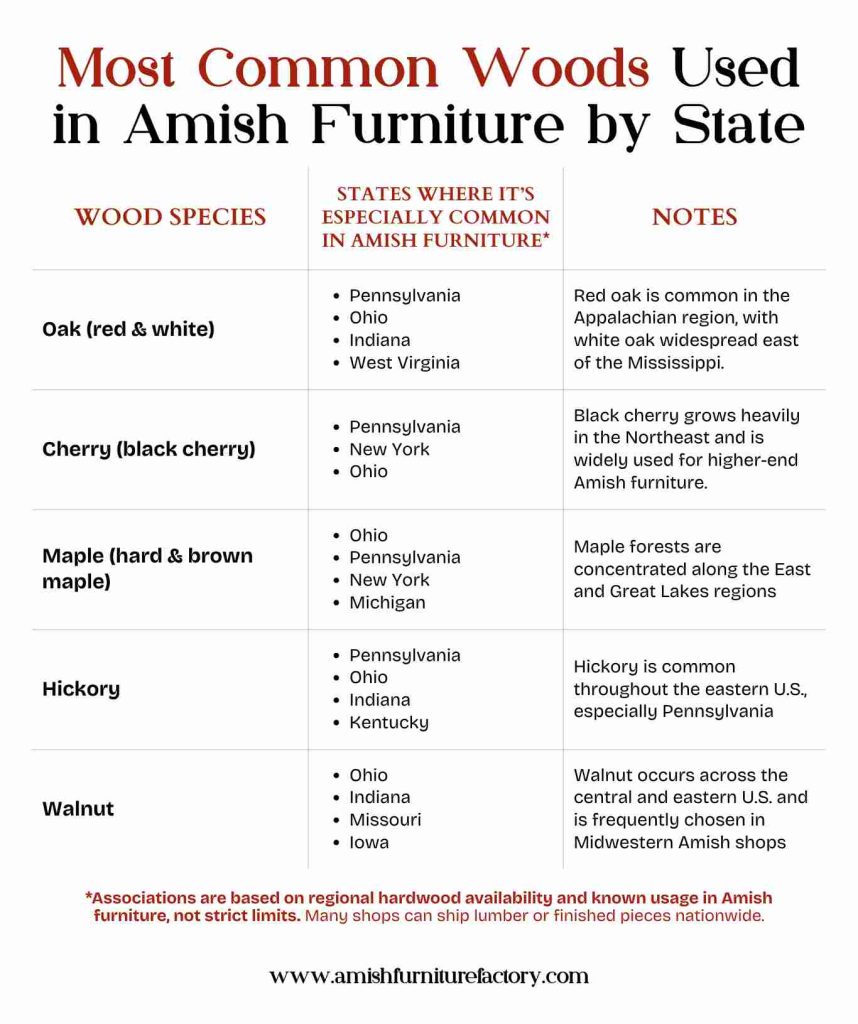
Here’s a quick reference showing how common regional woods tend to line up with states where they’re especially prevalent in Amish shops:
Top Amish Furniture Styles by State
Across the country, Amish furniture reflects the character of the communities that build it. Geography, heritage, available hardwoods, and even nearby “English” buyers contribute to subtle but meaningful differences. Here are the top Amish furniture styles by state:
Pennsylvania: Traditional Amish Furniture with Heritage Roots
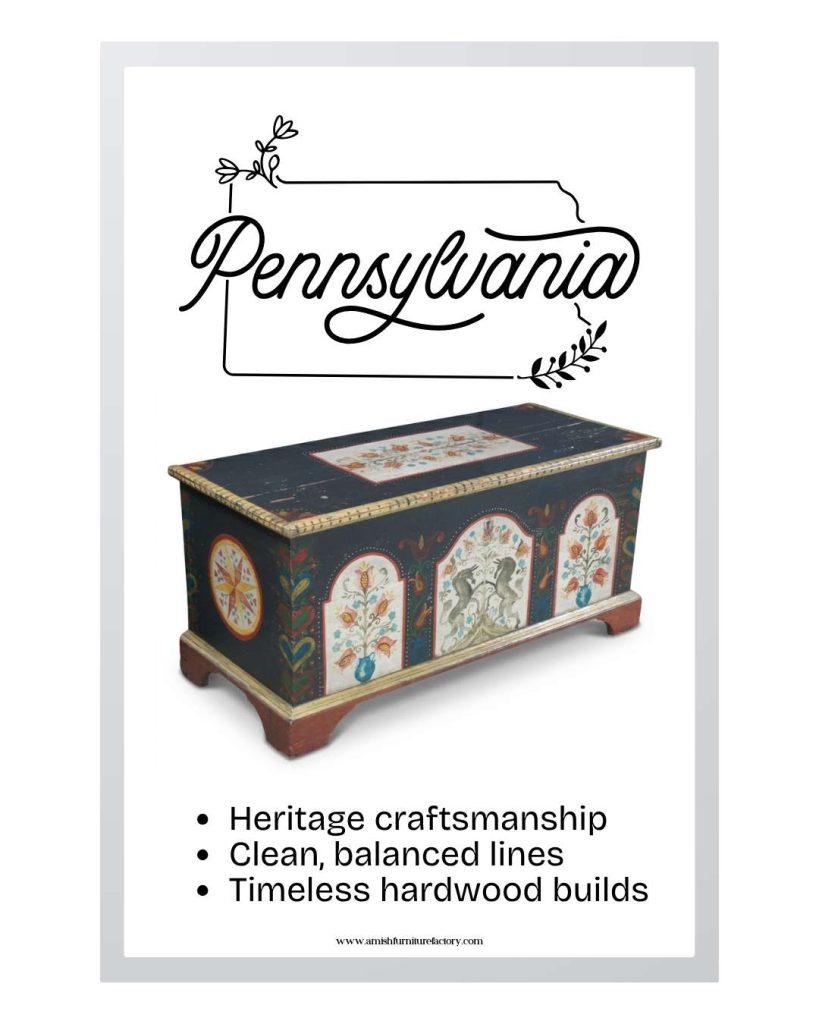
Pennsylvania, especially in Lancaster settlement, remains the strongest link to early Amish craftsmanship, producing pieces rooted in traditional, colonial, and Shaker style. The furniture here prioritizes balance, clean lines, and heirloom durability, often using locally sourced cherry and oak. If you are looking for a table with a traditional Inset drawer or a classic pegged joint, the Lancaster County tradition is the gold standard.
Ohio: Transitional & Modern Amish Furniture Hub
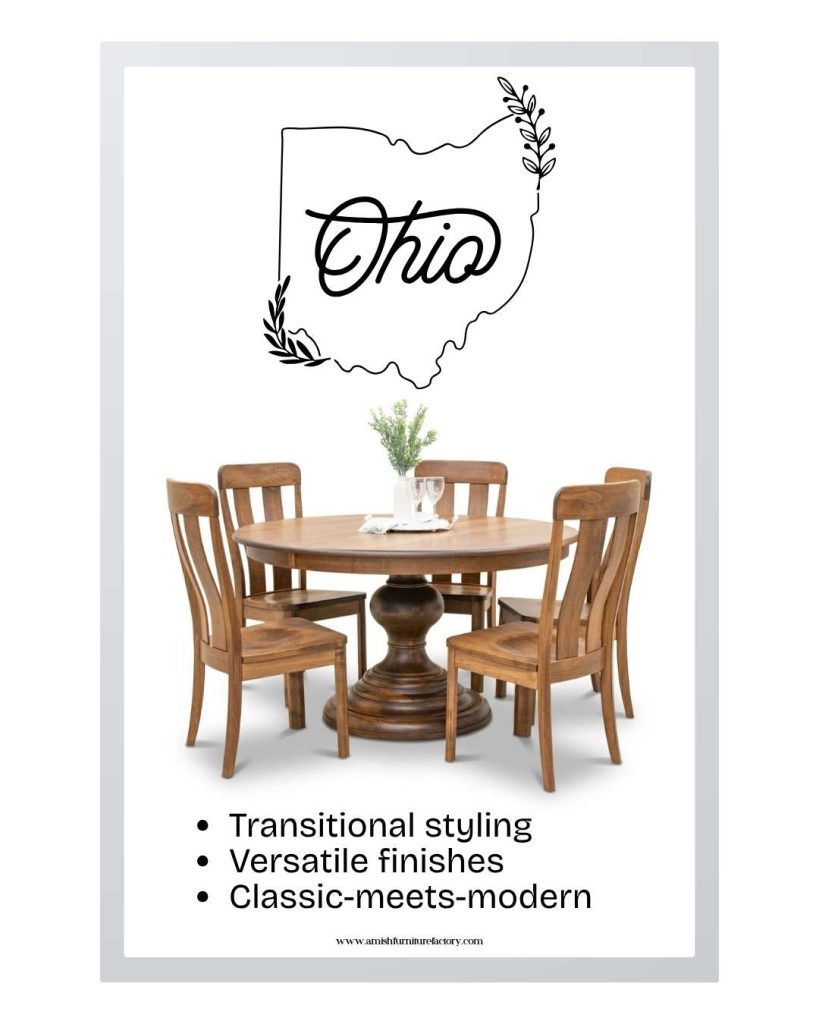
Ohio, particularly the Holmes County region, has become one of the largest Amish furniture hubs in the country, known for blending time-honored craftsmanship with more contemporary aesthetics. Builders in Ohio often work heavily with maple, oak, and walnut, creating pieces that feel both classic and updated. Ohio’s large and diverse buyer market also pushes makers to experiment with transitional styles, softer silhouettes, and modern finishes.
Indiana: Rustic, Live-Edge & Craftsman Amish Furniture
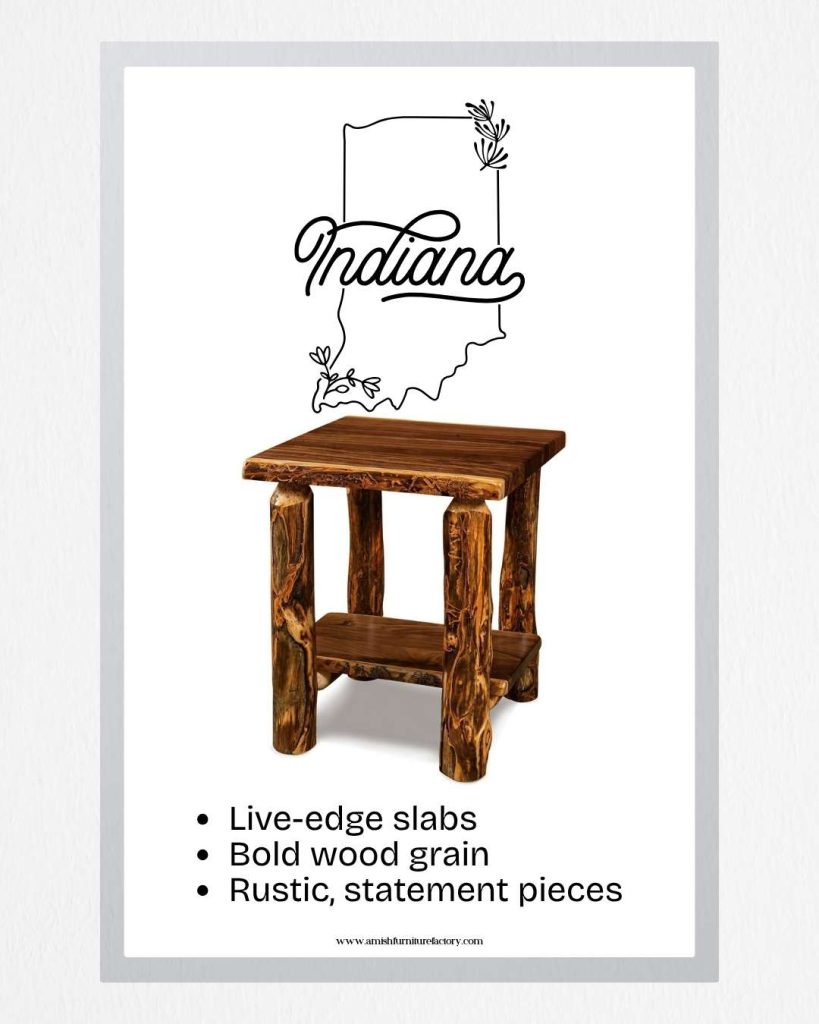
Indiana’s Amish furniture scene is known for bolder, more rustic craftsmanship, often showcasing the natural character of Midwestern hardwoods. Many Indiana builders specialize in Craftsman-inspired builds, rough-sawn textures, and striking live-edge slabs of walnut or maple. The state’s strong woodworking tradition and abundant hardwood supply encourage makers to embrace heavier silhouettes, visible grain, and statement-making tabletops.
Michigan: Precision-Crafted Amish Furniture with Modern Appeal
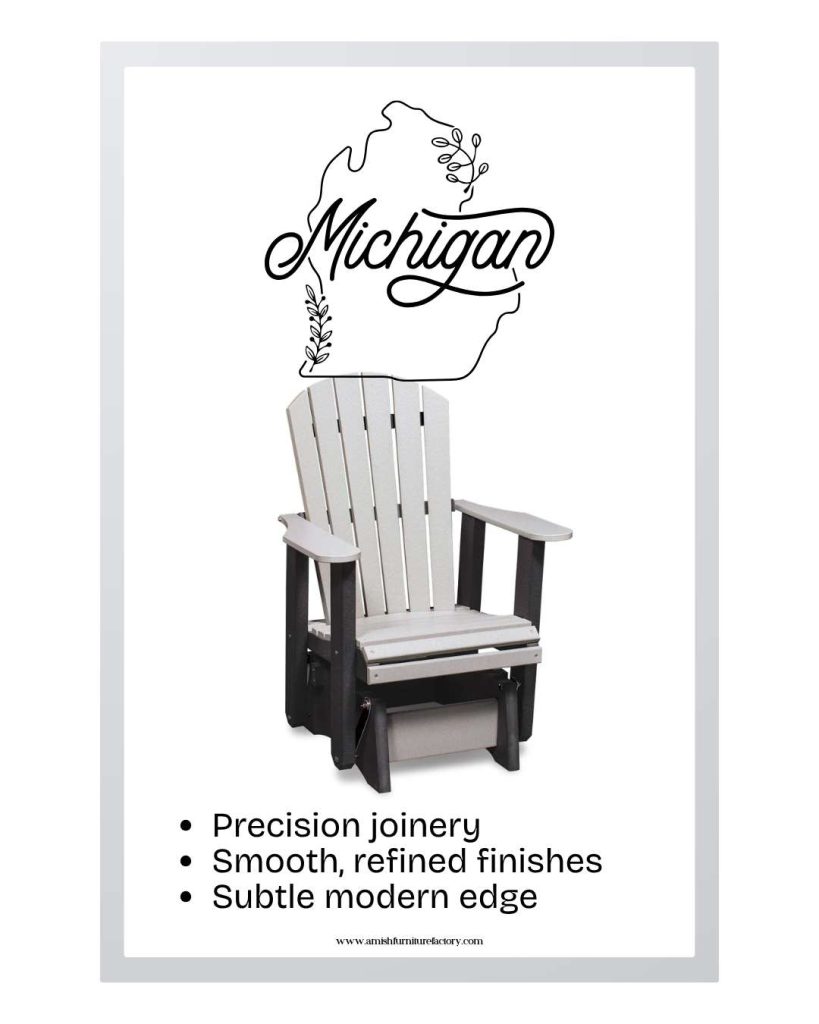
In Michigan, Amish shops lean into the state’s northern hardwoods, especially maple, cherry, and hickory, resulting in crisp, precise craftsmanship. Michigan makers often balance clean Craftsman geometry with smooth finishes that highlight the tight grain of local lumber. Because of the colder northern climate, Michigan Maple tends to be exceptionally dense and durable, making it our top recommendation for high-traffic kitchen islands and butcher blocks.
Wisconsin: Practical, Farmhouse-Style Amish Furniture
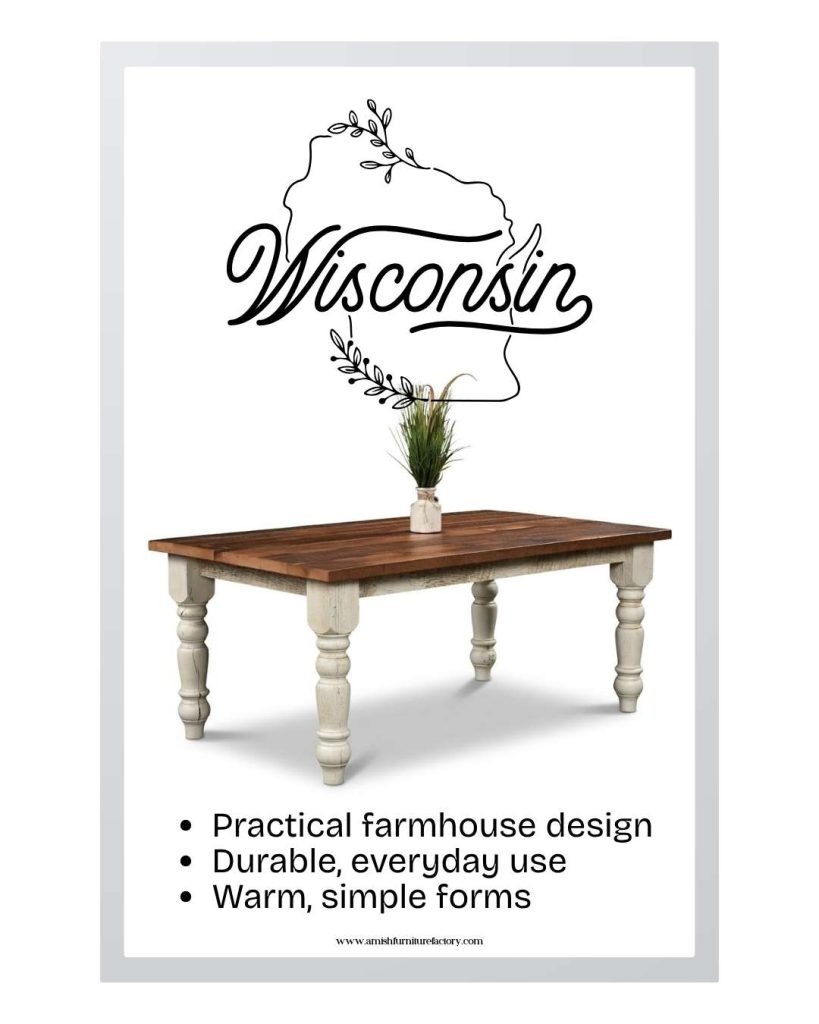
Amish communities in Wisconsin are known for practical, everyday-use furniture with a rustic and farmhouse lean. Local makers often use oak, maple, and hickory (woods abundant across the state) to craft pieces that feel sturdy, approachable, and designed for real-life durability. Wisconsin’s agricultural heritage also influences the aesthetic: simple lines, warm finishes, and functional forms dominate.
Missouri: Rustic Cabin & Log Amish Furniture
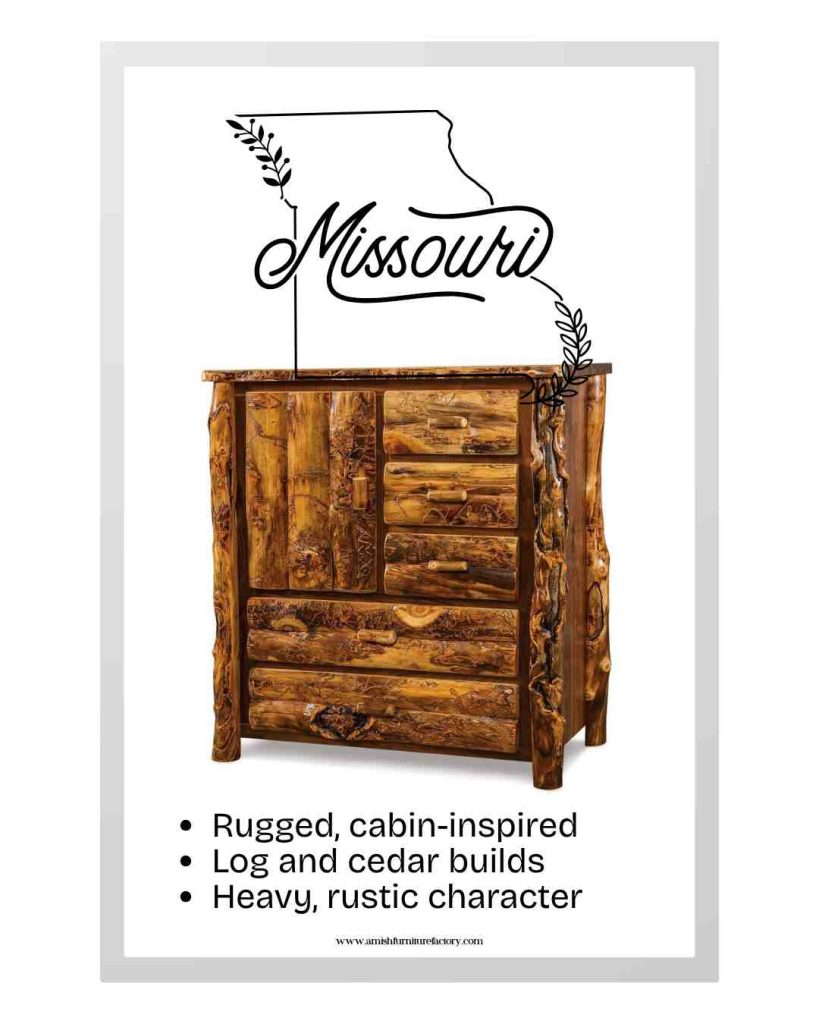
In Missouri, Amish furniture inherits a strong frontier and country influence, reflecting the state’s rural landscapes and homestead roots. Makers often use local woods like oak, walnut, and cedar to build rugged, country-style furniture. Missouri is especially known for its log furniture cabins, bedroom sets, and rustic outdoor pieces. The emphasis is on durability and authenticity rather than refinement, giving the furniture a warm, frontier charm.
Kentucky: Classic Amish Furniture with Southern Influence
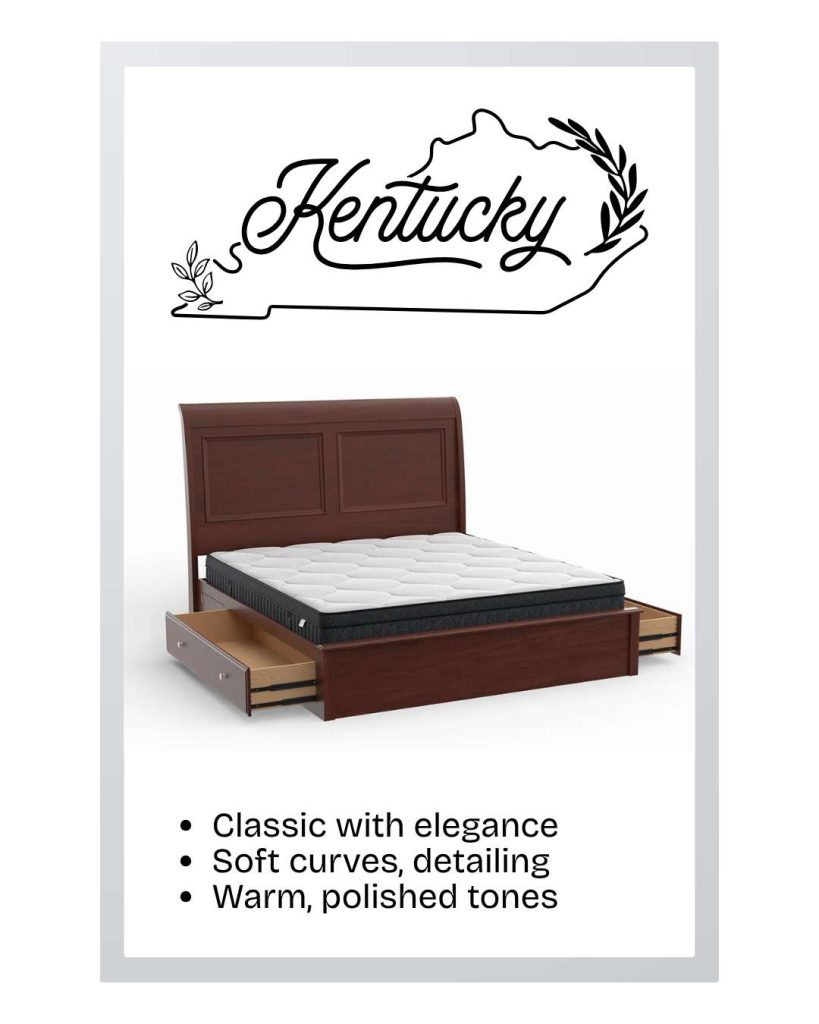
Amish furniture from Kentucky blends classic American craftsmanship with just a hint of Southern refinement. Expect warm stains, elegant curves, and more decorative detailing than found in Midwestern styles. Kentucky’s hardwood diversity (oak, walnut, cherry, and poplar) gives makers a broad palette, enabling both traditional and subtly polished pieces that fit historic homes and modern Southern spaces alike.
Emerging Amish Furniture States
While Pennsylvania, Ohio, and Indiana dominate the Amish furniture landscape, several rising states are carving out their own identity. Below are the states quickly gaining recognition for their unique takes on Amish craftsmanship.
- Iowa – Iowa’s Amish furniture typically embraces clean, straightforward forms: Mission, Shaker, and classic farmhouse silhouettes built with an emphasis on long-term utility. Many Iowa communities prioritize sturdy frames, practical storage, and finishes suited for everyday wear.
- Tennessee – Tennessee’s growing Amish communities are developing a style that blends rustic charm with a refined, slightly modern twist. Pieces often combine traditional Amish joinery with updated silhouettes and hardware.
- Montana – Montana’s emerging Amish districts lean heavily into the state’s rugged, mountainous character. Furniture here often features log construction, lodge-style proportions, natural edges, and Western-inspired detailing.
Whether you’re drawn to the clean lines of Mission or the ornate details of Queen Anne, you can shop by Amish furniture style to find the perfect handcrafted piece for your home. Explore our curated collections today!
Buying Authentic Amish Furniture: Tips & Red Flags
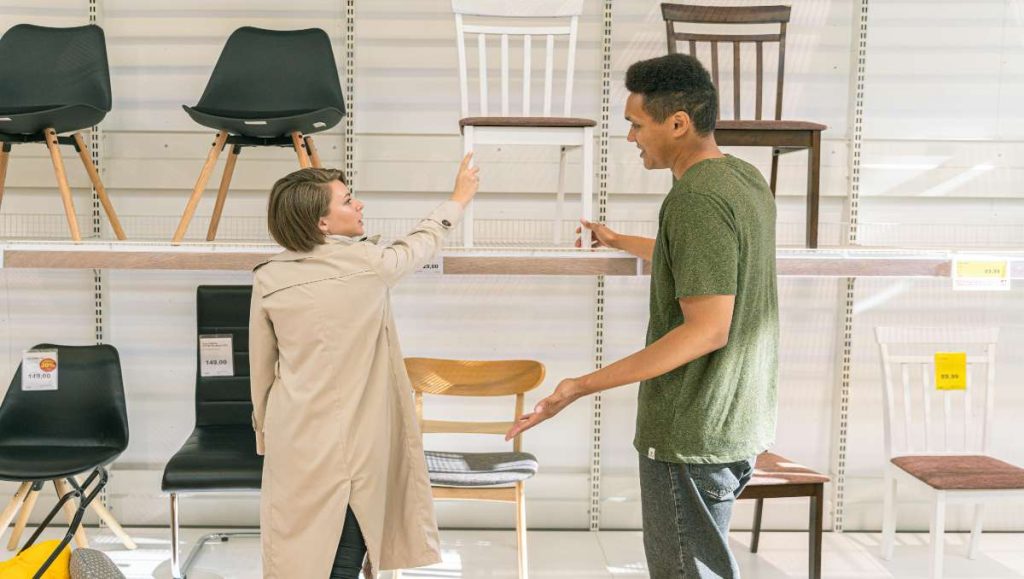
When shopping for real Amish-made furniture, the difference lies in the details. Here are the key things to look for (and avoid).
- Choose solid hardwood over composites: Authentic pieces use 100% solid Cherry, Oak, Maple, Walnut, or Hickory. If you see a veneer seam or feel a hollow thud when tapping the wood, it is a factory-made imitation.
- Ask about traditional joinery: Look for dovetail drawers and true mortise-and-tenon joints. At our factory, we never use staples or metal brackets to hold primary joints together. The wood is engineered to hold itself.
- Confirm the builder or community: Reliable sellers can name the specific Amish shop or region where the furniture was built. Vague answers like “Amish-made style” or “inspired by Amish craftsmen are reasons to doubt the quality.
- Check for hand-applied finishes and smooth sanding: Amish pieces typically use catalyzed varnish or hand-rubbed stains that enhance natural grain. Consider overly glossy plastic-like finishes or uneven surface texture a red flag.
- Evaluate the weight and feel: Solid hardwood furniture is heavy, balanced, and stable when moved. Stay away from hollow-feeling drawers, wobbly frames, or overly light builds.
💡 Did You Know?
Some Amish craftsmen leave a discreet maker’s mark, but not in ink. Many Amish makers leave a hidden maker’s mark inside a drawer, on the underside, or within the joinery.
Conclusion: Understanding Amish Furniture Styles Across America
Amish furniture isn’t defined by one look or one region. It’s shaped by the history, landscapes, woodlands, and communities that produce it. From the heritage-rich traditions of Pennsylvania to the modern-meets-traditional blend of Ohio, and the rising craftsmanship in states like Iowa, Tennessee, and Montana, each area adds its own character to Amish woodworking.
Understanding these regional signatures deepens appreciation for the cultural roots and skilled labor behind every handcrafted table, chair, or cabinet. Whether you’re drawn to Mission simplicity, rustic farmhouse charm, or polished Southern refinement, Amish furniture remains one of the most reliable sources of genuine, heirloom-quality craftsmanship in the U.S.
Frequently Asked Questions
Which states produce the highest-quality Amish furniture?
Pennsylvania, Ohio, and Indiana are widely considered the top three due to their long-established Amish communities and dense clusters of skilled workshops. That said, high-quality craftsmanship can also depend more on the individual shop than the state itself.
Is there a difference in quality between Amish furniture made in Ohio versus Pennsylvania?
Both states produce excellent handcrafted furniture, and the quality is generally comparable. The main differences lie in style: Pennsylvania leans more traditional and heritage-driven, while Ohio often blends traditional craftsmanship with modern or transitional design.
Can Amish furniture be customized to fit my home?
Yes, most of our Amish furniture can be customized in wood type, stain, finish, and size. This lets you create pieces that perfectly match your home’s style and your family’s needs.
Can I buy Amish furniture online by state?
You can browse and order handcrafted Amish furniture through our website and have it shipped directly to your home. Our online store makes it easy to explore pieces from different styles and collections, even if you’re not near a physical showroom.