

Amish clothing is more than just simple dresses and broad-brimmed hats—it’s a reflection of deep-rooted values, community identity, and a way of life that resists fast-changing trends. While the styles may appear plain to the modern eye, every detail—from fabric choice to button placement—carries meaning. Amish fashion isn’t about making a statement; it’s about living one.
Key Takeaways:
- Amish fashion and clothing attire are simple, modest, and functional, reflecting their religious values through plain, homemade garments in dark, solid colors without patterns.
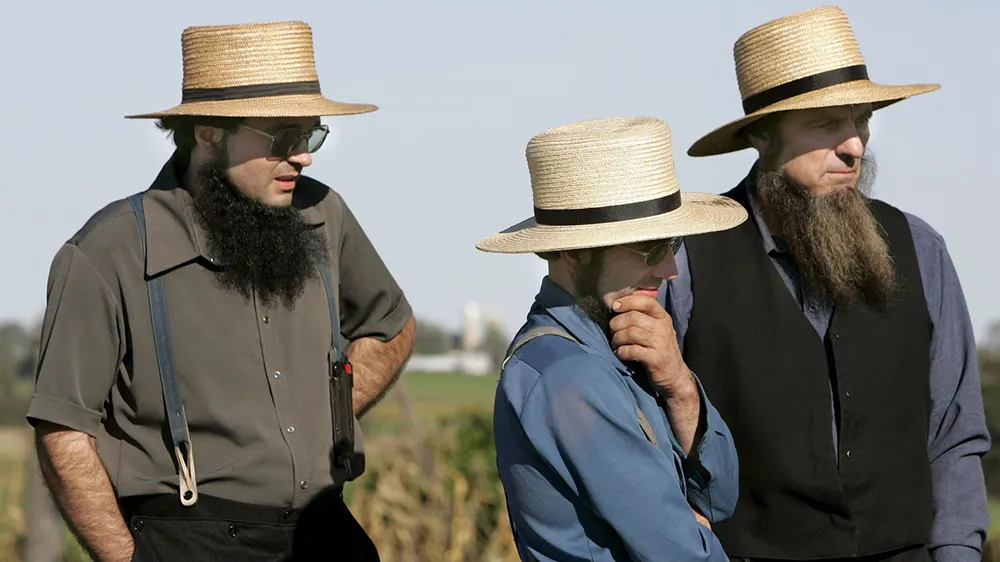
- One can easily distinguish the Amish by their solid-colored garments, fastened shirts with traditional buttons, long sleeves, full skirts, capes, hats, and suspenders.
- The Amish fashion symbolizes their faith, humility, and separation from the world.
In this article, we’ll explore the thoughtful traditions behind Amish attire, how it varies between communities, and what their clothing reveals about faith, humility, and belonging.
Principles Behind Amish Clothing
The principles guiding Amish clothing reflect the core values of the community: modesty, religious adherence, and a strong sense of identity. Each piece worn is a representation of these deeper beliefs, making their clothing far more than just a fashion statement.
Modesty and Simplicity
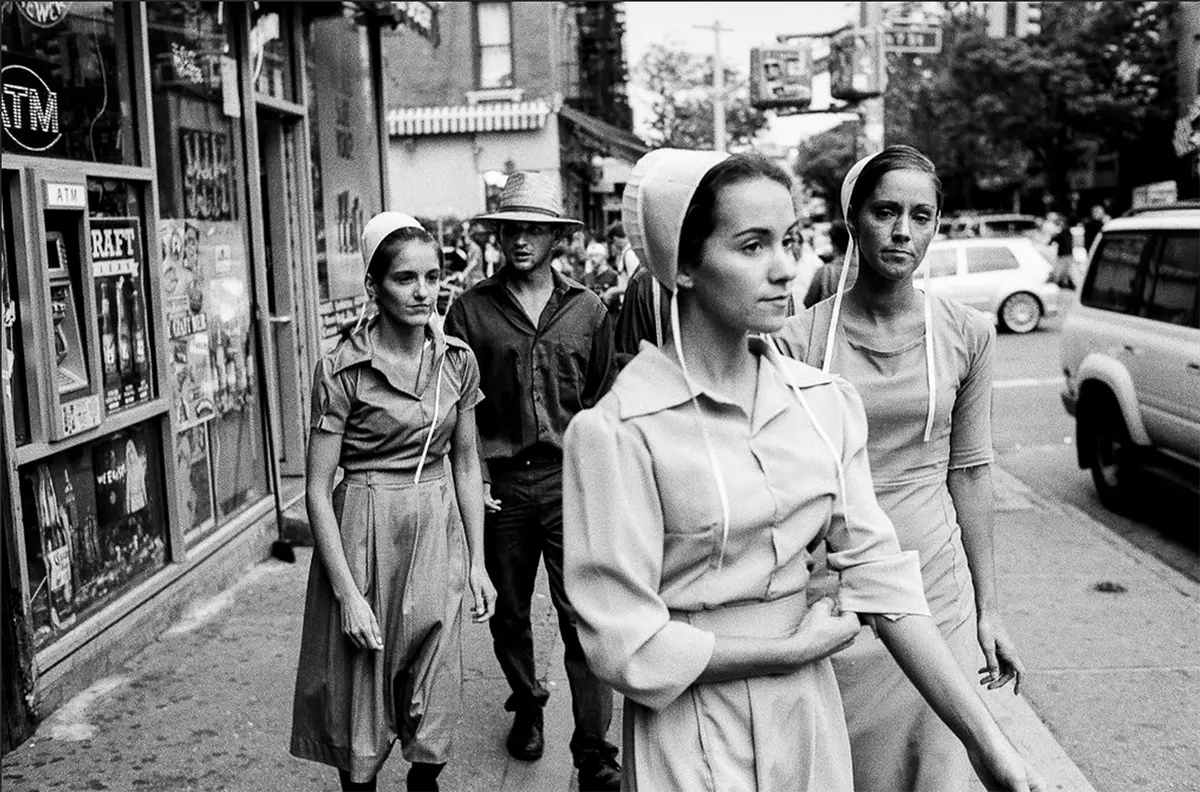
Amish clothing is designed to be modest and simple, avoiding any form of ostentation. This is evident in both the cut and the color of the garments. Men typically wear straight-cut suits without lapels, while women don plain dresses with long sleeves and full skirts. The choice of dark, solid colors further reinforces the principle of simplicity, steering clear of the vanity often associated with more elaborate attire.
Biblical Foundations
The design and manner of wearing Amish clothing are deeply rooted in biblical teachings. The Bible’s directives to dress modestly are taken very seriously by the Amish community, influencing not just the style but also the making of the clothing. This adherence to scripture ensures that their garments remain free from the influence of modern fashion trends, aligning with their religious commitments.
Cultural Identity
For the Amish, clothing is a key marker of cultural identity. Each style and fabric choice serves to distinguish their community from the broader society, reinforcing a sense of belonging and unity. From the characteristic Amish bonnet to the specific style of men’s hats, each element of their attire carries historical significance and reflects the community’s enduring values.
Regional Variations in Amish Dress
While Amish clothing adheres to common principles of modesty, simplicity, and separation from the world, notable variations exist across different Amish settlements. These differences are often subtle to outsiders but are deeply meaningful within Amish communities, reflecting local interpretations of the Ordnung (church rules) and long-standing traditions. For example, bonnet shapes, apron lengths, color preferences, and stitching styles can all vary based on the region, and even among districts within the same settlement.
Men’s attire also carries distinctions. Button usage, the cut of suit coats, or whether suspenders are single or double-striped can signal not just a family’s district, but also its standing within a specific Ordnung.
The Evolution of Amish Clothing
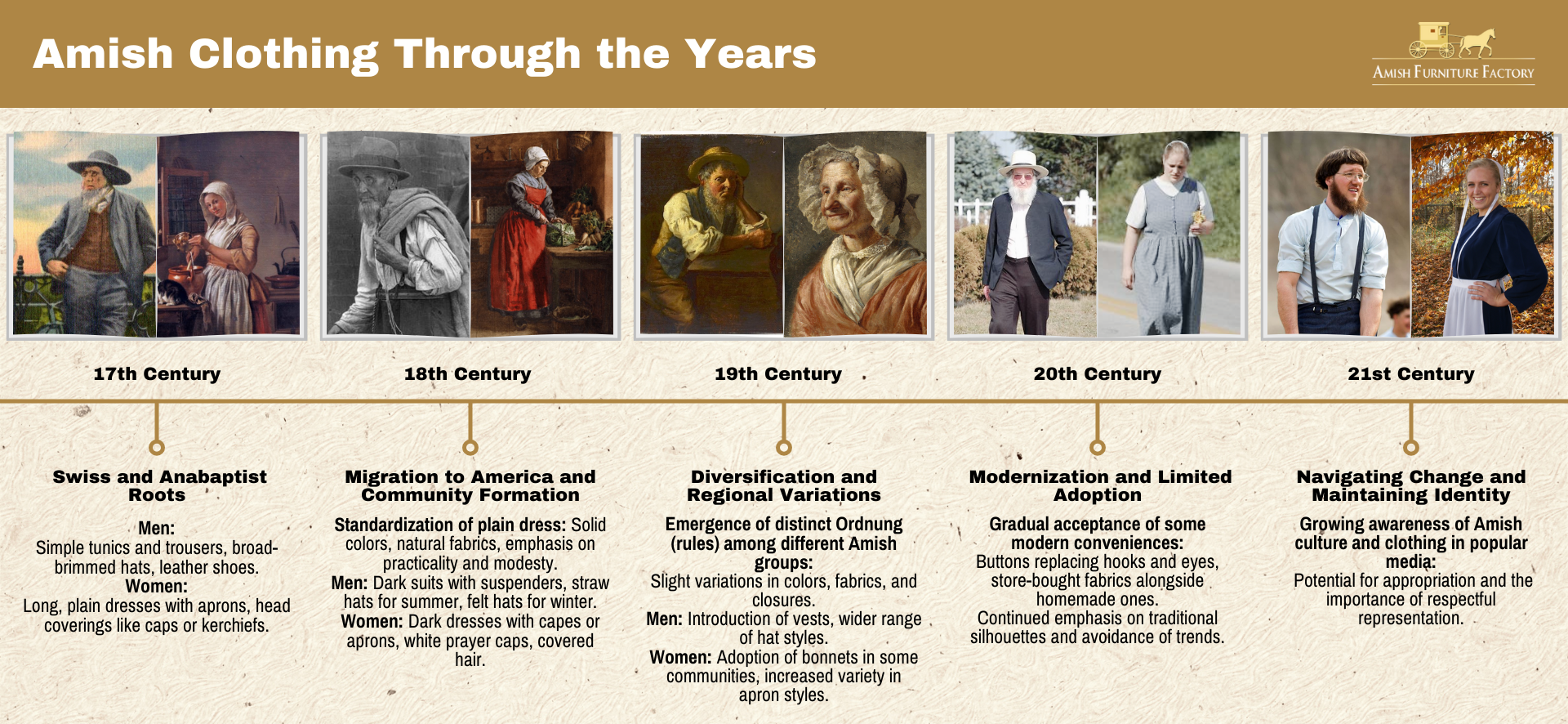
Amish clothing is often seen as timeless, but it has gradually evolved in response to both practical needs and cultural values. What began in the 17th century as attire similar to European peasant dress slowly developed into a distinct style, marked by modest cuts, plain fabrics, and symbolic details like bonnets and broad-brimmed hats. As the Amish settled in North America, they adapted their clothing to the environment, choosing durable materials and creating garments suitable for both work and worship.
Over the years, the community has made careful adjustments such as using hooks instead of buttons, avoiding synthetic fabrics, and adding reflective vests for safety, while preserving the principles of modesty and simplicity. Even today, small variations like brighter fabrics for children or hidden snaps in dresses show a balance between practicality and tradition. Through each change, Amish clothing continues to serve as both a functional necessity and a visible expression of faith and separation from mainstream society.
Characteristics of Amish Clothing
Amish clothing is not just functional; it embodies the community’s values and traditions. Below, we explore how these characteristics manifest differently in the apparel of men, women, and children within the Amish community.
Men’s Apparel
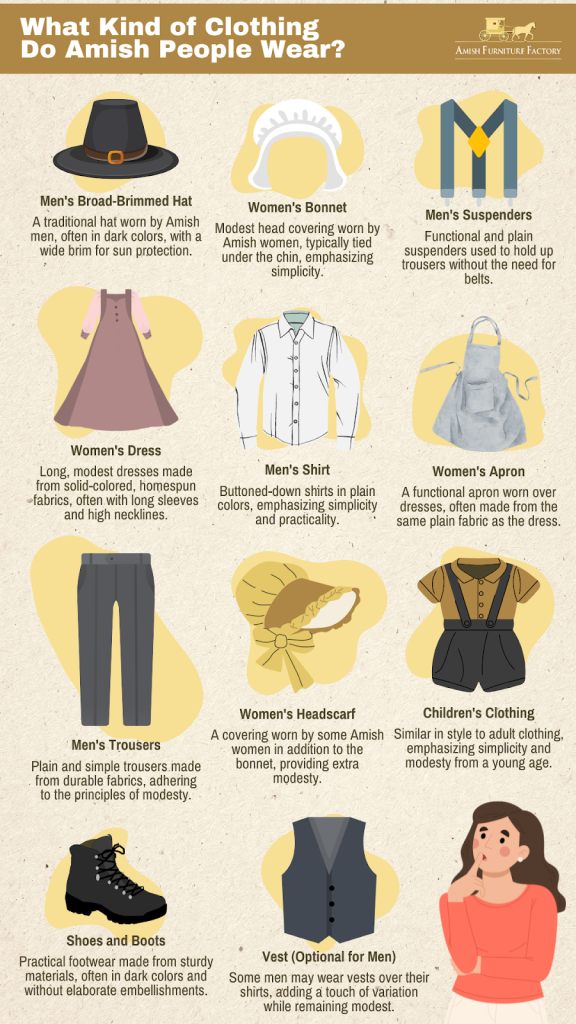
The clothing of Amish men is characterized by its functionality and uniformity. Typically, this includes dark-colored trousers and a plain, buttoned shirt. Suspenders are often worn instead of belts, and during colder months, a simple coat or jacket is common. Hats are customary, with styles varying slightly among communities but always maintaining a traditional look.
Women’s Apparel
Amish women’s apparel is designed for modesty and discretion. Dresses are typically ankle-length with long sleeves and a high neckline, often worn with an apron during daily tasks. The fabric is usually plain or with subtle patterns, adhering to the community’s standards of simplicity. Head coverings, either bonnets or white prayer caps, are an essential part of their attire, symbolizing a woman’s commitment to her faith.
Children’s Clothing
Children’s clothing in the Amish community mirrors the principles seen in adult attire but with slight modifications for age appropriateness. Boys wear scaled-down versions of men’s clothing, and girls wear simpler versions of women’s dresses. The use of color is slightly more lenient for children, although it still remains within a muted palette. This early adoption of the traditional dress code helps instill Amish values from a young age.
Explore the Amish style further with our guide to creating a timeless wardrobe inspired by their principles of simplicity and practicality.
Where Amish Clothing Comes From
When exploring Amish clothing, it’s important to recognize the distinction between traditionally handmade garments and those purchased, each with its own origins and characteristics.
Homemade vs. Store-Bought
Most Amish clothing is homemade by community women, using fabrics that reflect modesty and simplicity. This ensures uniformity and adherence to religious guidelines. Some basics like underwear, socks, and plain shirts may be purchased from stores such as Walmart, as long as they meet Plain standards.
Specialized Amish Clothing Stores
Amish communities also have their own shops that sell plain clothing approved by community standards. These stores offer items like workwear, church suits, and broad-fall trousers designed to match Plain traditions. They serve both Amish members who prefer ready-made clothing and visitors interested in authentic Amish garments.
Modern Influences on Amish Fashion
Modern influences on Amish fashion are subtle but meaningful, showing how tradition and practicality can coexist. While the core values of simplicity and modesty remain unchanged, certain aspects of Amish dress have evolved in response to modern materials and needs.

Fabric Choices
Amish communities continue to prioritize plain, solid-colored clothing, but many now use poly/cotton blends and tri-blend denims for everyday garments. These modern fabrics offer better durability, easier maintenance, and more comfort than traditional 100% cotton. Though the colors remain muted, these material updates reflect a practical response to modern textile availability, not a shift in values.
Sustainability and Eco-Friendliness
While black, navy, and other dark colors are still standard, lighter fabrics and colors are sometimes worn in warmer months or by younger women, depending on the community. Changes in cut and fit may also appear for comfort, but they remain modest and simple.
Tools and Production Methods
Most Amish still use non-electric, treadle-powered sewing machines or other manual tools. While electricity is generally avoided, these alternatives allow for more efficient clothing production without violating traditional restrictions.
Commercial Influence
Some Amish seamstresses sell plain clothing to non-Amish customers, occasionally making small adjustments to appeal to a broader market. However, these garments still follow core Amish design principles and rarely stray far from tradition.
The Impact of Rumspringa on Fashion Choices

During Rumspringa, a period of adolescence when Amish youth are given greater personal freedom, the strict clothing rules of their communities are often temporarily set aside. This period allows young people to explore the “English” world. While some may only slightly alter their traditional attire, others fully embrace modern fashion. They wear everything from jeans and T-shirts to trendy sneakers and branded apparel.
The fashion choices made during Rumspringa serve a crucial role in the individual’s journey toward baptism. By allowing youth to experience mainstream culture and its associated styles, the Amish community ensures that the eventual decision to be baptized and permanently adopt traditional clothing is a fully informed one.
The Role of Clothing in Amish Ceremonies and Rituals
In Amish life, clothing is more than just something to wear. It represents faith, humility, and a sense of community. At weddings, brides wear a simple blue dress that often becomes their regular church outfit, showing lifelong commitment and modesty. For funerals, men and women wear plain black to express respect and equality before God. Baptism clothing is handmade and simple to mark a person’s formal entry into the church.
Day to day, Amish clothing also helps reinforce unity. Styles stay the same throughout the year, with people layering heavier fabrics in winter or using lighter ones in summer. By avoiding fashion trends, their clothing keeps the focus on modesty and faith. Their everyday dress is a quiet reflection of their way of life.

Amish Dress, Discipline, and Tradition
The Amish Ordnung sets strict rules for clothing to preserve modesty, humility, and separation from the outside world. While guidelines vary by district, items such as bright colors, zippers, and patterns are generally forbidden. Repeated violations can lead to shunning or excommunication. Those who leave often switch to mainstream clothing immediately as part of their transition into wider society.
At the same time, Amish dress faces pressures from modern life. Younger members may be drawn to outside styles, while outsiders commercializing “Amish-style” clothing often misrepresent the culture. Practical issues, such as safety when using machinery or traveling on public roads, also force occasional adjustments. Despite these challenges, Amish clothing remains a clear expression of faith and identity. It makes sure to balance tradition with the few practical changes necessary for daily life.
Frequently Asked Questions (FAQs)
Can non-Amish people purchase and wear Amish clothing?
Yes, non-Amish people can purchase and wear Amish clothing. Specialized Amish stores, including those online, often sell traditional Amish garments to anyone interested. However, it’s important to wear these clothes respectfully, understanding that they are deeply tied to the Amish culture and beliefs.
How do Amish communities view the modernization of their traditional attire?
Amish communities generally view the modernization of their attire cautiously. While practical adjustments are sometimes made to accommodate safety or work-related needs, any change is carefully considered to ensure it does not compromise their values of simplicity and modesty. The community leaders often weigh these decisions to maintain a balance that respects tradition while addressing practical concerns.
Are there specific colors or fabrics that are preferred in Amish clothing?
Amish clothing typically features solid, dark colors such as black, blue, green, or purple. This aligns with their values of modesty and simplicity. Preferred fabrics are those that are natural and durable, like cotton and wool. These materials are chosen for their practicality and comfort, reflecting the Amish commitment to a simple, unadorned lifestyle.
Players today value convenience, security, and fast payouts. In particular, kasinoer med raske utbetalinger kontrollert https://norskhavservice.no/ av eksperter provide reliable and efficient transactions. Across all types of wagering, enthusiasts enjoy excitement, unpredictability, and the thrill of testing their luck in various ways.
thank for this,,, I a Non Amish .. am so drawn to their clothing… cloth they use,,, wonderful,, comfortable fresh air clothing … as I “see” it