
Water damage can quickly ruin the appearance and stability of wood furniture, leaving behind stains, warping, or weakened joints. While severe damage may seem irreversible, many solid wood furniture pieces can be restored with the right repair techniques and proper care. Knowing how to repair water-damaged wood furniture step by step can help you save valuable pieces, restore their natural beauty, and extend their lifespan without immediately resorting to expensive replacements.
Key Takeaways:
- Repairing water-damaged wood requires thorough drying, mold treatment, and repairing wood fibers before refinishing.
- Solid wood furniture is often more repairable than particle board or MDF because hardwood fibers can usually be sanded and restored.
- Preventing future water damage starts with humidity control, protective finishes, and proper maintenance.
Types of Water Damage and How to Identify Them
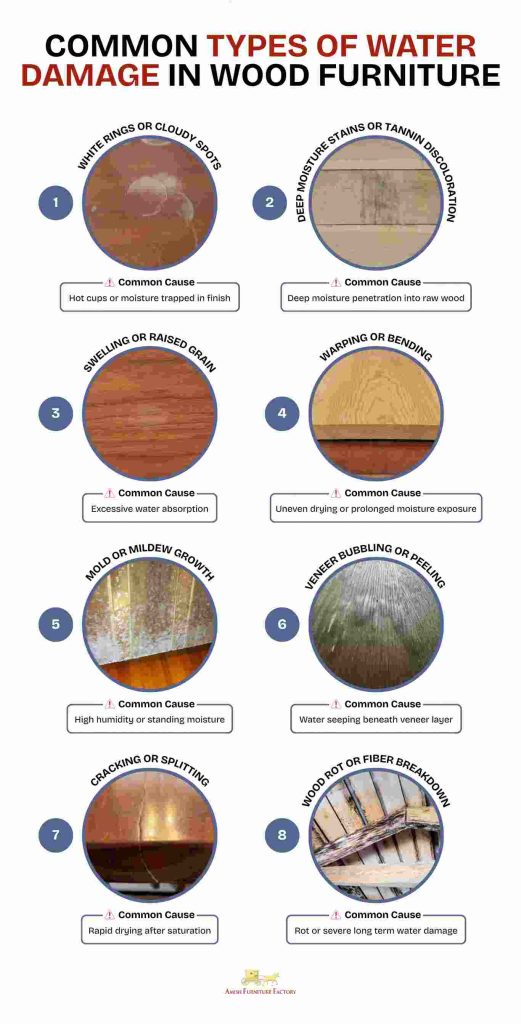
Water damage affects wood furniture in different ways depending on how long the moisture sits and how deeply it penetrates the surface. Some issues remain cosmetic, while others weaken the structural integrity of the wood itself. Common early signs include discoloration, rough texture, raised grain, bubbling finishes, swelling, or musty odors.
Solid wood furniture is often more repairable because natural hardwood fibers can usually be dried, sanded, and refinished successfully. In contrast, furniture made from particle board or MDF is often difficult to restore once it swells, crumbles, or permanently loses its shape. In many cases, furniture is still repairable when the damage is limited to surface stains, minor warping, or isolated swelling.
How to Repair Water-Damaged Wood Furniture: Step-by-Step Guide
Before repairing water-damaged furniture, make sure the piece is completely removed from the moisture source. Wear gloves and a mask when cleaning mold, sanding finishes, or using chemical products. Here are essential tools to prepare:
- Drying tools: Fans, dehumidifiers, moisture absorbers
- Repair tools: Clamps, wood glue, wood fillers, sandpaper
- Cleaning agents: Mild soap, vinegar solution, wood-safe disinfectants
- Refinishing materials: Wood stains, sealers, furniture oils, polyurethane
Step 1: Controlled Drying (Stabilizing the Wood)
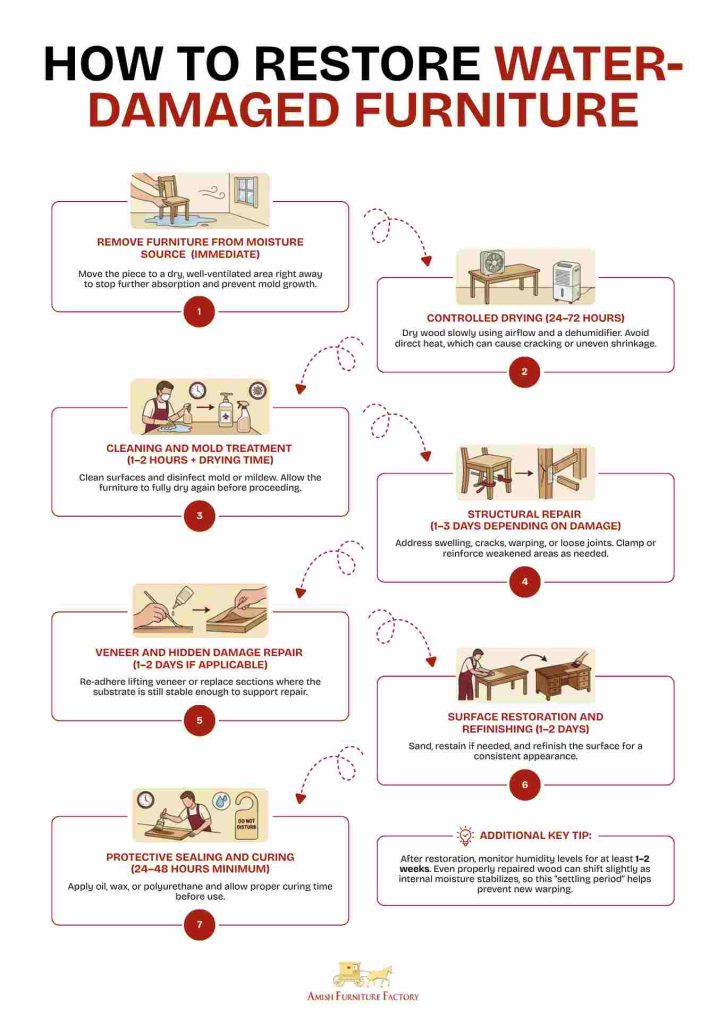
Move the furniture away from the moisture source immediately. Controlled air drying works better than aggressive heat. Space heaters and hair dryers can dry wood unevenly. Fans and dehumidifiers help pull moisture out gradually while reducing the risk of structural stress.
For heavily saturated pieces, allow several days for drying before beginning repairs. The wood should feel dry to the touch and no longer cool or damp.
Step 2: Cleaning and Mold/Mildew Treatment
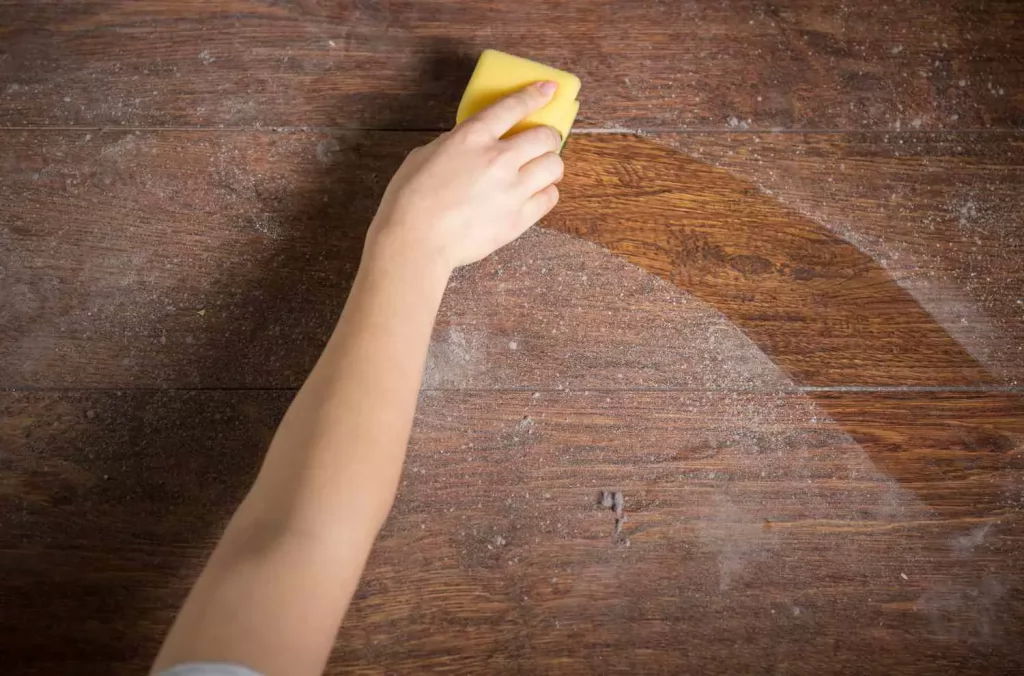
Once the furniture is completely dry, clean the surface thoroughly to remove dirt, mildew, and contaminants. For light surface mold or mildew, a vinegar solution or diluted rubbing alcohol can help disinfect the wood safely. Bleach is generally not good for porous wood because it may not penetrate deeply enough and can sometimes damage or discolor the wood fibers.
Porous wood may require repeated gentle cleaning since moisture and mold spores can settle deeper into the grain. Use a soft brush or cloth instead of soaking the surface again. If mold has deeply penetrated the wood fibers or caused soft rot, the damage may no longer be reversible. In severe cases, replacement is often safer than wood furniture restoration.
Step 3: Repairing Surface Damage (Water Stains and White/Gray Rings)
White rings and cloudy marks usually affect the finish layer rather than the wood itself. In many cases, gentle heat from an iron placed over a cotton cloth can help release trapped moisture. Keep the heat low and move carefully to avoid scorching the finish. Since some finishes may react poorly to heat, always test the iron method on a hidden area first.
For darker stains that have penetrated deeper into the wood, light sanding and refinishing are often required. Oxalic acid wood bleach may also help reduce black water stains before refinishing furniture. After stain removal, smooth the area with fine grit sandpaper and blend the repair into the surrounding finish.
Step 4: Fixing Warping, Swelling, and Structural Issues
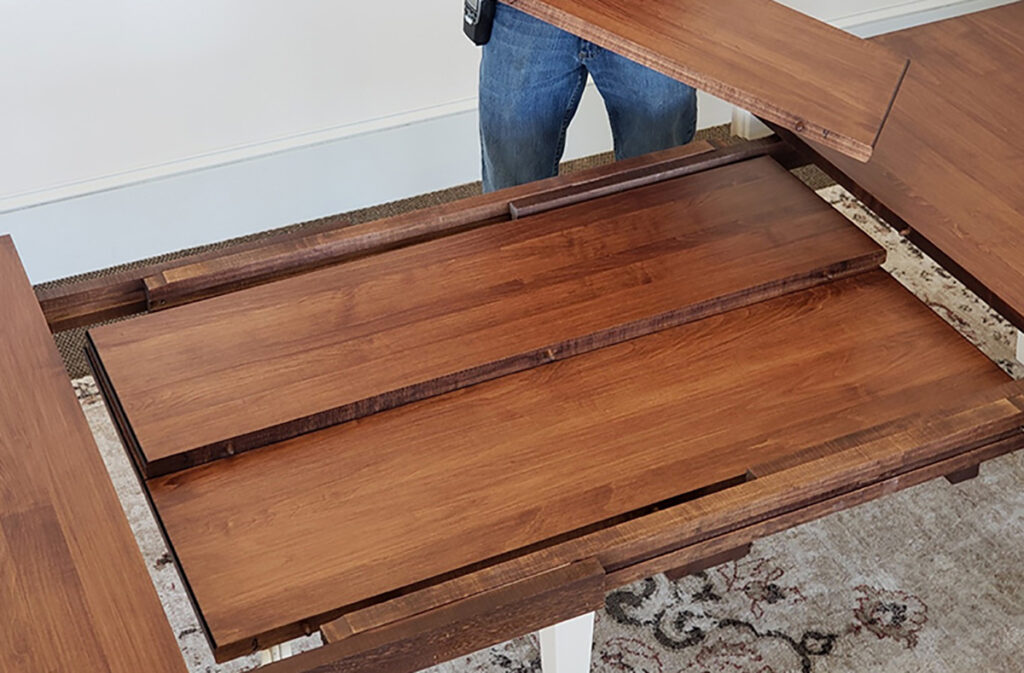
Warped boards should be flattened slowly to avoid cracking. Light moisture combined with even clamping pressure sometimes helps reshape slightly bent wood over time.
Swollen wood can often be sanded once fully dry. Raised grain and uneven edges should be leveled carefully before refinishing.
You can repair cracks and splits using wood filler or epoxy, depending on the size and depth of the damage. After the filler cures, sand the area smooth, so it blends naturally with the surrounding surface.
Step 5: Repairing Veneer or Layer Separation (If Applicable)
Water-damaged veneer often bubbles or lifts as moisture weakens the adhesive underneath. You can usually repair small sections without replacing the entire veneer.
If the water got under a wood veneer causing it to bubble, slice the bubble with a razor blade, inject wood glue underneath, and clamp it down. Wipe away excess glue immediately and allow the repair to cure fully before sanding or refinishing.
| Note: Water damage often causes particle boards to swell and break down permanently. Because it cannot be structurally restored, a severely damaged particle board or MDF usually needs to be replaced. |
Step 6: Surface Refinishing and Color Restoration
Once repairs are complete, sand the furniture evenly to prepare the surface for refinishing. Start with medium-grit sandpaper (around 120–150 grit) and finish with fine grit (180–220 grit) for a smooth surface. Always sand in the direction of the wood grain to avoid deep scratches. Apply stain carefully if color restoration is needed. Matching older wood finishes may require testing on a hidden area first. Lastly, finish the restoration with a protective sealant such as oil, wax, or polyurethane.
Preventing Future Water Damage in Wood Furniture
Even well-restored furniture can still develop new damage if moisture problems are not addressed. Consider stress prevention alongside repair, especially for solid wood furniture meant to last for generations.
- Maintain stable indoor humidity levels (ideally 40–55%) using dehumidifiers, humidifiers, or proper ventilation to prevent swelling, shrinking, and joint stress
- Apply protective sealants, oils, or finishes regularly to reinforce moisture resistance and slow down absorption from spills or humidity changes
- Keep furniture away from high-risk areas such as windows with condensation, exterior walls, and AC units or vents that may leak or create temperature swings
- Use coasters, placemats, and protective pads consistently to prevent direct contact with water, heat, and condensation from everyday use
- Wipe spills immediately and avoid allowing moisture to sit on the surface, as even brief exposure can seep into unfinished or worn areas of the finish
- Inspect furniture seasonally for early signs of moisture issues such as dulling finish, small cracks, slight warping, or loosening joints so you can address the problems early
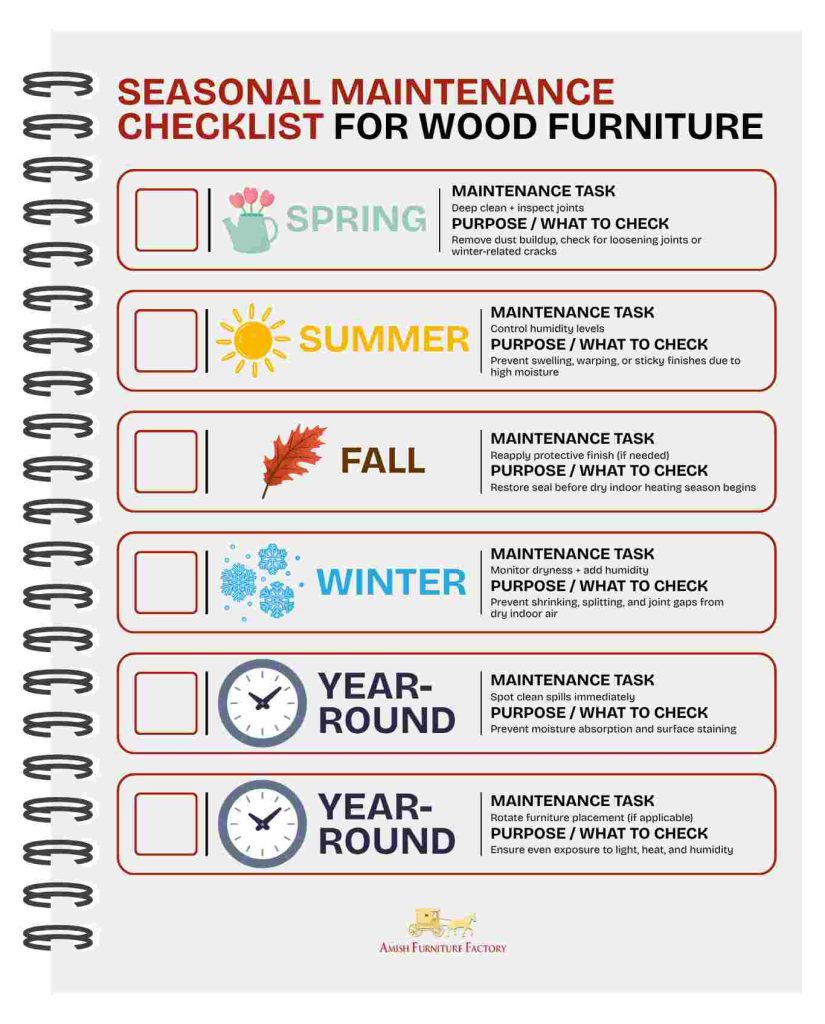
Here’s a simple seasonal maintenance checklist to help protect wood furniture year round:
If your water-damaged piece is beyond repair, it might be time to upgrade to something crafted to last a lifetime. Explore our collection of durable Amish living room furniture to find the perfect replacement for your home.
Conclusion: Restoring Value and Longevity Through Proper Wood Care
Repairing water-damaged wood furniture starts with patience and proper drying. From removing stains and flattening warped boards to refinishing the surface, each step plays a role in restoring both appearance and structural integrity. When addressed promptly and properly, water damage does not have to mean the end of a well-crafted wood furniture piece.
Frequently Asked Questions
Can water-damaged wood be fixed?
Yes. Many types of water damaged wood can be repaired if the damage is addressed early. Solid wood furniture often responds well to drying, sanding, refinishing, and structural repairs.
Does vinegar and oil restore wood?
Vinegar and oil can help clean and temporarily improve the appearance of some wood surfaces. However, they do not fully repair deep water damage or structural problems.
How do you fix water damage on wood without sanding?
You can reduce minor white water rings or surface haze using gentle heat, furniture oils, or specialized wood restoration products. Deeper stains usually require sanding and refinishing.
Can swollen wood furniture go back to its original shape?
In some cases, yes. Slight swelling may shrink as the wood dries properly. Severe swelling or fiber breakdown may require sanding, filling, or replacement of damaged sections.