
Choosing the right dining table shape for a small space depends on how the piece interacts with your specific floor plan and traffic flow. Because the dining table is usually the center of the home, the wrong geometry can make a compact room feel closed-in and difficult to navigate.
Key Takeaways:
- Round dining tables are usually the best shape for small spaces because they eliminate corners that interrupt traffic flow.
- Square rooms pair well with round or square tables, while narrow rooms work better with oval or rectangular tables.
- Smart features like drop-leaf or extendable designs can make small dining areas far more flexible.
In our workshops, we have found that visual clearance is just as vital as the physical footprint of the wood. This guide explains which shapes maximize a tight layout and how our craftsmen design for long-term functionality.
How Dining Table Shapes Affect Space Perception
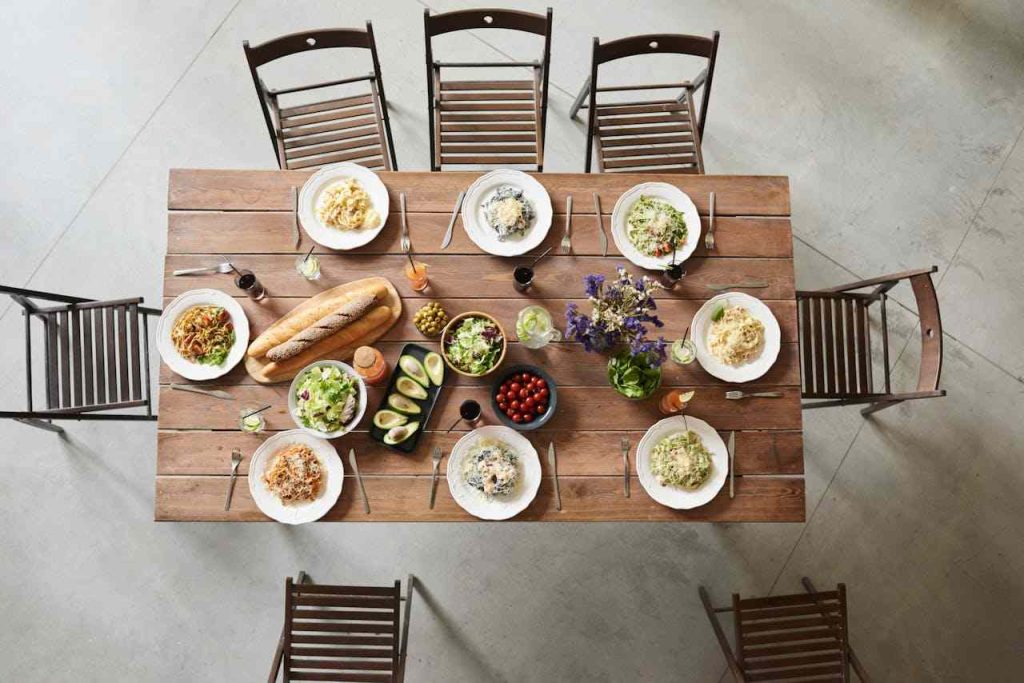
In small areas, the shape of a dining table affects how easily your family moves through the house. Sharp corners can interrupt walkways and create dead zones where square footage is wasted. Curved edges create a continuous flow that tricks the eye into seeing more floor space than actually exists.
Beyond physics, the shape affects the intimacy of the meal. A pro-tip from our builders is that round tables naturally dampen clatter in small rooms with hard surfaces because sound waves aren’t bouncing off flat, parallel table edges.
Interestingly, research shows that dining styles, which include table setup and seating patterns, can even affect human behavior and comfort, such as conversation patterns, sound pressure, and overall acoustic comfort. In practical terms, well-chosen shapes help balance visual weight and traffic flow in tight layouts, providing a perception of spaciousness even when the square footage is limited.
Best Dining Table Shapes for Small Spaces
If you’re trying to decide what shape dining table is best for your small space or condo, the most common options include round, square, oval, and rectangular tables. Each shape interacts differently with room layouts, traffic flow, and seating needs. Below is a closer look at how each one performs in compact dining areas.
Round Dining Tables: The Best Shape for Small Spaces
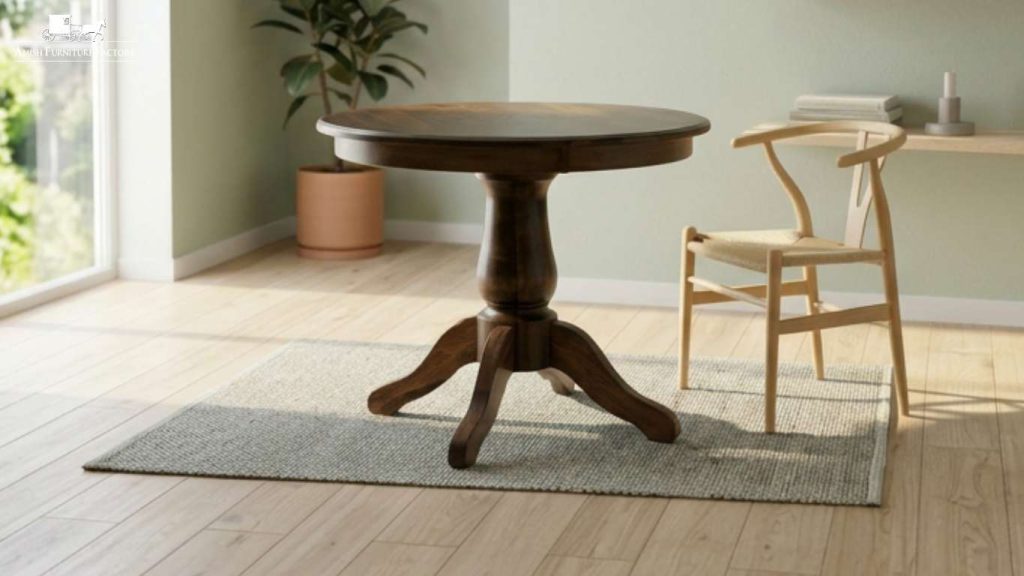
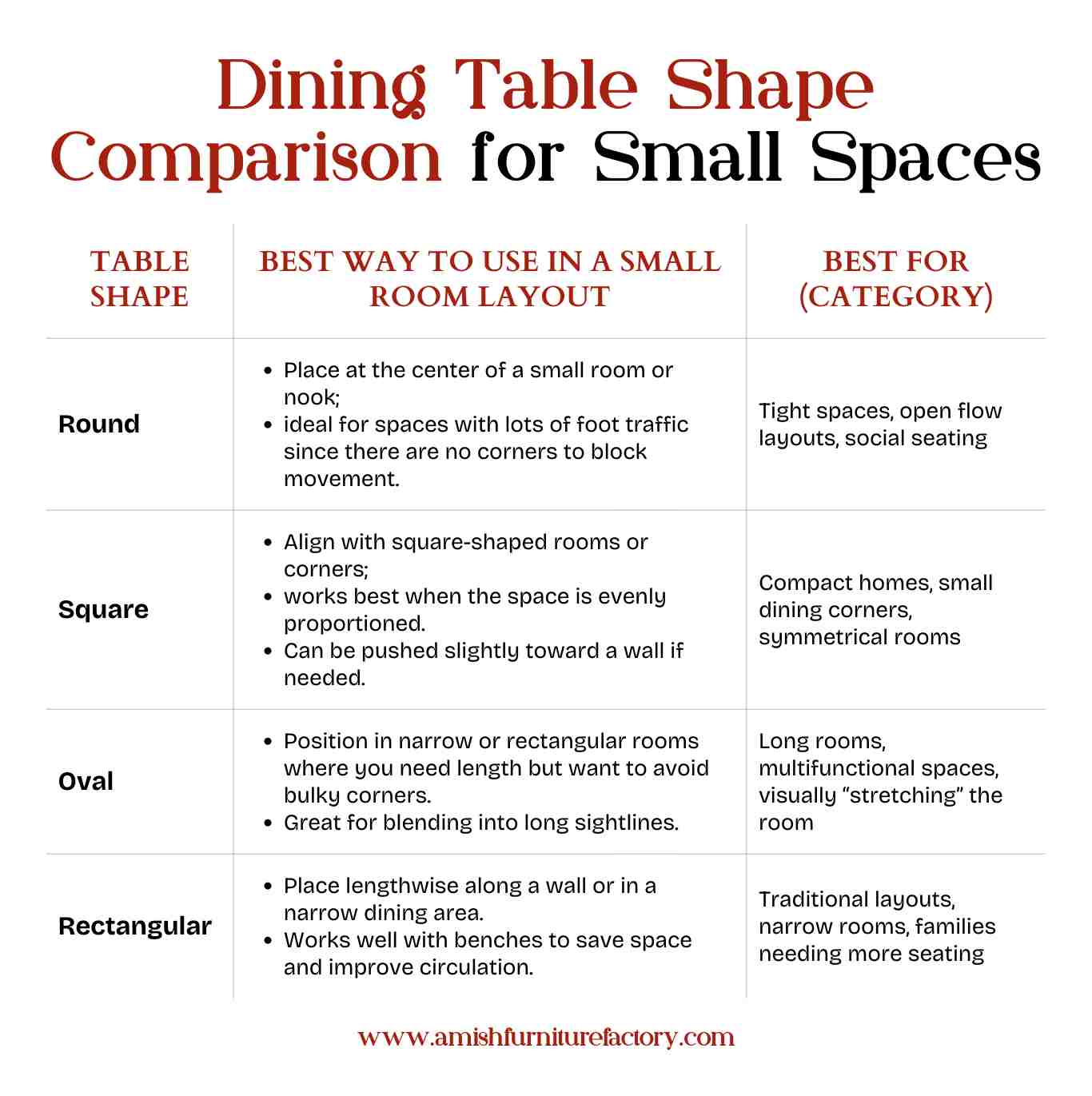
For most compact dining areas, round tables are the superior choice. They eliminate sharp corners that snag clothing in tight walkways. Without a head of the table, our round designs allow you to squeeze in an extra guest much more easily than a standard rectangular table with corner legs.
Square Dining Tables: Compact & Balanced
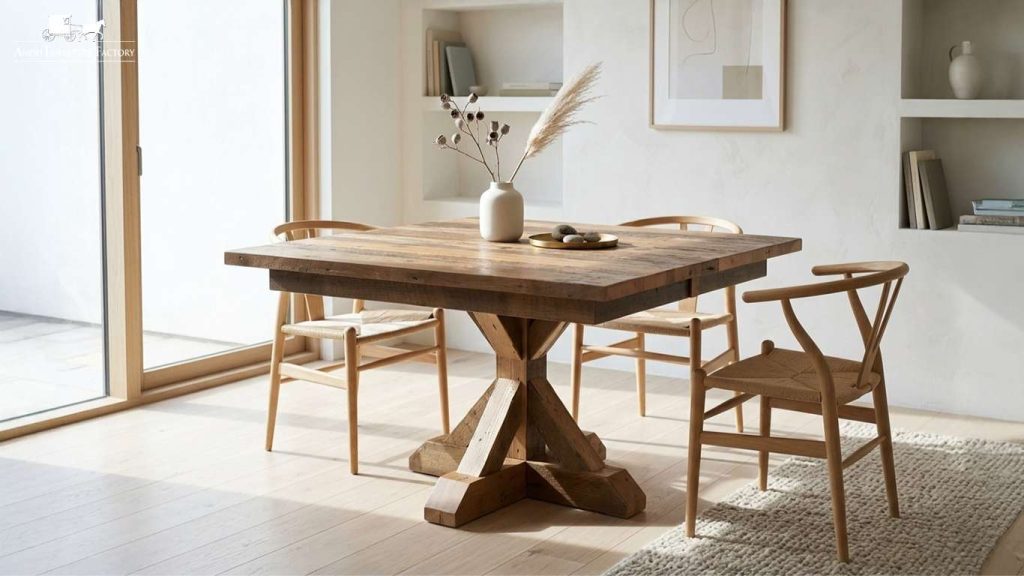
Square tables work best in perfectly symmetrical rooms or when pushed into a corner. Their equal sides mirror the room’s proportions to create a sense of intentional design. We often recommend square tables for multi-purpose spaces where the table must double as a desk against a wall during the workday.
Oval Dining Tables: Streamlined & Space-Stretching
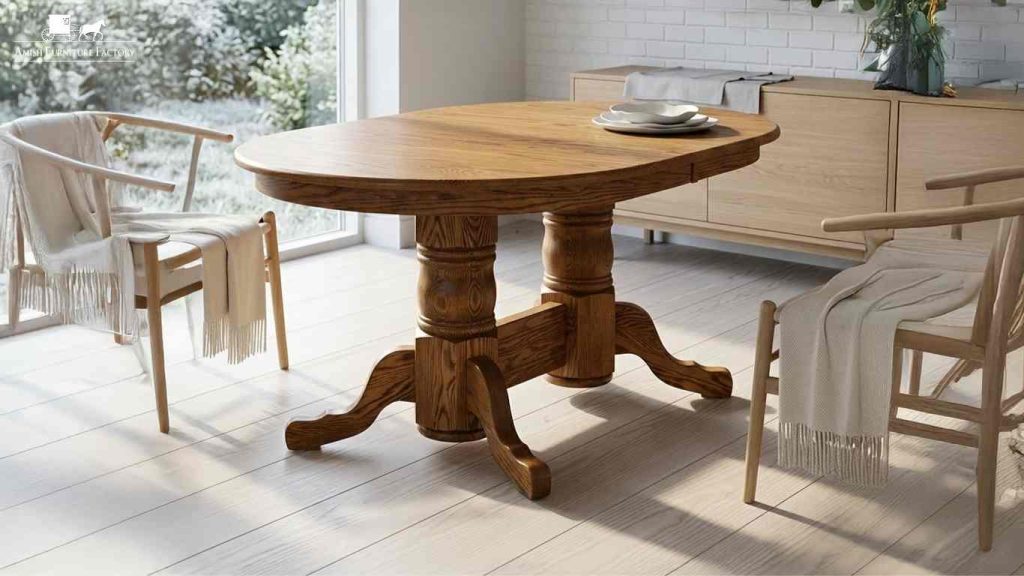
Oval tables combine the seating capacity of a rectangle with the soft edges of a circle. They are the ideal solution for narrow dining alleys that still need to seat six people comfortably. An oval shape provides the length needed for a full spread without the bulky visual weight of a standard rectangle.
Rectangular Dining Tables: Practical & Wall-Friendly
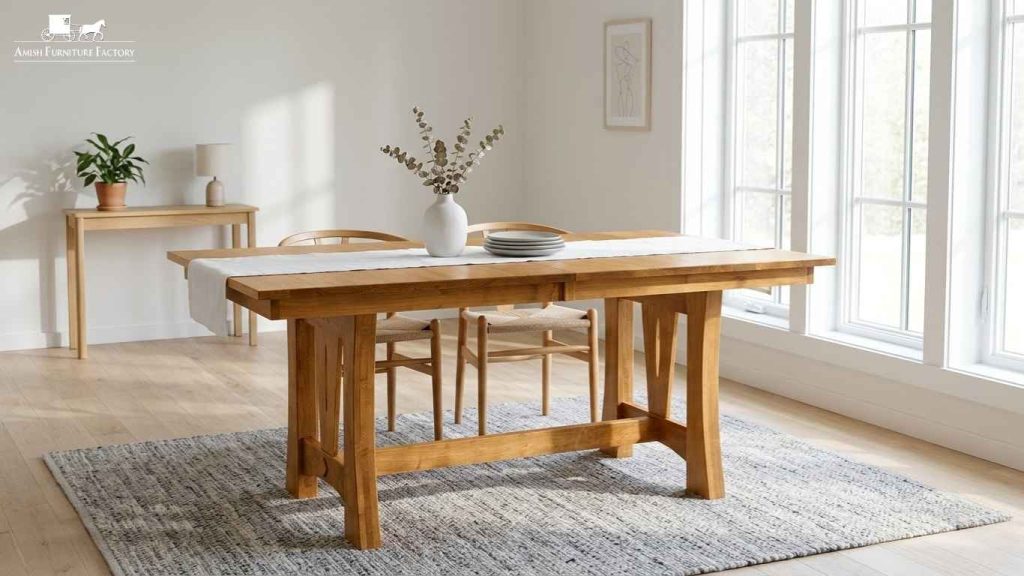
Rectangular tables are the traditional choice for long rooms. In small homes, you can maximize square footage by placing one long side against a wall. If you choose a rectangle for a small room, we recommend our Trestle or Pedestal bases over four corner legs. This allows chairs to tuck in 4–6 inches deeper, clearing the walkway when the table is not in use.
Here’s a quick comparison to help you see how each dining table shape performs in small spaces and the best way to use them in your layout.
Space-Saving Dining Table Features and Shapes You Should Consider
While choosing the right table shape is the first step, many small homes benefit even more from space-saving table designs that adapt to changing needs. Below are some of the most practical options worth considering.
Drop-Leaf Tables
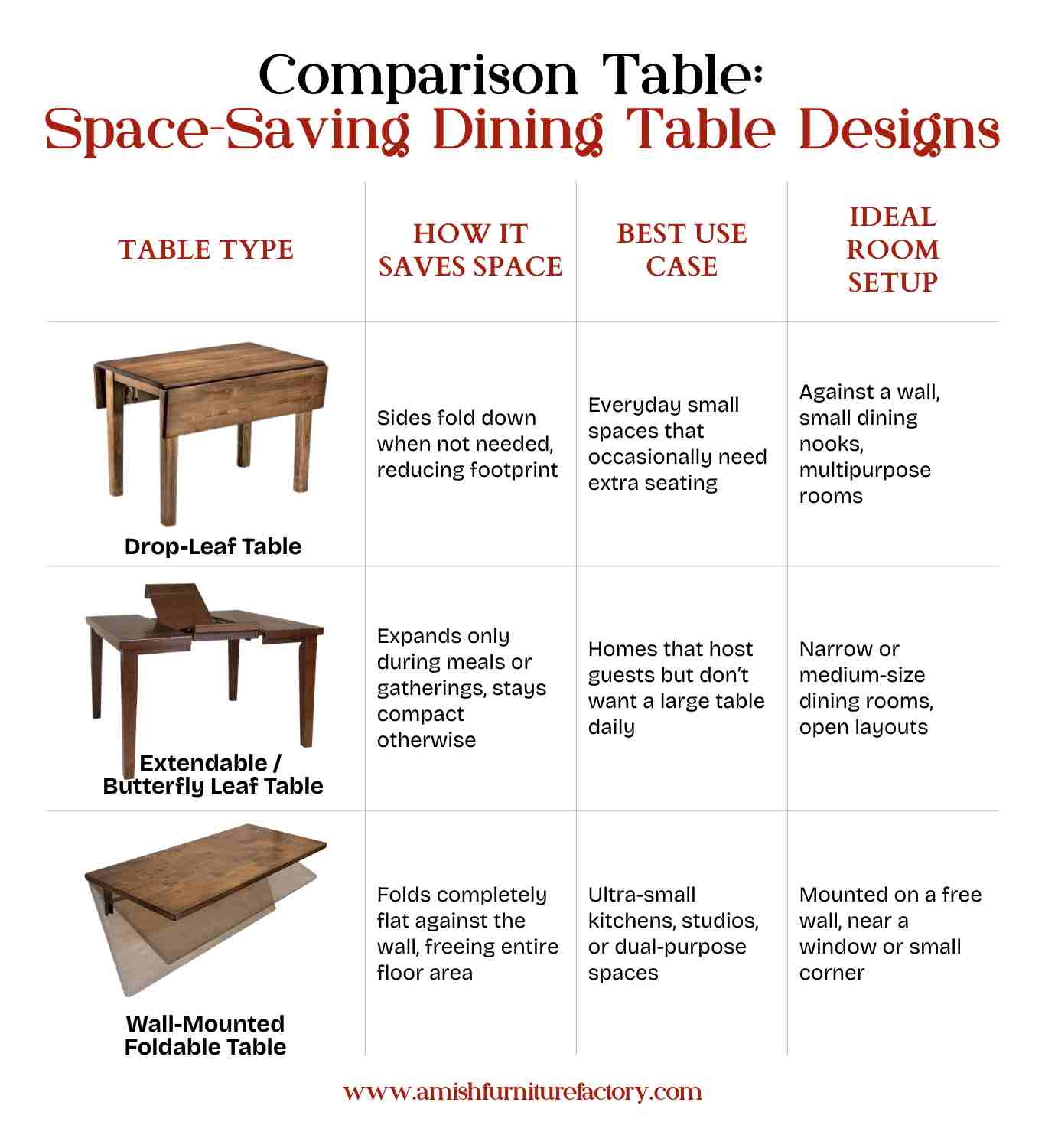
Drop-leaf tables are one of the most adaptable choices for compact dining areas. Their hinged sides lift only when needed, allowing the table to stay small day to day and expand easily for meals or guests. This makes them ideal for apartments, breakfast nooks, and multipurpose rooms where flexibility is essential.
Extendable & Butterfly Leaf Tables
These tables are perfect if you want a full-size dining surface only when necessary. Extendable tables expand by pulling the tabletop apart and inserting an extension panel, while butterfly leaf designs store the leaf inside the table itself for convenience. They’re ideal for small homes that occasionally host more people.
Wall-Mounted Foldable Tables
Wall-mounted foldable tables are the most space-efficient option on this list. They attach directly to the wall and fold completely flat when you’re done using them. This makes them ideal for studio apartments, tiny kitchens, or areas that serve as both dining and workspace.
Here’s a quick comparison to help you see how each space-saving table option works and which setup it’s best suited for.
How to Choose the Right Dining Table for Your Space
Finding the perfect dining table for a small area is about making sure the table fits your lifestyle, layout, and the natural flow of the room. Below are the key factors to consider before making your final choice.
1. Do a Detailed Assessment of Your Room
Start by looking closely at the layout of your dining area. A table should work with the room, not fight against it. Note the room’s shape, potential traffic choke points, and whether the space has a single purpose or doubles as a kitchen, workspace, or living area.
2. Understand Scale, Proportion, and Balance
Even the most beautiful table will look off if it’s the wrong scale. In small rooms, aim for a table that visually “fits” without overwhelming the surroundings. Matching the table shape to the room shape often creates a more harmonious look. Interior designer Kathryn Nelson emphasizes the importance of thoughtful design details:
“Every piece must earn its place. We look at scale, base design, and visual weight just as closely as dimensions. A pedestal base can maximize legroom, lighter finishes reduce heaviness, and transparent or open details help the room feel airy.”
3. Follow the Rule of Clearance (36–48 inches)
A practical rule to remember is giving yourself 36–48 inches (about 90–120 cm) of space between the table edge and the nearest wall or furniture. This clearance ensures you can walk comfortably around the table and pull out chairs without feeling cramped. Pedestal base style free up legroom, making it easier to slide chairs in and out.
4. Choose the Right Dining Table Material
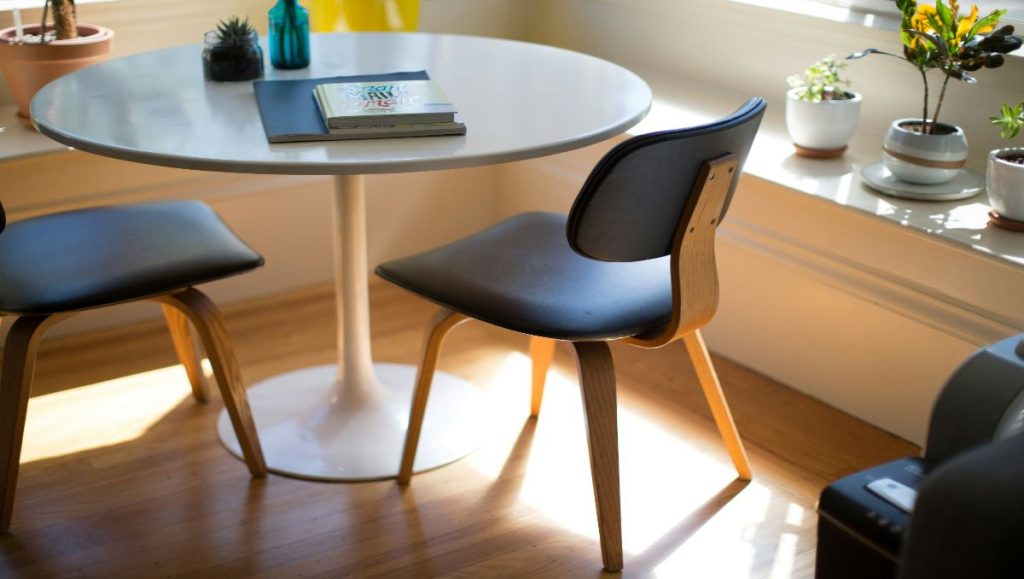
The material you choose affects more than durability. It influences how heavy, bright, or bulky the table feels inside a small room. Light-toned or reflective materials tend to make the space feel more open, while dark, heavy materials add richness but can visually shrink the room.
Whether you’re looking to maximize a tight corner or anchor a grand dining room, our handcrafted Amish dining tables offer the perfect blend of timeless shape and heirloom quality.
Conclusion: Which Dining Table Shape Is Best for a Small Space?
If you’re deciding what shape dining table is best for a small space, round tables are usually the most space-efficient choice because they improve circulation and eliminate corners. However, square tables work well in symmetrical rooms, while narrow layouts may benefit from oval or slim rectangular tables. However, the “best” choice still depends on your room’s shape, traffic flow, and how you use the space daily.
Whether you prefer a round, square, oval, or rectangular table, the goal is the same. It’s to create a layout that feels open, balanced, and comfortable. With the right shape and the right placement, you can make even the smallest dining area feel intentional and inviting.
Frequently Asked Questions
Does a round or square table take less space?
Round tables typically save more usable space because they don’t have corners that jut out into walkways. However, if your table will stay in a corner permanently, a square shape may fit the geometry better. For central placement, round tables almost always feel more spacious.
Can I use a rectangular table in a room that is almost perfectly square?
You can, but be mindful of balance. A rectangular table in a square room can look visually heavy if it’s too long. If you prefer this shape, choose a narrow or shorter model to keep the room from feeling off-center.
Does a round table make a room look bigger?
Yes, a round table can make a room feel more spacious because it has no sharp corners and allows for smoother movement around it. Just ensure there is about 36 inches of clearance around the table so the space doesn’t feel crowded.
When should you not use a round dining table?
Avoid round dining tables in long, narrow rooms, where rectangular tables use space more efficiently. They’re also less practical for larger gatherings, since very large round tables take up more room and can make it harder for diners to reach the center.