
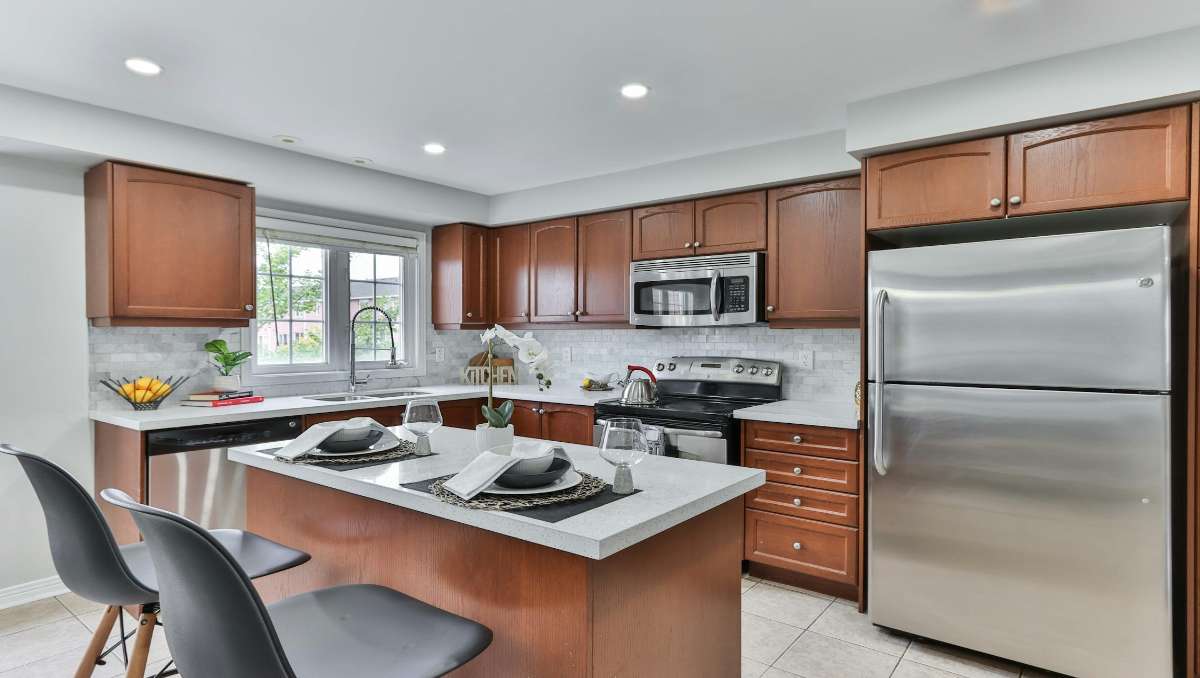
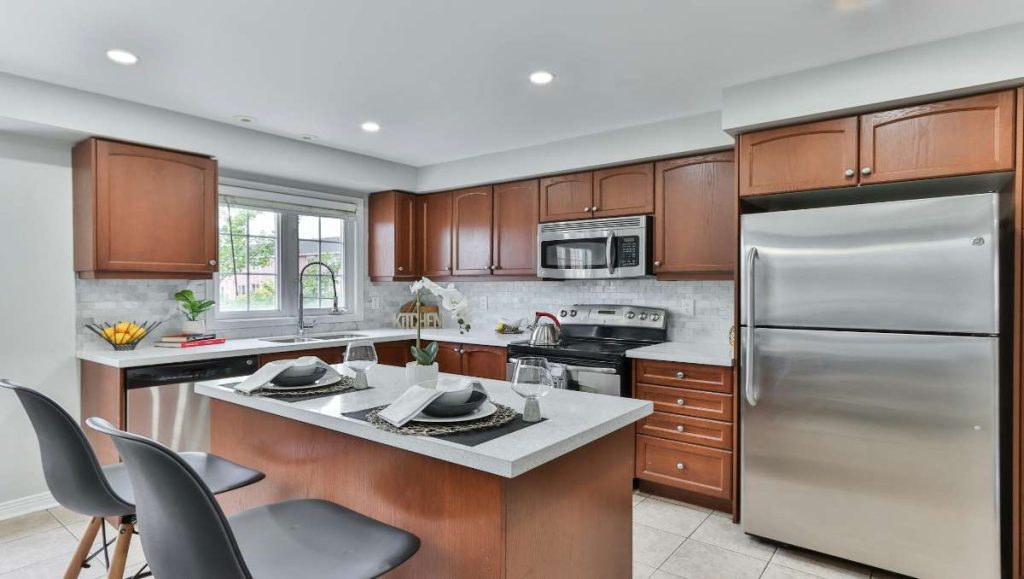
When ordering custom Amish cabinets, the details and cabinet depth can quietly make or break how your kitchen feels day to day. Upper cabinets, in particular, need to strike a careful balance. Deep enough to be practical, but not so deep that they crowd your workspace or block sightlines. If you’ve ever found yourself wondering how deep are upper cabinets, you’re not alone. It’s a common question, and the answer isn’t always as straightforward as a single measurement, especially when custom craftsmanship enters the picture.
Key Takeaways
- Custom Amish upper cabinets are typically 12–15 inches deep and can be built to any depth needed, with 15 inches popular for larger dishware.
- Shallow (10–11″) improves openness, 12–13″ balances storage and comfort, and 14–15″+ maximizes storage in larger or specialty areas.
- The right depth depends on kitchen size, ceiling height, and daily use.
This guide breaks down the standard depths of upper cabinets, why Amish builders often approach it differently, and how those choices can affect storage, comfort, and the overall kitchen flow.
What Are Upper Cabinets and What Do They Do?
Upper cabinets are wall-mounted units installed above countertops and appliances to store everyday items while keeping counters clear. Because they sit at eye level, their size and depth significantly affect kitchen comfort, visibility, and overall flow.
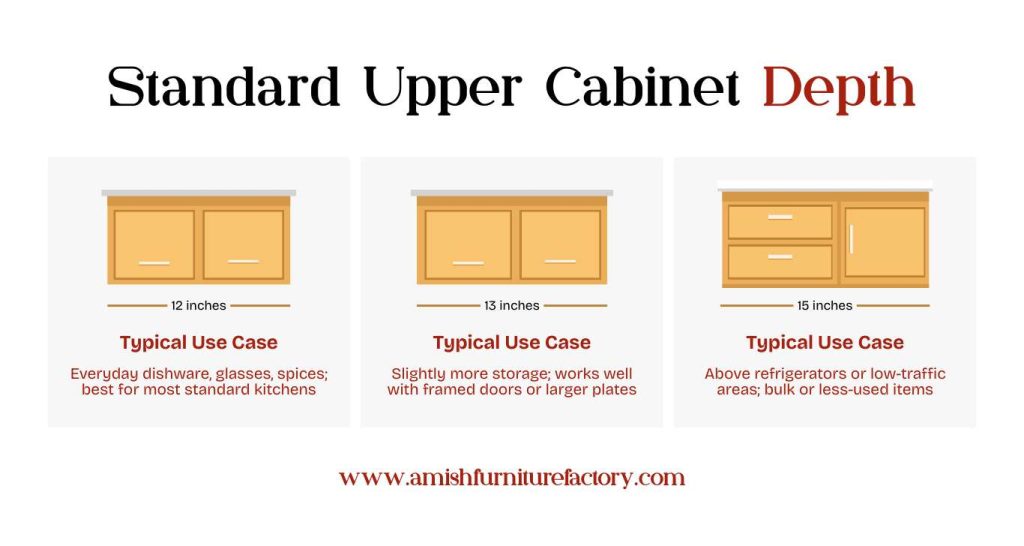
Most upper cabinets are 12 inches deep, with typical depths ranging from 12–15 inches. The 12-inch standard pairs well with 24-inch base cabinets and maintains head clearance, while 15-inch depths are often used above refrigerators or for specialty storage.
How Amish Cabinet Makers Approach Upper Cabinet Depth
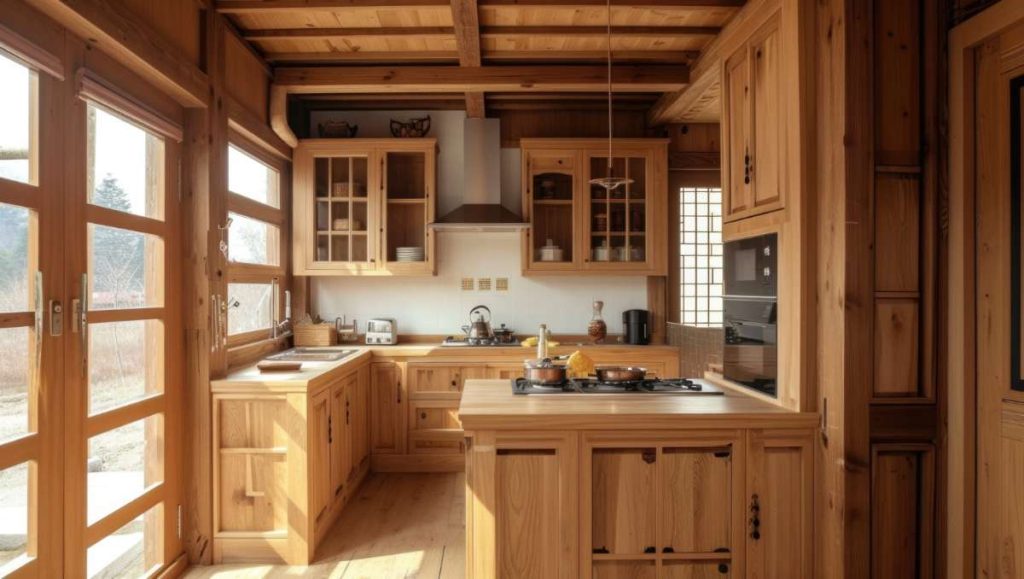
Amish cabinet makers don’t rely on preset dimensions. They base upper cabinet depth on how the kitchen will actually be used. Instead of following mass-produced standards, they consider ceiling height, wall length, user height, and how people move through the space. Because each cabinet is built to order, depth can be adjusted in small but meaningful ways to improve comfort and workflow, especially in older homes or narrow kitchens where standard sizes feel “off.” The result is cabinetry that fits the space naturally and supports long-term usability.
Common Upper Cabinet Depth Options When Ordering Amish Cabinets
When ordering custom Amish cabinets, you’re not limited to a single standard depth. Instead, you can choose from several practical ranges depending on storage needs, kitchen size, and how open you want the space to feel. Below are the most common upper cabinet depth options:
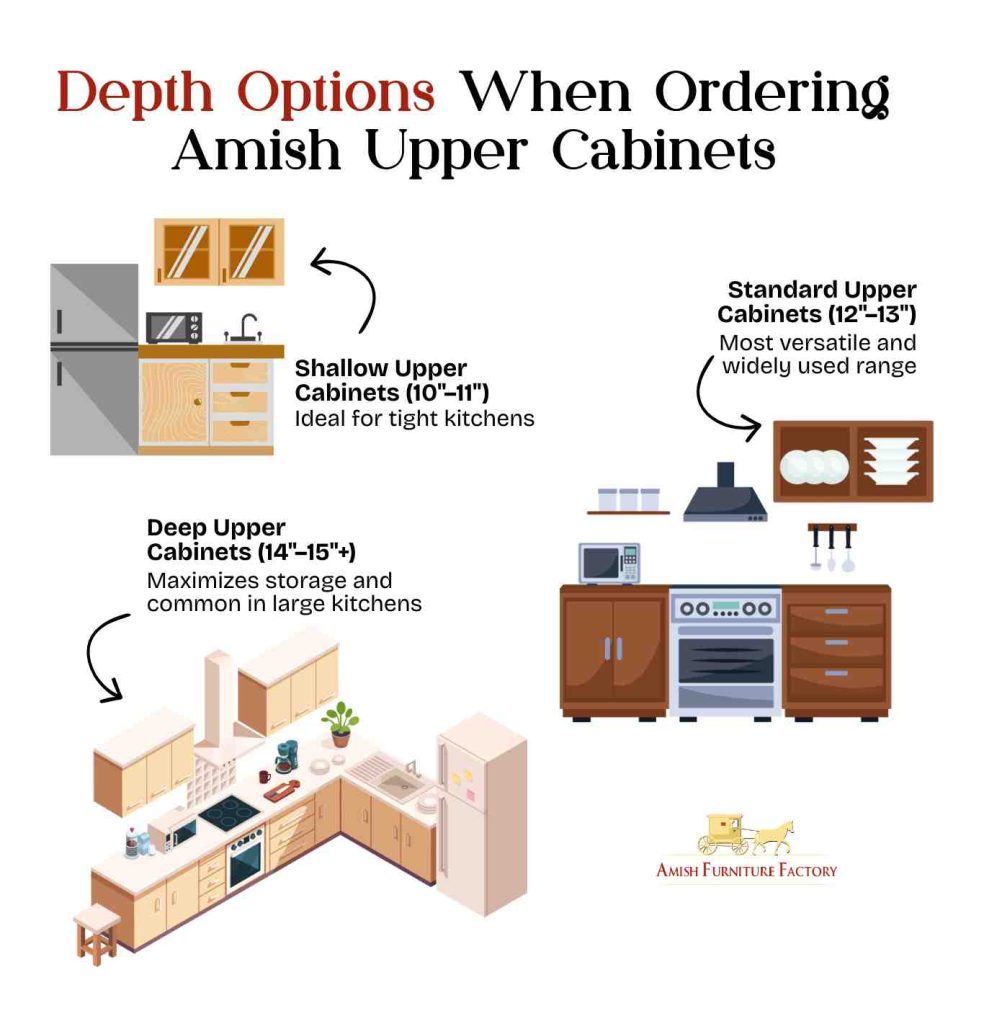
Shallow Upper Cabinets (10″–11″)
Shallow upper cabinets are ideal for tight kitchens or areas where openness and visibility matter most. They reduce the risk of bumping your head, allow more light to reach the countertop, and work well for storing smaller items like glasses, spices, and everyday dishware. This depth has also become increasingly popular in modern kitchen design, where homeowners prefer clean sightlines and a lighter, less bulky look above the counter.
Standard Upper Cabinets (12″–13″)
This is the most versatile and widely used range. Standard-depth upper cabinets provide enough room for plates, bowls, and pantry items without overwhelming the workspace below. Many homeowners find this depth to be the sweet spot, offering balanced storage while maintaining comfortable clearance above counters.
Deep Upper Cabinets (14″–15″+)
Deep upper cabinets maximize storage and are often used in specific zones rather than across an entire kitchen. They’re common above refrigerators, in pantry walls, or in kitchens with generous square footage. While they offer extra capacity for bulk items or large serving pieces, they’re best planned carefully to avoid making the kitchen feel heavy or closed in. In larger and luxury kitchens, 15-inch or deeper uppers are becoming more common because expansive layouts can support the added visual weight and homeowners often want maximum storage with a fully built-in, custom appearance.
How Ceiling Height and Depth Shape Upper Cabinet Design
Ceiling height plays a subtle but important role in determining the ideal depth of upper cabinets, because it affects both comfort and the overall look of the kitchen. In rooms with standard 8-foot ceilings, deeper uppers can feel heavy and encroach on headroom. Higher ceilings (9 feet and above) offer more freedom. The added vertical space allows for deeper cabinets or even multi-tiered uppers without overwhelming the room, making it easier to increase storage while maintaining visual balance.
Depth also influences how the kitchen functions day to day. Cabinets that are too deep can make items harder to see and reach, while standard-depth uppers keep essentials within comfortable reach and clear view. Visually, depth affects the room’s character. Shallower cabinets create a lighter, more open look, whereas deeper cabinets add visual weight and a more built-in feel suited to larger or traditional kitchens.
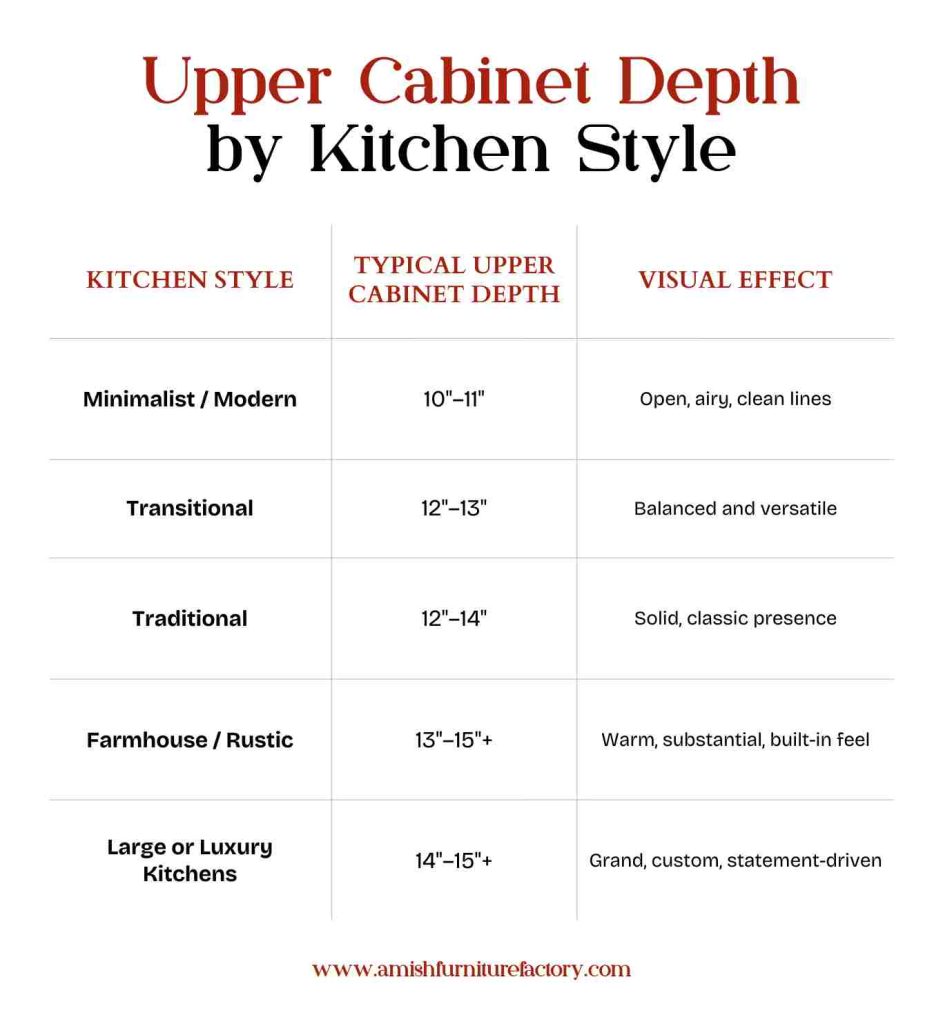
The goal is to choose a depth that feels natural for the ceiling height, supports practical storage, and maintains pleasing sightlines throughout the kitchen. The table below shows how different kitchen styles typically pair with upper cabinet depths and the visual effect they create.
How to Choose the Right Upper Cabinet Depth for Your Space
Choosing the right upper cabinet depth comes down to how your space is used. Custom Amish cabinets give you the flexibility to fine-tune these decisions, but a clear framework makes the process much easier.
1. Consider Your Space Layout
The overall layout and kitchen dimensions set the boundaries for what will feel comfortable. Narrow galley kitchens, tight walkways, or heavy traffic areas benefit from shallower upper cabinets to preserve headroom and movement. More open layouts, such as L-shaped or U-shaped kitchens, can often accommodate standard or slightly deeper cabinets without feeling crowded.
2. Match Depth to Storage Needs
Not every kitchen needs maximum depth everywhere. If you primarily store plates, cups, and everyday items, standard depths are usually sufficient. Deeper cabinets make more sense for bulk storage, large serving pieces, or areas used less frequently, such as above refrigerators or pantry walls.
3. Account for Ceiling Height and Cabinet Placement
Ceiling height influences how deep cabinets feel once installed. Higher ceilings allow cabinets to be mounted slightly higher, which can comfortably support deeper depths. In rooms with lower ceilings, reducing depth helps maintain proportion and avoids a top-heavy look.
4. Think About Daily Reach and Comfort
Depth directly affects accessibility. Cabinets that are too deep can force awkward reaching and reduce visibility, especially for shorter users. Prioritizing ease of reach for frequently used items leads to a kitchen that feels more natural and less tiring to use over time.
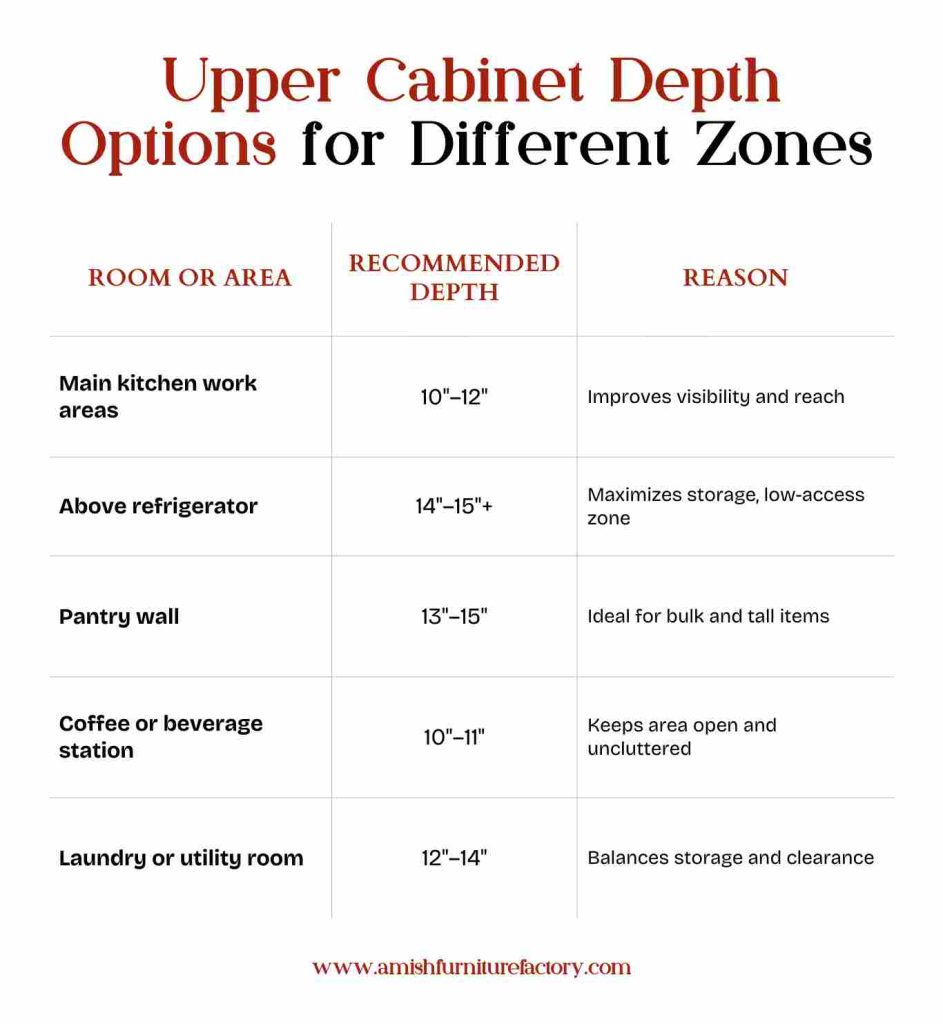
5. Consider Depth Adjustments for Specific Rooms
Different rooms and even different zones within the same kitchen often benefit from different cabinet depths. Adjusting depth based on function allows you to maximize usability without sacrificing comfort or aesthetics.
The table below highlights common room-specific applications and why certain depths work better in each case.
If you’re looking to elevate your kitchen’s style beyond standard storage, consider swapping traditional upper units for curio and display cabinets to showcase your favorite pieces with elegance.
Conclusion: Why Custom Amish Cabinets Are Worth the Investment
Custom Amish cabinets offer beautiful craftsmanship and provide a level of precision, durability, and personalization that stock cabinets rarely match. When it comes to upper cabinet depth, this means you can select cabinet dimensions that perfectly suit your kitchen layout, ceiling height, storage needs, and daily kitchen workflow. With Amish cabinets, depth is a carefully considered design choice that balances practicality, kitchen ergonomics, and aesthetics. Investing in custom cabinetry ensures your kitchen works for you, not the other way around, while adding long-lasting value and timeless appeal.
Frequently Asked Questions
Can upper cabinets be 24″ deep?
Technically, yes. However, 24″ is extremely deep for upper cabinets. Most kitchens use 12″–15″ depths to maintain comfort and accessibility. Cabinets deeper than 15″ can be difficult to reach and may overwhelm the space visually, so they’re usually reserved for pantry walls or areas where the upper cabinets won’t be used daily.
Are deeper upper cabinets harder to access on a daily basis?
Yes, as depth increases, items stored at the back can become harder to reach. For everyday kitchen use, standard or slightly deeper cabinets (12″–13″) are often more practical.
Does custom upper cabinet depth significantly increase cost?
Adjusting depth slightly usually has minimal impact on cost. The main factor is whether the change requires additional cabinet materials, special wood joinery, or complex installation. With Amish cabinets, small customizations are often built into the standard pricing structure, making it a worthwhile investment for improved usability.
Is there a maximum depth for upper cabinets before they require extra structural reinforcement or floor support?
Yes, very deep or oversized upper cabinets, typically above 15″–16″, may require additional bracing or wall reinforcement to safely support the added weight, especially if filled with heavy items. Custom Amish builders account for this during design and installation to ensure durability and kitchen safety.