
A beautiful wood table has a way of grounding a room; it feels warm, lived-in, and timeless. But keeping that natural grain visible while still shielding it from scratches, spills, and daily wear can feel like a balancing act. If you’ve been wondering how to protect wood table surfaces without burying them under thick varnish or bulky covers, you’re not alone. The good news—with the right finishes and a bit of thoughtful care, you can preserve your table’s character and let the wood’s beauty stay front and center.
Key Takeaways:
- To protect a wood table without hiding its natural beauty, prep the wood properly before applying any protection and use thin coats of oils, wax, or matte to keep the natural look.
- When using a wood table, use physical barriers like tablecloths, placemats, runners, and coasters, especially for hot or wet items.
- Maintain your finish periodically for long-lasting protection.
Below, you’ll find a practical, step-by-step guide on how to protect a wood table without hiding the character that makes it special.
Understanding How Protection Works: Penetration vs. Surface Barriers
Wood protection comes down to understanding where the defense actually happens—inside the wood or on top of it. Penetrating finishes like oils and hardwax oils seep into the grain, strengthening the fibers from within. They enhance color and texture without forming a noticeable film, which is why many people prefer them for keeping a table looking raw and natural.
Surface barriers, on the other hand, sit on top of the wood and act as a physical shield against scratches, stains, heat, and heavy use. These include film-forming coatings like polyurethane, varnish, conversion varnish, and certain water-based finishes. Knowing the difference helps you choose the right approach based on how natural you want your table to look and how much protection your lifestyle demands.
Preparing Your Wood Table for Long-Lasting Protection
Before applying any protective product, you need a clean, smooth surface that will accept the finish evenly. This step helps the wood breathe, absorb oils properly, and maintain a natural texture.
1. Clean the Surface Thoroughly
Start by wiping the table with a slightly damp microfiber cloth to remove dust, fingerprints, and surface dirt. If the table has sticky spots, water rings, or grime buildup, use a gentle wood-safe cleaner or a mix of mild soap and water. Avoid abrasive chemical cleaners.
2. Remove Old Finish (If Needed)
If your table already has a worn or uneven finish, lightly stripping or sanding may be required. You don’t need to remove every trace of finish, just ensure the surface is consistent and receptive to new protection.
3. Light Sanding for a Smooth, Even Base
Use 120 → 180 → 220 grit sandpaper to create a uniform, smooth surface. Always sand with the grain to avoid micro-scratches that become visible once oil or wax is applied. After sanding, vacuum dust and wipe with a clean microfiber cloth.
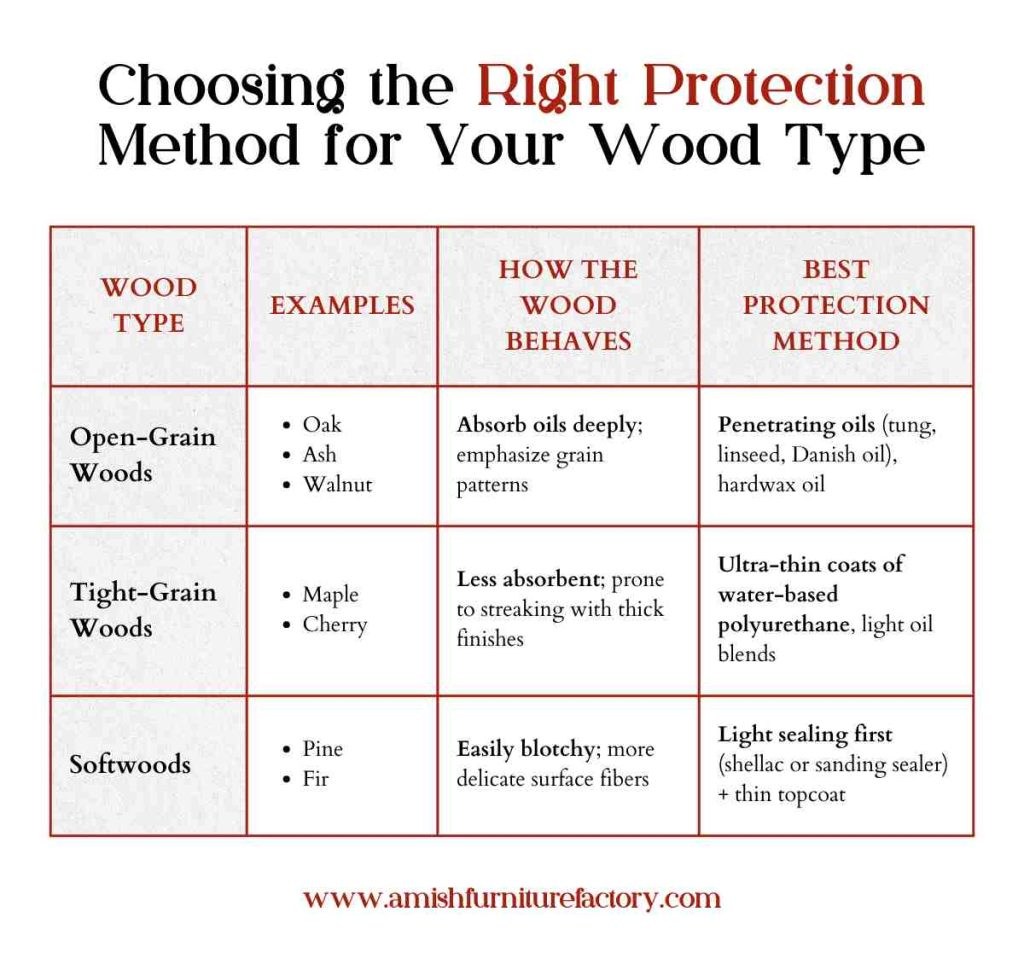
4. Choose the Right Protection Method for Your Wood Type
Different woods behave differently. Your choice of protection determines how natural the wood will look. Here’s how to choose the right protection method for your wood type:
Applying Protective Products Without Masking the Grain
Once the table is prepped, you can apply finishes that protect without forming a thick plastic-like barrier. The key is thin layers, patience, and breathable products.
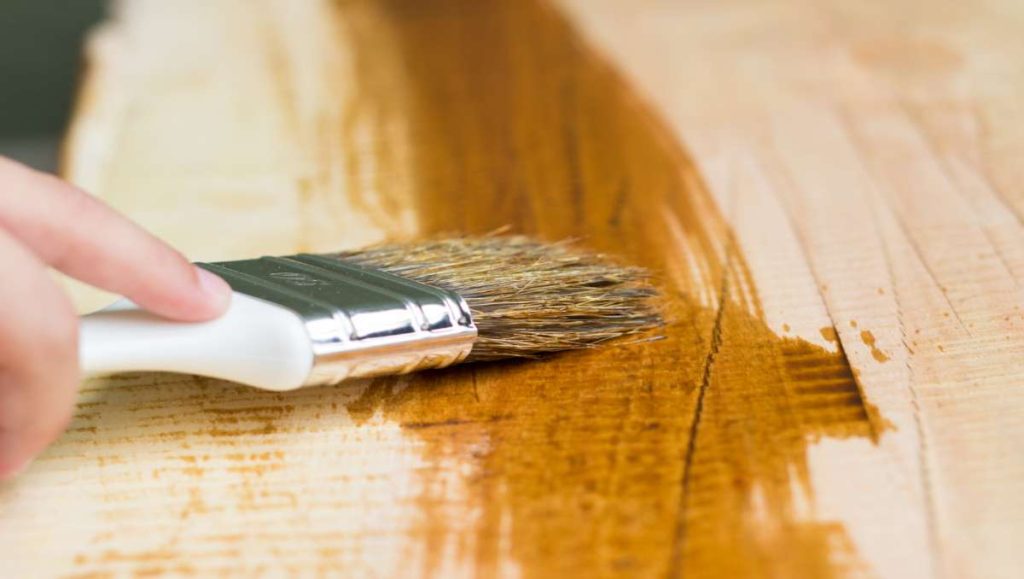
Use Penetrating Oils to Enrich the Grain
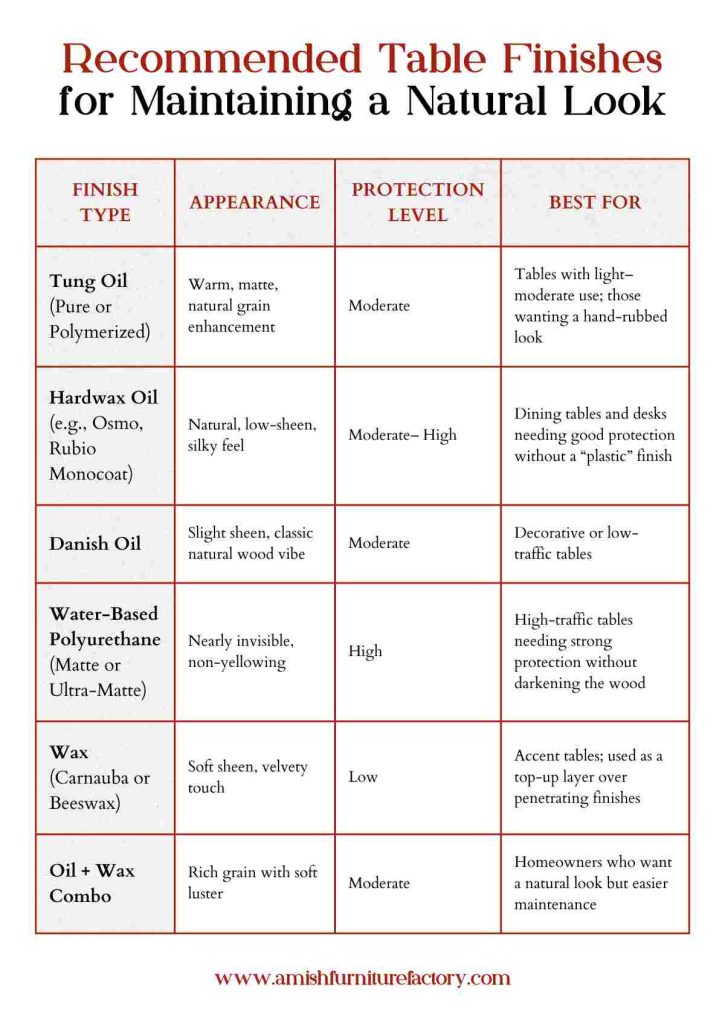
Penetrating oils are ideal when you want the table to look as close to raw wood as possible while gaining subtle protection, as they seep into the fibers to enhance depth and color rather than forming a surface film. Options like tung oil, boiled linseed oil, and Danish oil add warmth and clarity to the grain, and applying them is simple: wipe on a thin coat, allow it to soak for several minutes, then remove all excess so the wood absorbs only what it needs.
Layer Wax for a Soft, Natural Finish
Wax creates a gentle, velvety sheen that preserves the tactile quality of real wood, making it a great companion finish when layered over oil. Applied sparingly in thin, even coats, wax fills minor pores and adds a soft barrier against everyday wear without altering the surface color or producing shine.
Apply Thin Coats of Water-Based Varnish or Polyurethane
For households needing stronger protection without sacrificing the table’s natural appearance, matte or ultra-matte water-based polyurethane is a reliable option because it dries clear and doesn’t amber the wood. The key is applying very thin coats with slow, even strokes to avoid bubbles or streaks, lightly sanding between layers to keep the texture smooth.
Avoid Over-Application
Over-applying any furniture finish—oil, wax, or polyurethane—can create build-up that clouds the wood’s natural beauty, leading to tackiness, streaks, or a thick film that distracts from the grain.
Here’s a guide for recommended table finishes for maintaining a natural look:
Care Tips to Maintain Your Wood Table’s Natural Beauty
Daily habits matter just as much as the finish you choose. A beautiful table stays beautiful when protected from the small things that cause gradual wear.
1. Use Furniture Accessories and Protective Barriers
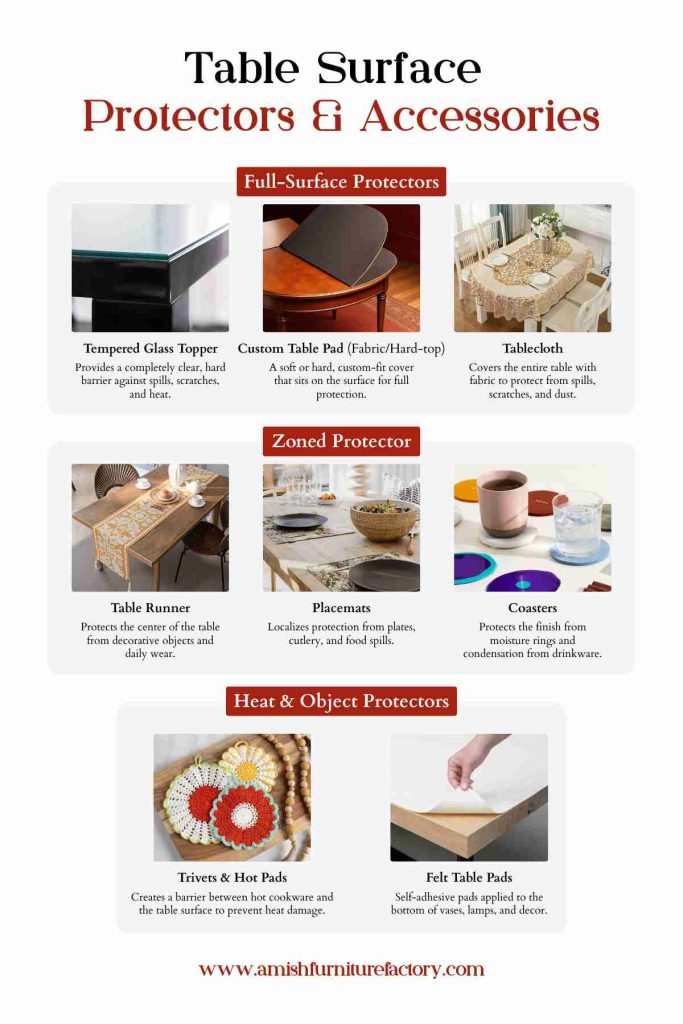
Physical barriers are some of the easiest and most effective ways to shield a wood table from everyday hazards. High-quality placemats, cloth runners, and felt-backed coasters help prevent scratches, scuffs, and heat marks without hiding the table itself. For heavy-use areas like a dining table, adding a clear tempered glass topper can provide full coverage while letting the wood grain stay completely visible.
2. Wipe Up Spills Immediately and Clean Regularly
Standing water is the #1 cause of wood stains. Always blot (never rub) spills, especially wine, citrus, vinegar, or hot liquids. Even a few minutes of moisture sitting on the surface can seep into the grain. Acting quickly prevents liquids from penetrating the finish and keeps the surface from swelling or warping. Regular cleaning is the easiest way to prevent long-term damage, but it has to be done correctly. Use a soft microfiber cloth and a gentle, wood-safe cleaner or a simple mix of mild soap and water.
3. Avoid Direct Sunlight and Extreme Humidity
The environment plays a surprisingly big role in how wood behaves. Wood naturally expands and contracts with changes in humidity, so keeping your home between 40–55% relative humidity reduces warping and cracking over time. Direct sunlight can bleach or darken certain woods, making window placement an important part of protecting your table’s surface.
4. Repair Minor Damage Promptly
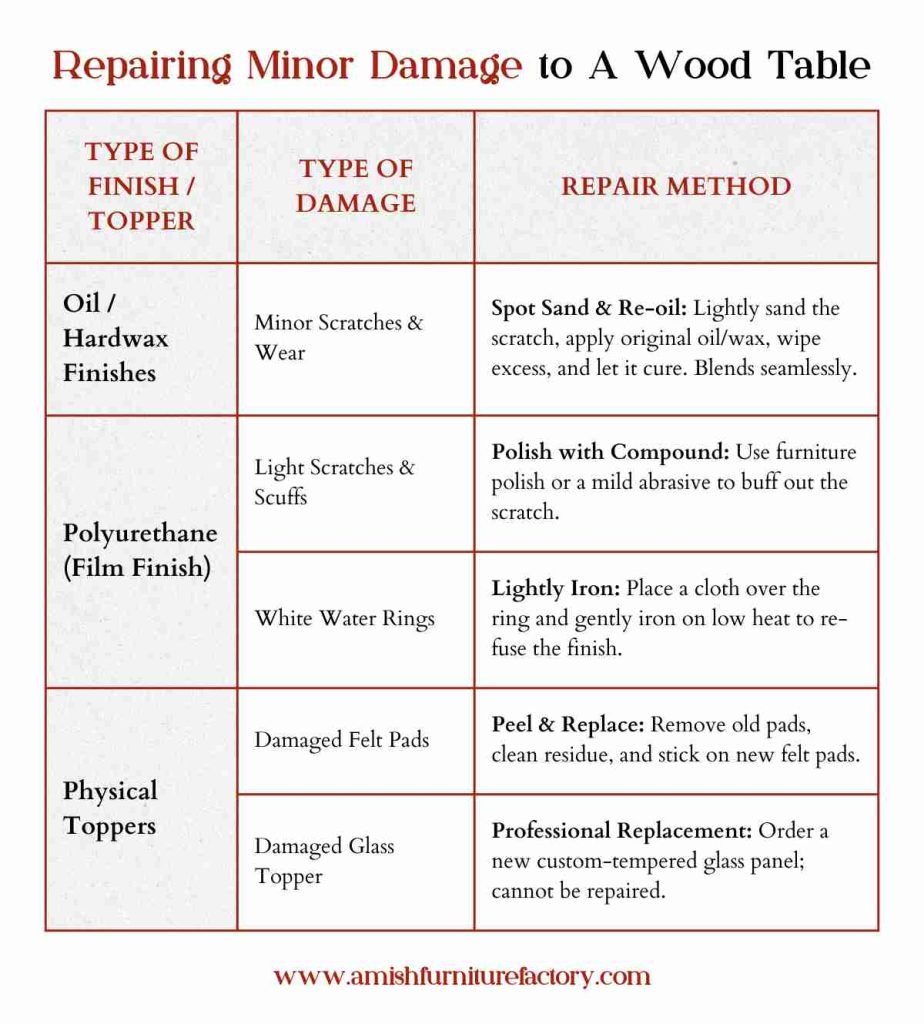
Small dents, scratches, and white heat rings don’t always require a full refinishing job. For light scratches, blending them with a matching wood touch-up marker or a dab of hardwax oil can make them nearly invisible. For darker stains or deeper scratches, gentle sanding of just the affected area followed by spot-finishing usually restores uniformity.
5. Refresh Your Wood Table’s Finish Before It Fails
All finishes wear down eventually, especially on heavily used surfaces, so periodic replenishing keeps protection intact. Penetrating finishes like tung oil or hardwax oil may need reapplication every 6–24 months depending on use, while water-based poly may last years before needing touch-ups. When you notice the surface looking dry, dull, or more vulnerable to water spots, it’s a good sign that a refresh is due.
Ready to bring the timeless Amish dining tables craftsmanship into your home? Discover our curated collection of solid wood tables built to last a lifetime.
Conclusion: Protecting Wood While Keeping Its Natural Beauty
Protecting a wood table without hiding its natural character isn’t about choosing between beauty and durability; it’s about finding the right balance. When you pair a finish that highlights the grain with smart everyday habits and thoughtful long-term maintenance, your table gains both charm and resilience. The goal is not perfection but preservation: keeping the wood’s warmth and personality visible while ensuring it can stand up to real-life use. With the right approach, your table will continue to look like itself—just better protected, better maintained, and more ready for everyday living.
Frequently Asked Questions
What is the best way to protect a wooden table?
The best protection comes from combining a suitable finish with everyday safeguards. A clear, durable finish creates a strong foundation, while accessories like coasters, placemats, and table runners prevent heat, water, and scratches.
How to seal a wood table without polyurethane?
You can seal a wood table naturally using penetrating oils such as pure tung oil, Danish oil, or polymerized linseed oil. Hardwax oils are another great option—they offer the natural look of oil with added durability.
What is the most durable finish for a wood table?
For maximum durability, water-based polyurethane and conversion varnish are the top choices. They provide strong resistance against scratches, moisture, and heat. If you prefer a more natural aesthetic, high-quality hardwax oils offer a middle ground.
Do glass table toppers trap moisture or damage the finish beneath them?
Clear tempered glass toppers generally do not trap moisture or harm the finish—especially when paired with small, transparent bumpers to allow airflow. They’re an excellent way to preserve the tabletop while keeping its grain fully visible. Just be sure to clean both surfaces occasionally to prevent dust buildup.
Can I use coconut or olive oil to condition my wood table?
It’s best to avoid cooking oils like coconut or olive oil. They can oxidize, become sticky, or even develop odors over time. Instead, use products specifically formulated for wood care, such as tung oil, mineral oil, or hardwax oils.