
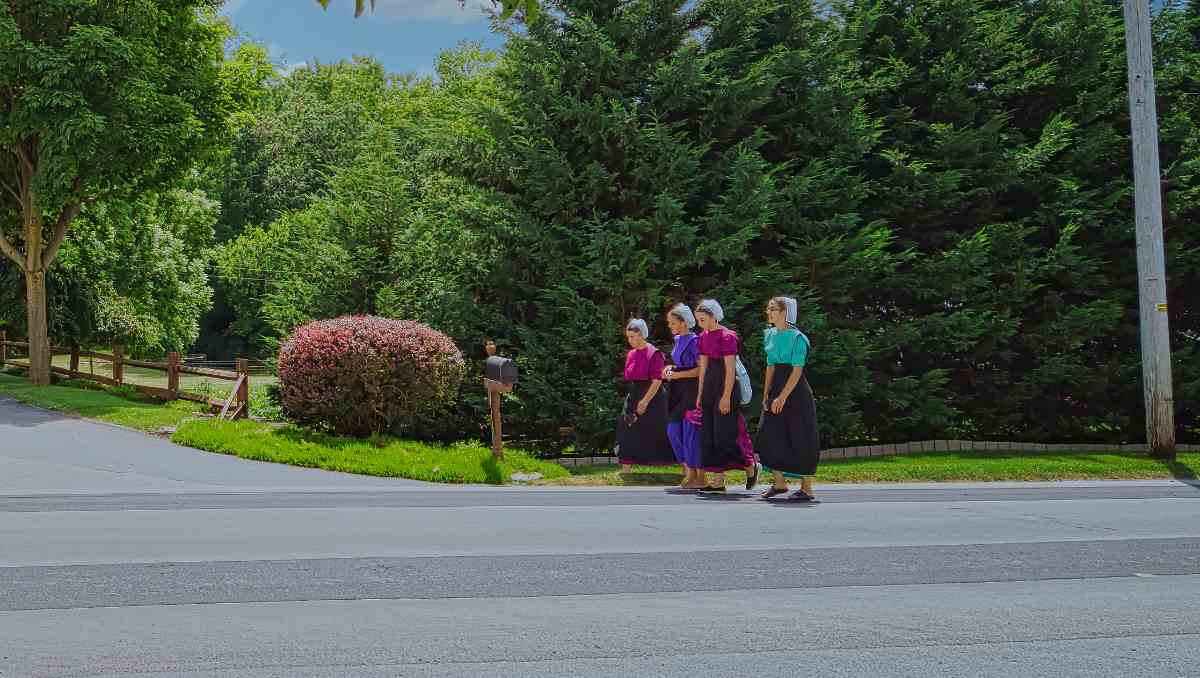
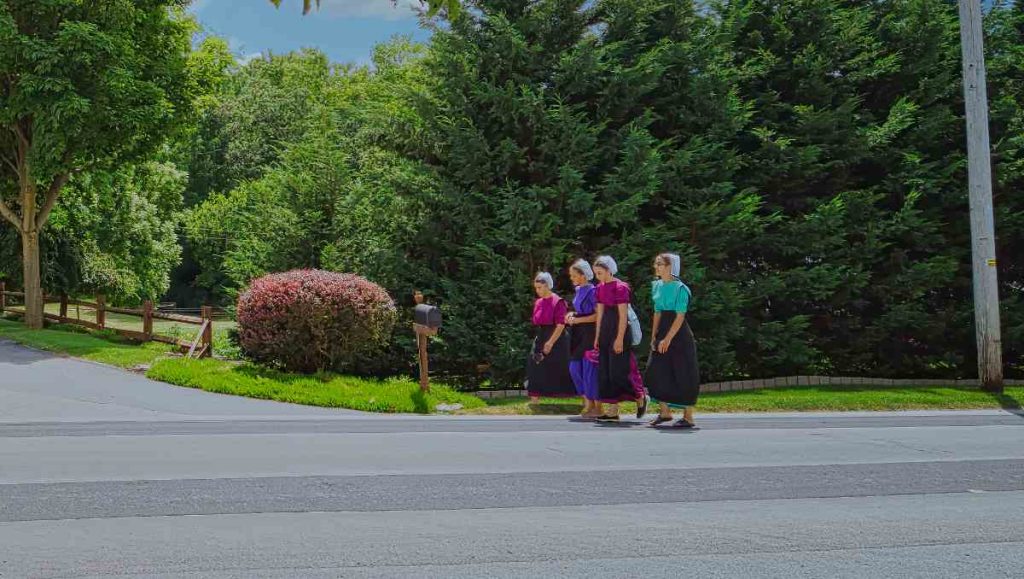
Have you heard of the Amish rite of passage known as “Rumspringa” before? Essentially, this is a time when Amish parents allow their young children (usually age 16) to leave the walls of the Amish community and see what outside life is like. After they’ve experienced it, they’ll have to make a choice as to whether or not they want to continue living the Amish lifestyle.
Key Takeaways:
- The Amish tradition of Rumspringa begins around age 16, offering young Amish men and women the chance to explore life beyond their community’s boundaries.
- Rumspringa varies in length, allowing each individual to take the time they need to explore. While some may return within a few months, others might take years, with most deciding before turning 30.
- The conclusion of Rumspringa is a turning point, leading to either a return to the Amish community and a commitment to its values or a departure to live outside it.
In this article, we’ll break down what Rumspringa really means, why it exists, and how it impacts the lives of Amish youth who step outside their traditional community, often for the first time.
What is Rumspringa?
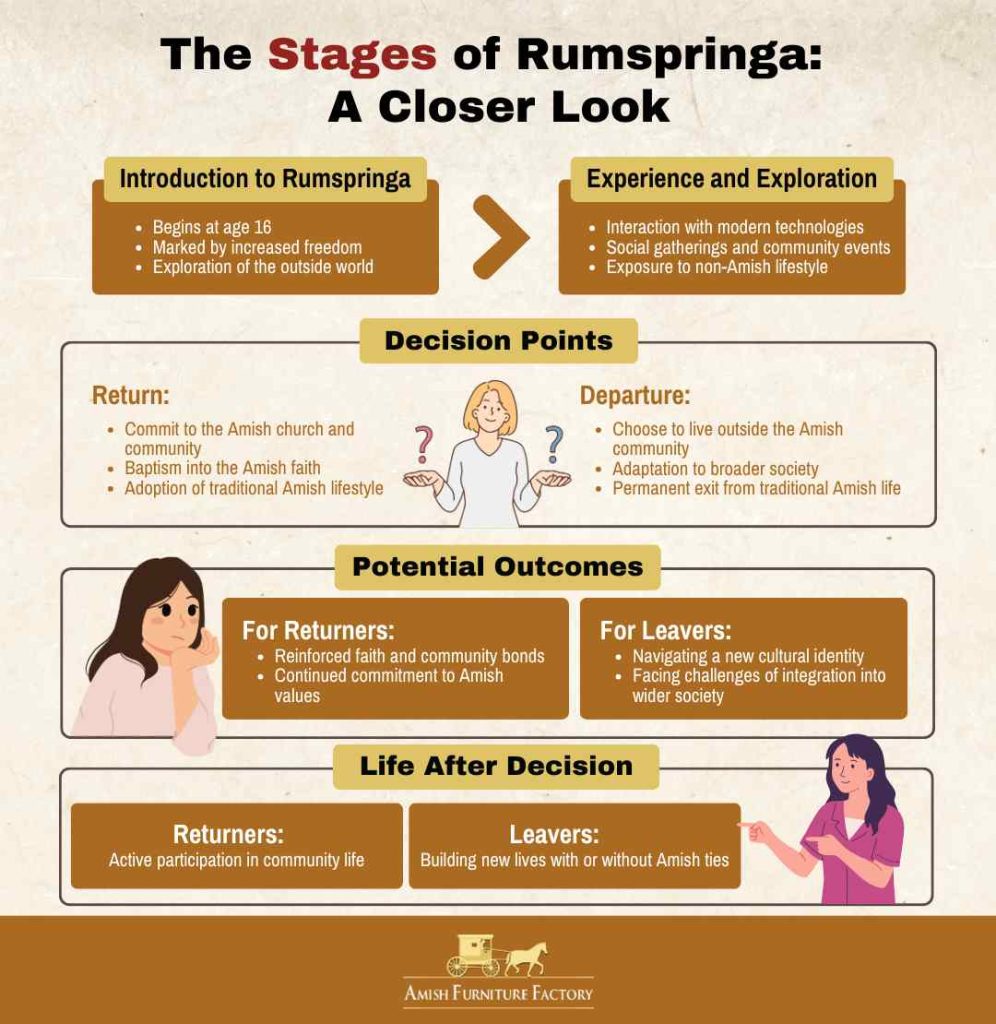
Rumspringa, which means “running around” in Pennsylvania German, is a period when Amish teens—usually starting around age 16—get the chance to explore life outside their community. During this time, they might wear non-Amish clothes, use phones or cars, go to parties, or even visit bars. For many, it’s their first real taste of modern life.
Since they’re not yet baptized, they aren’t bound by church rules, and parents generally allow this phase without judgment. Some teens keep it low-key—going bowling or still living at home—while others push boundaries more. Either way, Rumspringa gives them space to decide for themselves whether to return to the Amish faith or leave it behind.
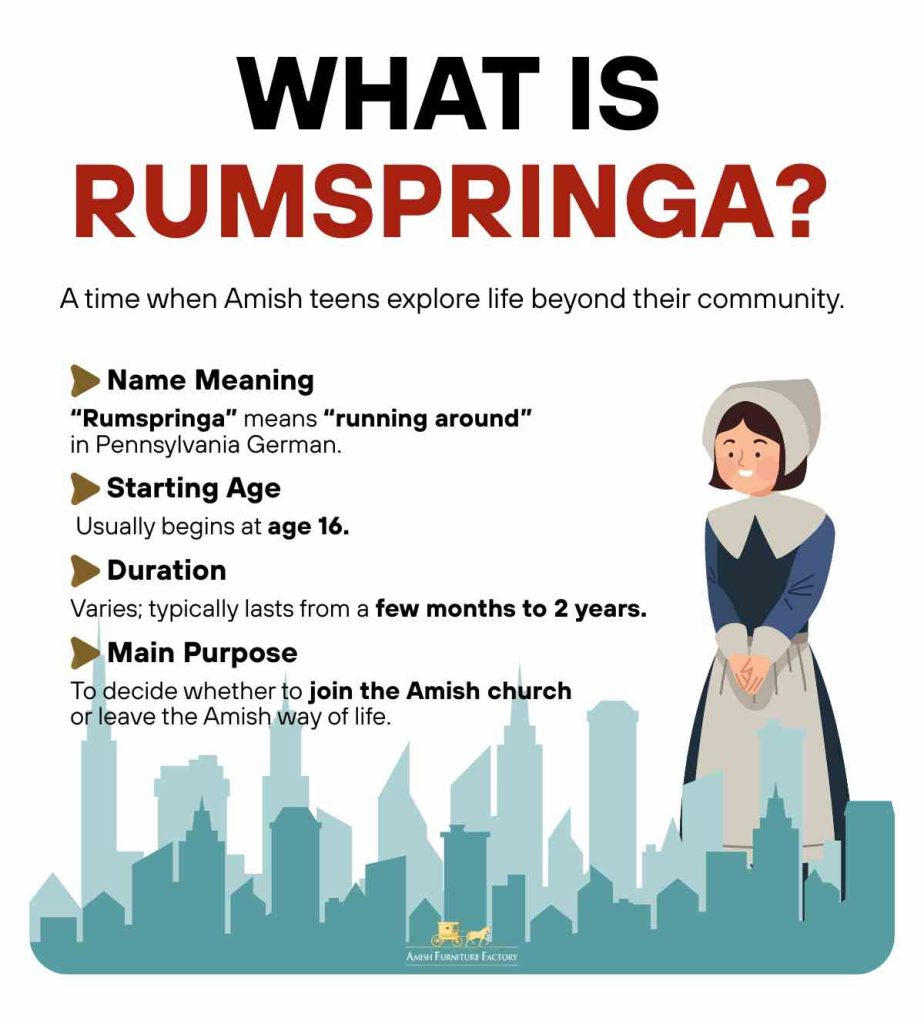
How long does Rumspringa last? The duration varies. For some, it’s a brief sojourn; for others, it’s a more extended journey. It ends not with a birthday or a specific milestone but when the individual feels ready to choose – to leave their explorations behind and commit to the Amish way of life or step away from the community they’ve known all their lives. While the length of Rumspringa varies, most young adults can decide before they turn 30, with the majority deciding within two years.
If you’re interested, here’s a video showing the Rumspringa journey of two teens:
The Amish Rumspringa Rules
Despite what many people think, Rumspringa isn’t just a free-for-all of modern pleasures. Instead, it’s a time for careful exploration that still respects the values of the community.
Here’s a summary of the detailed rules that guide this fascinating period:
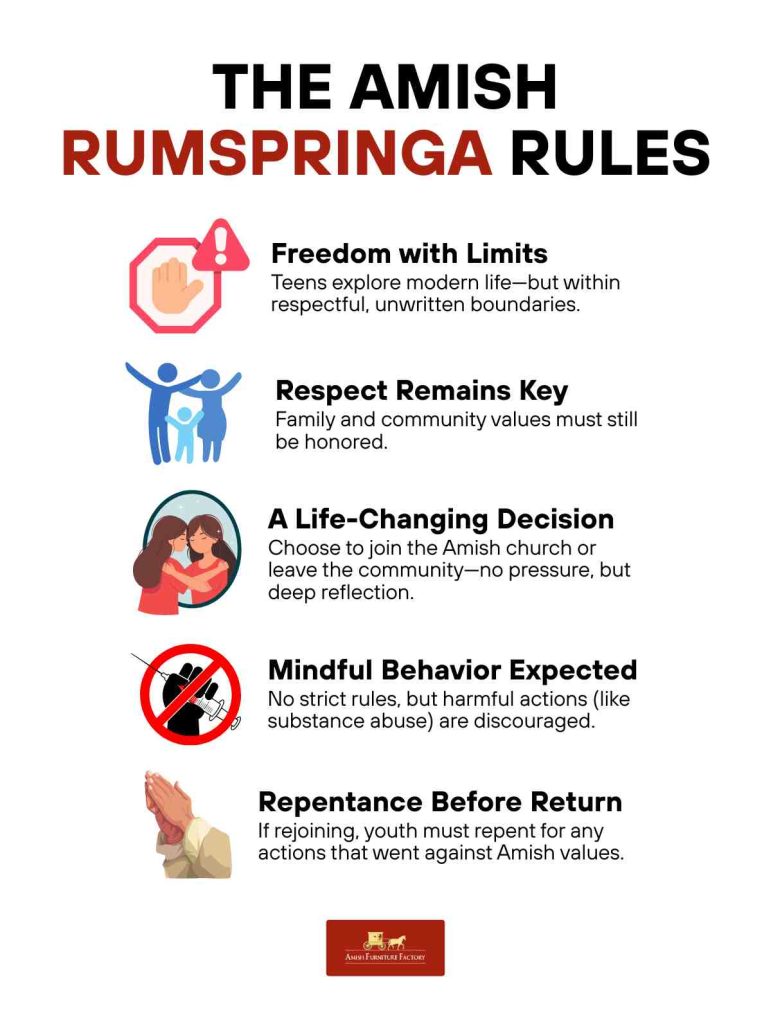
1. Freedom with Boundaries
During Rumspringa, teenagers are allowed more freedom to explore the world outside their Amish communities. However, this freedom comes with unspoken boundaries. Excessive or harmful behaviors are discouraged, and the core values of the Amish faith—like humility, family, and community—are expected to be respected.
2. Respect for Family and Community
Despite the newfound freedom, respect for family and community remains paramount. Teenagers are expected to maintain respect and consideration for their parent’s wishes and the community’s expectations. This respect is crucial in keeping the ties to their roots strong.
3. Decision-Making
The ultimate rule of Rumspringa is the decision every participant must make: whether to join the Amish church and community as a committed adult member or to leave for the outside world. This decision is deeply personal and comes at the end of their Rumspringa journey. The process is not rushed; young people are given time to reflect.
4. Behavioral Guidelines
While there are no strict, universally applied rules about behavior during Rumspringa, communities expect that participants will not engage in activities that starkly contradict Amish values. Substance abuse, for example, is frowned upon.
5. Returning to the Community
For those who choose to return and be baptized into the Amish church, repentance is expected for any actions during Rumspringa that contradict community standards. This act of repentance is necessary to fully integrate into the community and begin adult life within the Amish faith.
The Practices of Rumspringa
During Rumspringa, Amish teens get a rare chance to step outside their traditional world. They might swap plain clothes for jeans, try out smartphones, go to movies, or even attend public school or work in non-Amish jobs. It’s a time to explore life beyond the church—some stay close to home, while others venture farther—but the goal is the same: to figure out whether they want to commit to the Amish way of life.
That final decision is huge. It’s not just about giving up technology or freedom—it’s about choosing community, faith, and identity. According to The Amish (2013) by Kraybill and Johnson-Weiner, most teens do choose to return, even after experiencing the outside world. God Bless America estimates that 85–90% go back, showing how strong the pull of family, tradition, and belonging really is.
Here’s a closer look into what happens during Rumspringa:
The Impact of Social Media
Modern technology, especially social media, has significantly changed the Rumspringa experience. Platforms like Facebook and MeetMe.com enable Amish teens to connect, date, and organize large gatherings more easily than ever. Surprisingly, many teens use these platforms even more actively than their non-Amish peers.
Still, most prefer to socialize with others from similar Amish backgrounds, showing that even amid new freedoms, cultural ties remain strong.
Decision Time: Life After Rumspringa
Life after Rumspringa varies significantly from individual to individual, but one constant remains: the importance of this decision. For many young Amish, the end of Rumspringa brings a decision to be baptized into the Amish church, a commitment to their faith and the Amish way of life.
So, how do you make such an important decision?
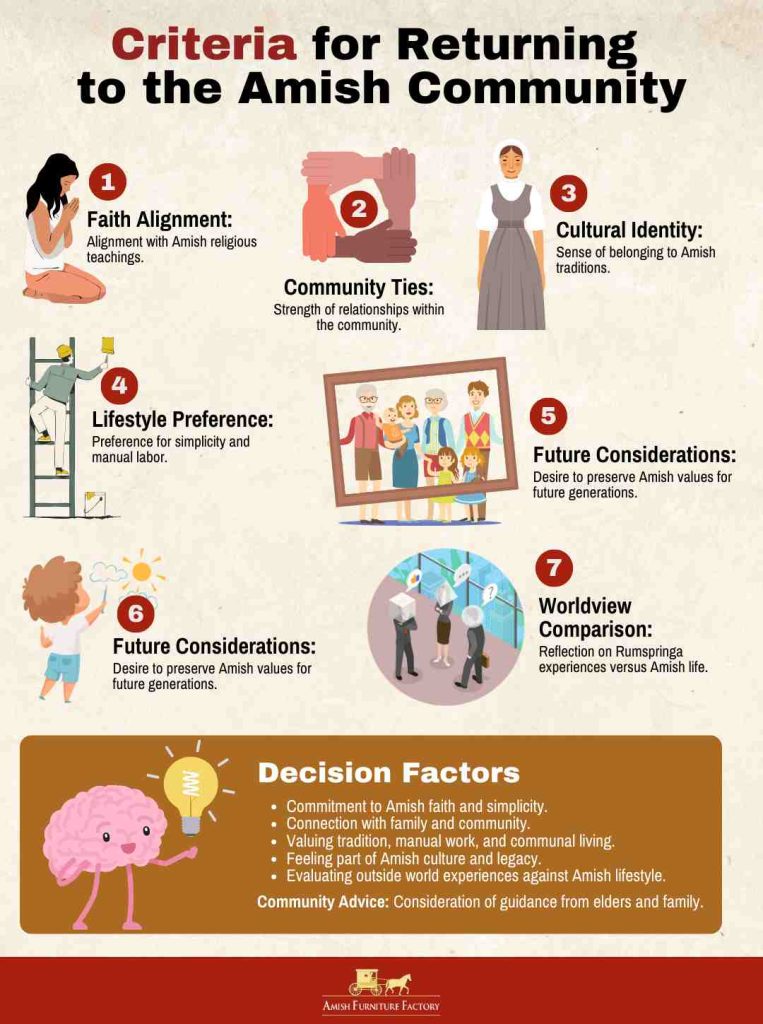
However, this decision is not made lightly. The Amish understand the weight of this commitment; thus, the choice to join the church is made with great care and deliberation. The role of the family in guiding, but not coercing, this decision cannot be overstated.
After Rumspringa
If the individual decides to continue living the Amish lifestyle after returning to the community, he or she will be baptized by the elders and must adhere to the Ordnung from that day forward. If they decide to leave the community after being baptized, they’re shunned from the community and asked to never return. This stance is considered to be an act of love.
Ultimately, most youngsters decide to stay in their community and get Baptized. Some estimates say this number is about 90% of Amish.
Media Surrounding Rumspringa
If you are interested in learning more about this Amish tradition, there are some interesting TV shows and books on the subject. For example, Amish Snow by Roger Rheinheimer is an interesting book that covers one individual’s experience with Rumspringa. There is also Tom Shachtman’s book Rumspringa: To Be or Not To Be Amish, which was published in 2006.
There is also a controversial 2002 documentary about Rumspringa entitled Devil’s Playground. This film was nominated for 3 documentary Emmy Awards. Further, the reality tv show Amish in the City covered Amish youngsters and follows them during Rumspringa.
There are a lot of misconceptions surrounding Rumspringa and what happens during this rite of passage. You might think that a large number of adolescents choose to leave their Amish lifestyles behind after Rumspringa, but, as stated above, this usually isn’t the case. Instead, most return to their community where they’re baptized and continue to live among the Amish for the rest of their life. While the Amish certainly live a strict lifestyle, most enjoy the closeness of their families and community.
Curious to learn more about Amish ways beyond Rumspringa? Delve deeper into their unique traditions and lifestyle in these informative guides.
Conclusion
Rumspringa stands as a pivotal rite of passage within the Amish community. This tradition, deeply rooted in the Amish culture, allows adolescents to experience the world beyond their community boundaries. This grants them the freedom to make informed choices about their faith and lifestyle. It is a testament to the community’s faith in the strength of their upbringing and the enduring values of their way of life.
Frequently Asked Questions
What is the purpose of Rumspringa?
Rumspringa is when Amish teenagers check out life beyond their community and decide if they want to stick with their Amish roots. It’s basically a chance for them to explore before deciding if they’re all in with the Amish way of life.
What can the Amish do during Rumspringa?
During Rumspringa, Amish youth have the freedom to explore the non-Amish world, including modern technology, and attend various social events. This period allows them to experience life outside their community. They do this before deciding whether to commit to the Amish way of life.
Do all Amish do Rumspringa?
Yes, Rumspringa is a common practice among Amish communities, serving as a rite of passage for teenagers. However, the specifics of how it is observed can vary from one community to another.
Where does Rumspringa take place?
Rumspringa primarily takes place both within and just outside Amish communities, allowing youths to interact with the broader society. The experiences and activities during Rumspringa can vary widely depending on the individual and their community’s guidelines.
thank you for the info
I agree nigger it was very usefull
Me too
I love your blog.. very nice colors & theme. Did you create this website yourself or did you hire someone to do it for you? Plz answer back as I’m looking to design my own blog and would like to know where u got this from. appreciate it|
By switching to solar with The Paradigm Energy, you can reduce your carbon footprint, enjoy energy independence, and benefit from long-term savings. Whether you need solar panel installation, battery storage, or maintenance services, their experienced team ensures a seamless transition to clean energy. Contact them today to power your future with renewable energy!
Thanks for every other fantastic post
That 85–90% “return rate” doesn’t prove strong faith or family values. It reflects lack of education, documentation, and real-world preparedness. Amish teens aren’t choosing freely; they’re cornered. Leaving means facing the outside world with only an 8th-grade education (in reality more like pre-K to 4th grade level with no understanding of history, STEM etc), no ID, no money, and the threat of total family shunning.
Calling that a “pull of tradition” ignores the coercion and control built into the system. Denying Amish children opportunities by limiting their access to education and threatening to ban their access to their loved ones-friends is abusive. Wisconsin v Yoder should be overturned.
Thanks for sharing! For anyone serious about car care, premium paint protection film is a great investment.