
Childbirth is a universal experience, but how it unfolds can vary widely depending on culture and values. For the Amish, a community known for its simple living and separation from modern technology, giving birth follows a very different path compared to what most people are familiar with. Their approach raises plenty of questions—about where births take place, who assists, and how medical care fits into their way of life.
Key Takeaways:
- Amish women give birth at home in a more natural way with the assistance of their family and midwives.
- Amish women don’t use pain meds, don’t focus on due dates, and don’t make public pregnancy announcements.
- Mothers rest while others handle chores, making recovery and bonding with their Amish babies easier.
For those who don’t belong to the community, the way the Amish give birth can be intriguing. If you are finding yourself curious about the process, this article can help you understand them better.
Where are Amish Babies Born?
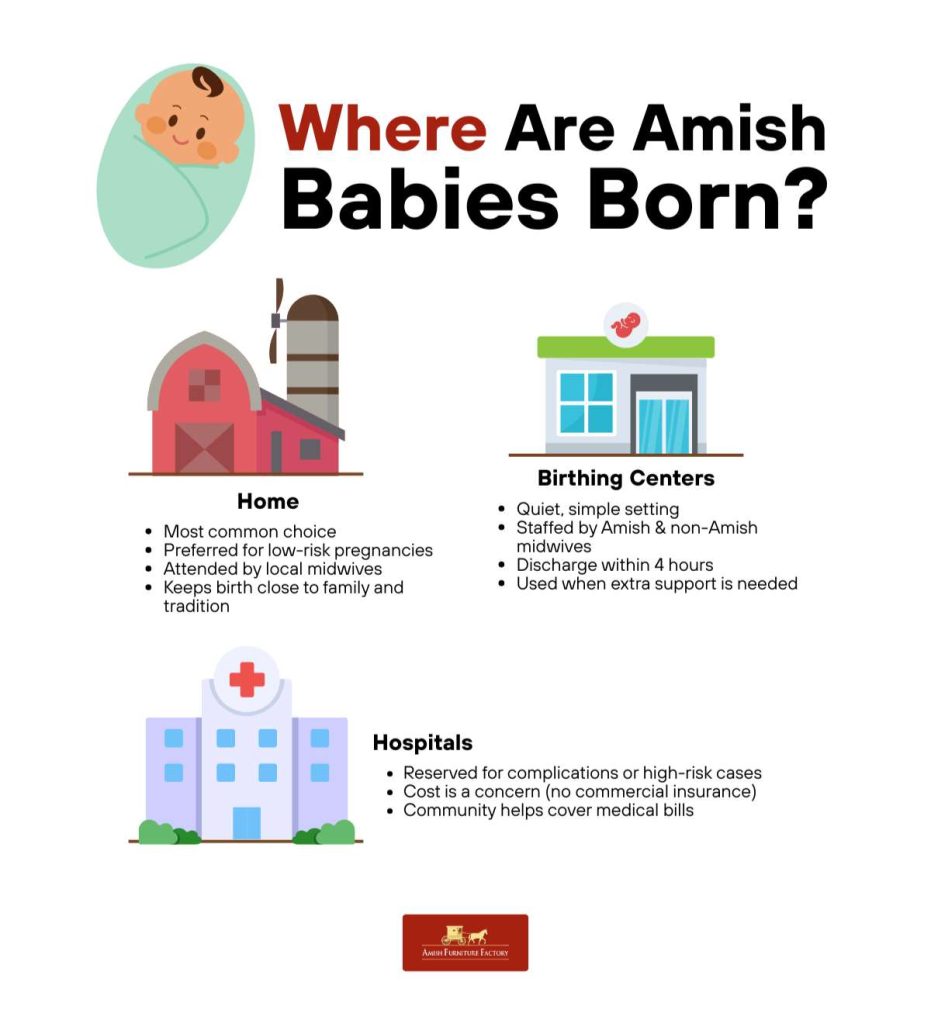
Generally, Amish women give birth to a baby in three places – at home, a birthing center, or a hospital.
Home
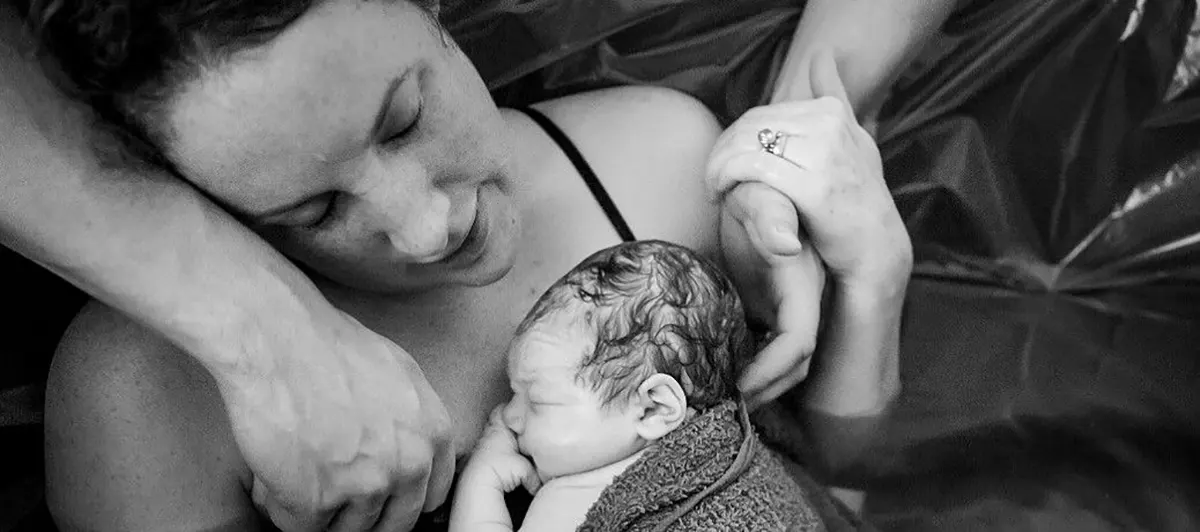
Most Amish children are born in the comfort of their homes. This idea can be challenging for some of us outside this community because we are often taught that home births come with certain risks. They are linked to a higher risk of infant death, convulsions, and other disorders than planned hospital births.
Amish women who are not experiencing any issues with their pregnancies prefer home birth, where they can be close to their families during this important chapter of their lives. They typically seek the assistance of a local midwife or a doctor who understands the Amish way of life.
Birthing Centers
For many Amish women, birthing centers provide a preferred alternative to home births. This offers a quiet, simple, family-centered environment that aligns with their values and is often staffed by both Amish and non-Amish midwives. Concerns over midwife certification, however, have created tension with state health regulations, highlighted in 1990 when more than 500 Amish and Mennonite individuals rallied in Pennsylvania to support a bill permitting uncertified midwives to continue practicing after legal action was taken against a lay midwife serving their community.
Despite such challenges, Amish families still favor birthing centers for low-risk pregnancies because they are less costly. This allows mothers to return home within hours, and minimize outside intervention, though complications or surgical needs still require transfer to nearby hospitals.
Hospitals
Since the Amish don’t carry commercial insurance, giving birth in hospitals is an issue in terms of cost. While some practices may vary from each Amish community, some have already built their own healthcare, funded by a system that combines church support, benefit auctions, and arranged discounts with local health centers and hospitals.
For some Amish communities with no arranged healthcare system, support from the other members of the Amish church can be surprising to non-Amish folks. This trait of the Amish people, who often go out of their way to help those in need, is one of a kind for many. If the hospital gives a bill they can’t settle, the Amish church and the members will pay for it. After all, it is God’s teaching to help one another.
What Things Do Pregnant Amish Women Do Differently?
While many of us regard the Amish as conservative, it’s a bit different when it comes to giving birth. This goes particularly true with pregnant Amish women as they do things a bit differently when it’s time to give birth.
Amish Women’s Attitude Toward Labor
For Amish women, childbirth is approached with remarkable calm and acceptance. Growing up in large families where babies are born regularly, they view labor as a natural part of life rather than something to fear. This perspective is reinforced by their belief that children are a blessing from God, which allows them to see childbirth not as a frightening ordeal but as a meaningful responsibility.
Unlike modern practices where pain management is often expected, Amish women typically refuse pain relief and medical interventions, believing that the discomfort of labor is part of God’s design. To them, giving birth is like any other hard task that must be done faithfully. The blessing of new life outweighs the temporary pain.

Pregnancy Practices: Privacy and Patience
Amish families also approach pregnancy with values that set them apart from mainstream society. They do not count down to due dates or schedule inductions, trusting that nature and God’s timing will determine when the baby arrives. Caesarean sections and other scheduled procedures are reserved only for emergencies that threaten the life of the mother or child.
Equally, pregnancy is not publicly announced or celebrated through parties or social media posts. Instead, it remains a private matter within the family. This modesty comes from their desire to avoid pride or insensitivity toward others who may be struggling to conceive or grieving a loss, keeping the focus on gratitude rather than attention.
The Birth Garment Tradition
Even during childbirth, Amish women remain faithful to their traditions of modesty. They prepare a special birth garment designed to cover the body while allowing space for delivery and immediate care of the newborn. The garment includes a discreet opening that enables skin-to-skin contact between mother and baby, blending practicality with the community’s strong emphasis on humility and dignity. This practice reflects how the Amish adapt their deeply held values to every stage of life, even the most intimate moments of childbirth.
Birth Control and Family Size
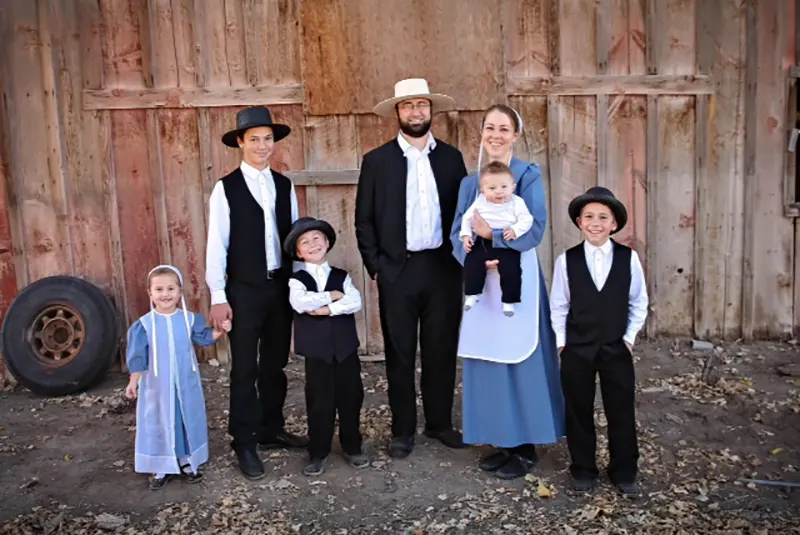
In Amish traditions, birth control is generally discouraged because children are seen as blessings from God. Family size is believed to be determined by His will. That said, practices can vary slightly since there is no central governing authority in the Amish church. While most avoid contraception, some may quietly use natural family planning or other methods due to health or financial concerns. Still, for the majority, large families remain a core part of Amish life and faith.
Newborn Care Traditions
When it comes to newborn care, the Amish follow customs that differ from modern medical recommendations. Unlike the common practice of encouraging immediate breastfeeding for colostrum intake, Amish babies often wait hours before latching. During this time, newborns may have watermelon seed tea or jello water, believed to help prevent jaundice. These practices reflect both cultural tradition and the community’s emphasis on natural remedies.
Staying Active Through Pregnancy
Pregnant Amish women also maintain their active lifestyles, continuing with chores at home and on the farm right up until labor. They believe that daily movement helps the body prepare for childbirth by encouraging the baby to move into the right position. Unless medical concerns arise, pregnancy is not a reason to slow down. Rather, it is a natural part of life that blends seamlessly with family and community responsibilities.
Life After Birth: Postpartum Care and Welcoming Amish Babies
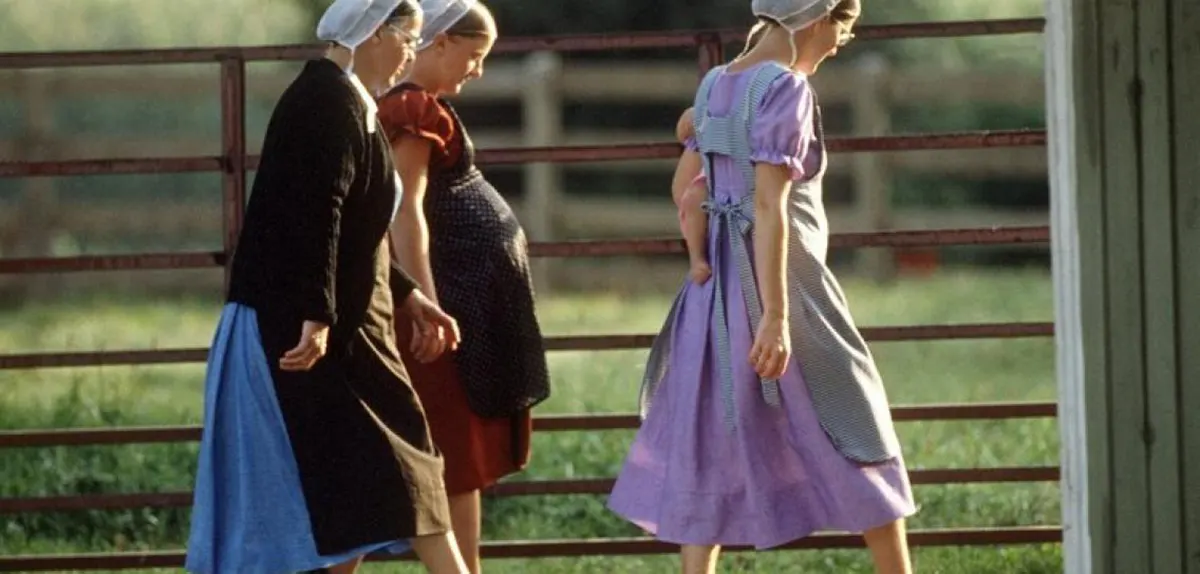
The arrival of an Amish baby signifies not just a new life, but a new member integrated into a deeply communal and spiritual framework. Following birth, Amish mothers typically observe a period of “lying in,” a crucial time for rest and recovery where community women take over household duties. This robust support system ensures the mother’s physical and emotional healing, allowing her to bond with her newborn without the immediate pressures of daily chores.
From birth, Amish babies are immersed in a life centered on family, community, and simple living. Raised within large families, surrounded by numerous relatives, they quickly learn the values of humility, obedience, and service. While some communities have a unique practice regarding immediate breastfeeding, it is generally established soon after and continues for an extended period. This aligns with their natural approach to nourishment.
Looking for handcrafted quality for your little one? Discover beautiful and durable Amish baby cribs and cradles that embody generations of tradition and care.
Conclusion
While home births are a growing interest in modern society, they often come with limitations due to safety concerns and reliance on medical systems. For the Amish, however, home births and community-based care are a natural extension of their way of life. They don’t reject outside help entirely, but they rely on long-standing traditions rooted in faith, simplicity, and mutual support in giving birth to Amish babies. Additionally, Amish births reflect a blend of time-honored practices and values that continue to guide their approach to bringing new life into the world.
Frequently Asked Questions (FAQs)
Are Amish babies vaccinated?
Vaccination rates among the Amish vary by community and family. Some Amish families choose to vaccinate their children according to standard schedules. Others may opt out or follow a delayed schedule due to concerns about ingredients, a belief in natural immunity, or general distrust of “English” medical interventions.
How soon after birth do Amish babies receive names?
Amish babies typically have a name within a few days of birth, often within the first week. The naming process is usually a family decision, with names often reflecting biblical figures or honoring family members.
Do Amish families use ultrasounds during pregnancy?
Like hospital births, the use of ultrasounds varies. Many Amish women will forgo routine ultrasounds if their pregnancy is low-risk, preferring a more natural approach. However, if a medical professional identifies a concern or a potential complication, they are generally open to diagnostic ultrasounds when deemed medically necessary for the safety of the mother or baby.
What is the average family size in Amish communities?
Amish families are typically large, with an average of 5 to 10 children, and sometimes more. Large families are blessings from God and contribute to the community’s workforce.
Do the Amish cut the umbilical cord?
What do they do with the afterbirth?
Do they have a birth certificate?
Thank you!!!
I respect Amish hard worker . Beautiful family
How long does the Amish pregnancy last?
I think 9 days
I think 9 days
do amish babies color change in the sun
I lived near the Amish community in Lancaster, Quarryville, Holtwood communities, in Pennsylvania, and lived near these Amish
people for thirteen years, and witnessed all the Amish men one day help altogether as a team that they are, builded a barn for another Amish family. They are loyal to each other as Amish families, and I have alot of respect for them and the Minute People were our neighbors as well . From my personal observation of the Amish world seems more calmer, more quieter, less complexed, more fulfilling compared to our civilized world which is extremely complexed, stressful, fast paced, demanding, doggie doggie world that I was brought in as a baby. I am now 73 but witnessed both the Amish, and Minute People when I was in my twenties for those 13 years. My first reaction when I first saw a Amish Buggy on the side road, my jaw dropped in admiration, and respect for these people. They are fantastic people who should be admired, respected. It was a culture eye opening for me. Yes I would had made a great Amish young girl at the time. Thank you for expressing myself to the Amish, and Minute people.