
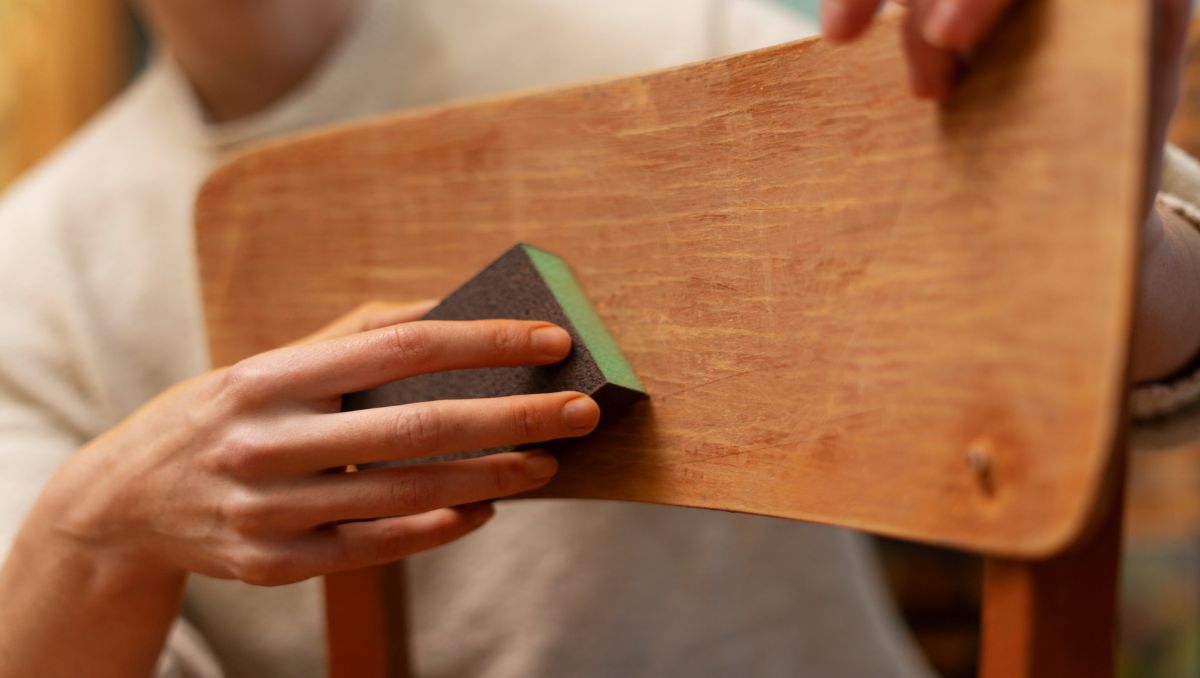
Scratches on furniture are one of those little annoyances that seem to appear out of nowhere. Maybe it’s from sliding a chair across the floor, a restless pet jumping on the couch, or just everyday wear and tear. While these marks might make a beloved table or cabinet look tired, the good news is that you don’t always need expensive kits or professional help to fix them. With a bit of creativity and a few things you probably already have at home, furniture scratch repair can be surprisingly simple.
Key Takeaways:
- To repair a furniture scratch, clean the area, then choose a method based on depth.
- Rub a walnut on light scratches, use a furniture marker for edge marks, apply a wax stick for deeper grooves, or fill deep scratches with wood filler before staining and finishing.
- Deep gouges may require furniture wax fillers, wood putty, and wood stain for a longer-lasting repair.
In this guide, we’ll walk through practical, tried-and-true ways to bring your pieces back to life using common household items.
What Finish Are You Working With?
Before you start any furniture scratch repair, it’s important to know what kind of finish you’re working with. Wood furniture can be sealed with varnish, lacquer, shellac, polyurethane, or even just oil, and each responds differently to repairs. A quick way to test is to dab a cotton swab with rubbing alcohol on a hidden spot. If it dissolves easily, you’re likely dealing with shellac or lacquer; if not, it could be polyurethane or varnish. Identifying the finish helps you choose the right method and ensures you don’t accidentally make the scratch look worse.
💡 Pro Tip
Take a moment to inspect the depth of the scratch, too. You’ll save yourself time and frustration by matching the right fix to the right problem.
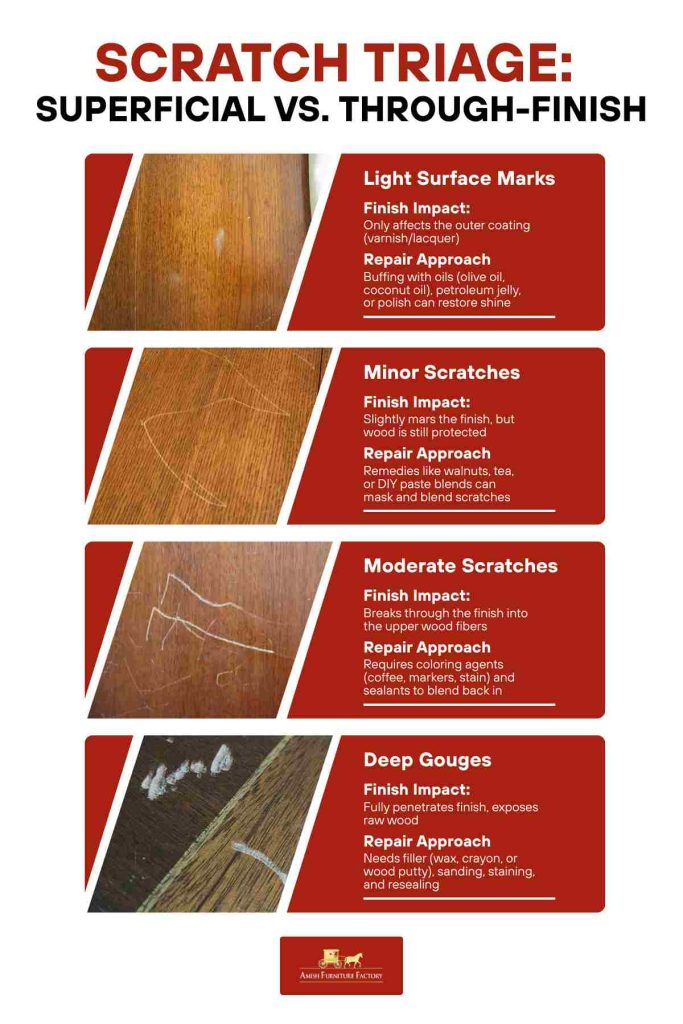
Let’s break down the difference between surface blemishes, hand oils, and deeper, through-the-finish scratches.
Common Household Items for DIY Furniture Scratch Repair
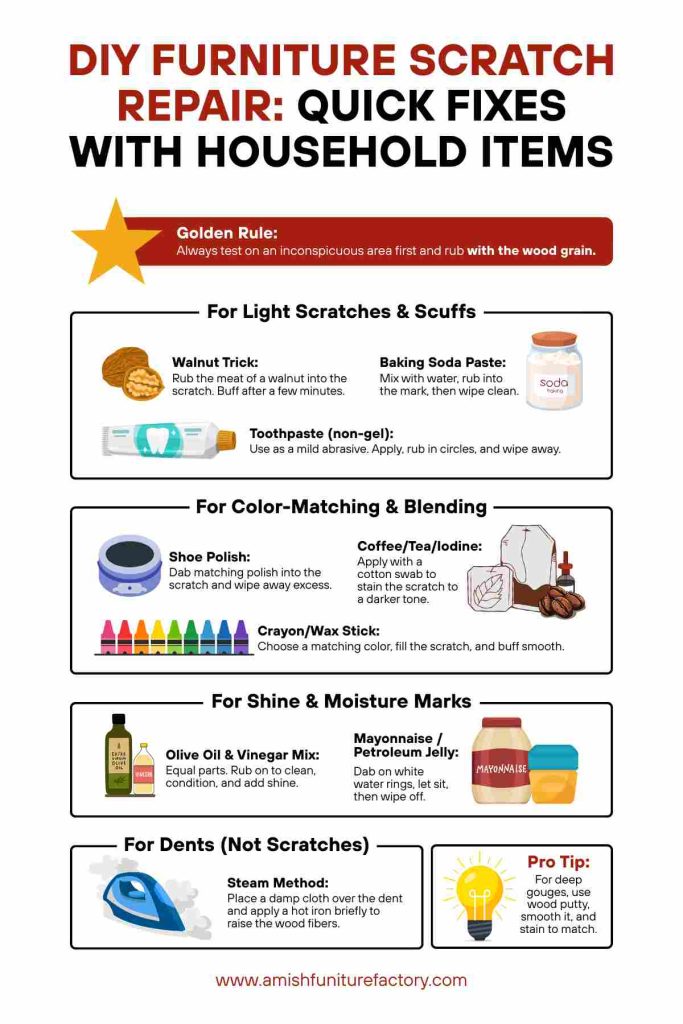
For furniture scratch repair, a handful of everyday items from your kitchen or bathroom, like walnuts, coffee, toothpaste, olive oil, and baking soda, can work wonders. Deeper scratches may benefit from wax fillers, like crayons. Whatever the method, always rub along the direction of the grain pattern and use a soft cloth to apply and remove any residue for the best results.
The Walnut Trick to Mask Light Scratches
Tools Needed: A whole walnut (unsalted, raw), soft cloth
- Crack the walnut kernel and rub the meat of the nut directly onto the scratch.
- Move in circular motions, then along the wood grain to distribute the natural oils.
- Let it sit for a few minutes so the wood absorbs the oil.
- Buff gently with a soft cloth to blend and restore shine.
Ben Kuhl, owner of Shelf Expression, emphasizes: “For darker woods, the old standby of using a walnut works surprisingly well. Take a walnut and rub the meat of the nut into the scratch. This releases natural oils and helps darken the exposed wood so it blends in.”
The Shoe Polish Method for Dark Woods
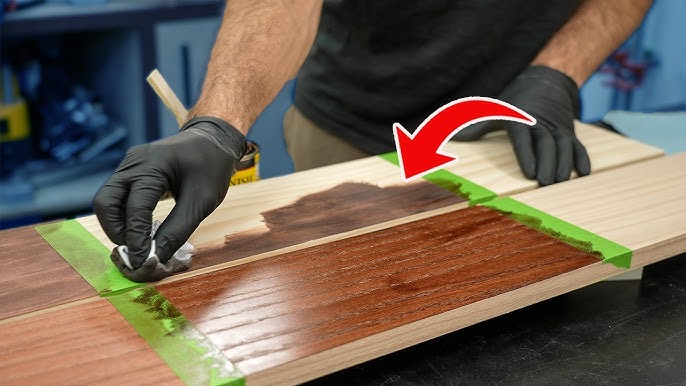
Tools Needed: Matching shade of cream or liquid shoe polish, cotton swab or soft cloth
- Dab a small amount of shoe polish directly into the scratch.
- Use a cotton swab to push polish into the groove, covering the lighter exposed wood.
- Wipe away any excess immediately with a clean cloth.
- Buff lightly to blend with the surrounding finish.
White Toothpaste as Mild Abrasive or Filler
Tools Needed: Non-gel white toothpaste, cotton swab or soft cloth
- Apply a pea-sized dab of toothpaste onto the scratch or scuff.
- Rub gently in circular motions, letting the mild abrasives smooth out the mark.
- Wipe off excess with a damp cloth.
- Dry and buff the area to reveal a cleaner, smoother finish.
Jeff Lexvold, who has renovated over 1,000 homes and runs Tropic Renovations, cautions: “Toothpaste is risky too; only use non-gel, non-whitening types and test in a hidden spot first.”
Baking Soda Paste for Marks and Scuffs
Tools Needed: Baking soda, water, soft cloth
- Mix baking soda with a few drops of water to create a paste.
- Apply the paste onto the scuff or scratch using a soft cloth.
- Rub gently in the direction of the wood grain.
- Wipe clean with a damp cloth and dry thoroughly.
Olive Oil + Vinegar Solution to Hide Micro-Scratches
Tools Needed: ½ cup olive oil, ½ cup vinegar (white or apple cider), small bowl, soft cloth
- Mix equal parts olive oil and vinegar in a bowl.
- Dip a soft cloth into the mixture and wring out excess liquid.
- Rub the cloth gently over the scratched area, following the wood grain.
- Let it sit for about 10–15 minutes, then buff with a dry cloth.
- The vinegar cleans the finish while the oil conditions and adds shine.
Ben shares: “You don’t always need specialty products for surface-level scratches. I recommend clients use a simple mixture of equal parts vinegar and olive oil to help blend in light marks. Wipe it on with a soft cloth and buff gently. You’d be surprised at the scratches this trick can hide.”
Mayonnaise or Petroleum Jelly for Water Rings
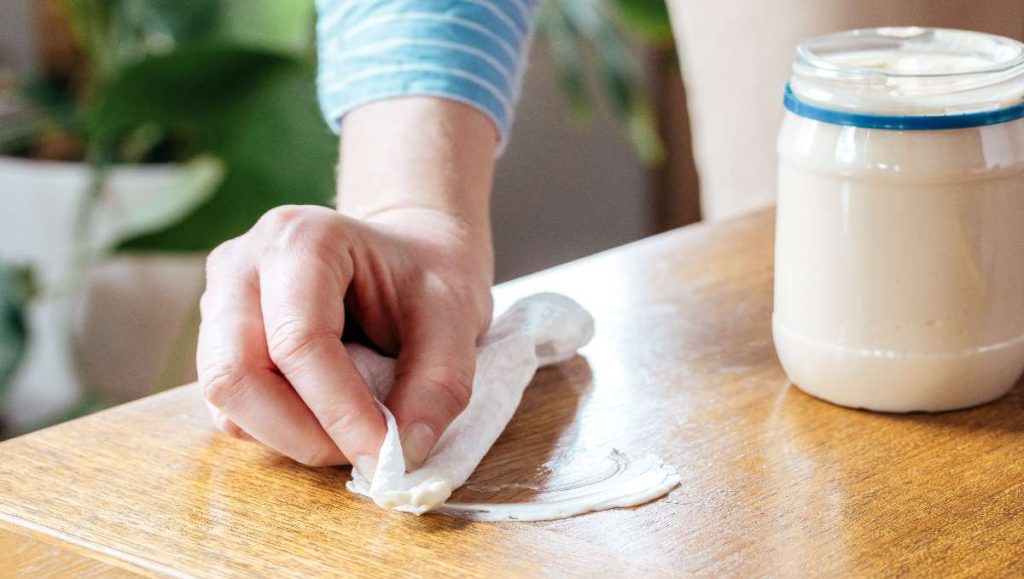
Tools Needed: Mayonnaise or petroleum jelly (Vaseline), soft cloth
- Dab a small amount of mayonnaise or petroleum jelly onto the water ring.
- Let it sit for at least an hour (overnight for stubborn marks).
- Wipe away with a clean cloth.
- Buff gently to restore sheen.
Jeff explains: “Mayonnaise works surprisingly well for light water rings—let it sit for 15 minutes then buff out. I had a client in Venice whose antique dining table looked ruined with water marks, and the mayonnaise trick saved them hundreds in refinishing costs.”
Color Touch-Up with Coffee, Tea, or Iodine (for Dark Scratches)
Tools Needed: Brewed black coffee or tea, or iodine solution, cotton swab or small brush, soft cloth
- Dip a cotton swab into coffee, tea, or iodine, depending on your wood’s color.
- Carefully apply it to the scratch, staying within the damaged area.
- Let it absorb for a few minutes, then wipe away excess with a cloth.
- Repeat as needed until the scratch blends with the surrounding wood tone.
Deep Scratches or Gouges: Wood Filler (Wax Stick, Crayon, or Putty)
Tools Needed: Wood filler (wax stick, crayon, or putty in a matching shade), putty knife (if using putty), wood stain or wood furniture marker (for blending), soft cloth
- Fill the gouge with wood filler or rub in a wax stick/crayon that matches the wood.
- Smooth the surface with a putty knife or your finger.
- Allow to set or harden, depending on the product instructions.
- Apply a small amount of wood stain or use a touch-up wood marker to blend the repaired area.
- Buff gently with a soft cloth for a natural finish.
Common Scratch Repair Mistakes to Avoid
Not every hack you see online is a safe bet for furniture scratch repair. For example, using nail polish remover, harsh chemical cleaners, or colored markers not meant for wood can actually worsen the damage by stripping the finish or staining unevenly. Another common mistake is overusing oils or waxes. While they can restore shine temporarily, too much buildup attracts dust and grime, dulling the surface over time. The key is moderation; gentle applications, minimal product, and always testing in an inconspicuous area first. Jeff warns:
“Never use nail polish or markers on quality furniture—I’ve seen too many pieces ruined this way during home staging jobs. Heat methods like irons can work but require extreme caution—one wrong move and you’ve got a permanent burn mark.”
Tired of scratches ruining your wood furniture? Dive into our comprehensive furniture and design guides for expert tips on repairs, maintenance, and more.
When to Call a Professional
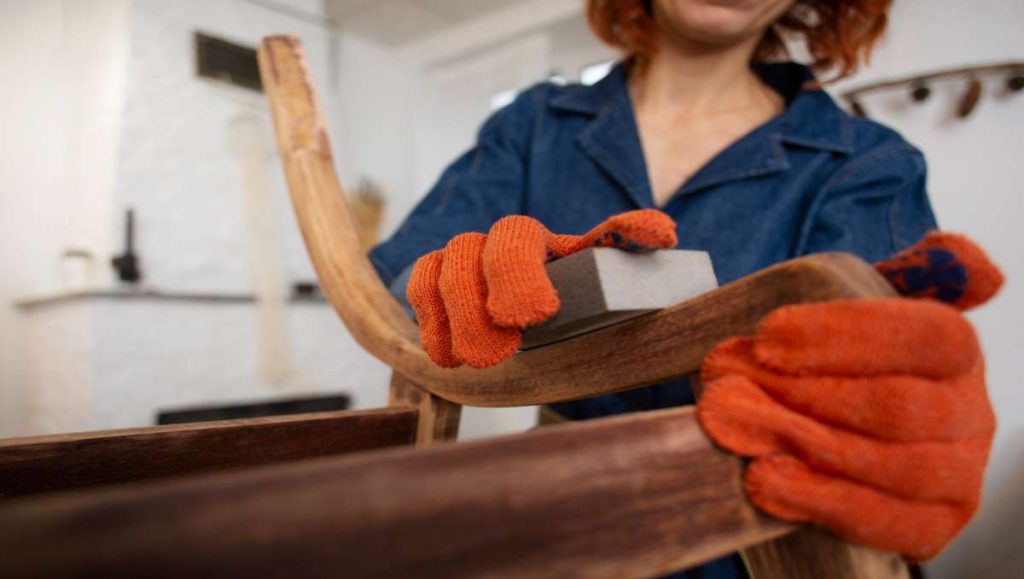
Deep gouges, cracks, or chips that expose raw wood across a large surface often require refinishing tools and skills beyond basic DIY fixes. Antique or high-value heirloom Amish furniture, especially pieces with veneer or intricate finishes, should also be entrusted to an expert to avoid accidental damage that can reduce their worth. Ben advises:
“Anytime veneer is involved, I recommend leaving it to a professional. Veneer can be just millimeters thick, and it’s very easy to sand right through it. Once that happens, the restoration is essentially ruined. Solid hardwood furniture, on the other hand, is much more forgiving and usually safe for DIY fixes.”
Final Thoughts: Bringing Your Furniture Back to Life
Scratches don’t have to spell the end for your favorite table, dresser, or chair. With a little patience and a few common household items, furniture scratch repair can be simple, cost-effective, and surprisingly effective at restoring charm to worn surfaces. From walnuts and baking soda to coffee and vinegar solutions, each method gives you a quick way to refresh without expensive furniture repair kits or professional tools. Knowing when a scratch is too deep or when the piece holds significant value will help you decide whether to keep it DIY or call in a professional.
Frequently Asked Questions
Do vinegar and olive oil fix scratches on wood furniture?
Vinegar and olive oil can help mask minor scratches by cleaning and adding shine, but they don’t actually repair the damage. This mixture is a temporary cosmetic fix rather than a true scratch remover.
Can deep scratches be removed?
Deep scratches usually cannot be completely removed without filling or refinishing the area. Repair typically involves wood filler, sanding, and refinishing to restore a smooth surface.
Is it safe to use olive oil on wood furniture?
Using olive oil occasionally for polishing is generally safe, but it can build up residue over time and attract dust. It’s better to use oils specifically designed for wood care to avoid sticky buildup.
Is vaseline good for deep scratches?
Vaseline can temporarily hide scratches by filling in grooves and adding shine, but it doesn’t repair deep damage. It’s more of a quick cosmetic fix rather than a long-term solution.
Does WD-40 really remove scratches?
WD-40 can reduce the appearance of minor surface scratches by lubricating and cleaning the wood, but it does not repair or fill in scratches. It’s best used cautiously and not as a permanent fix.
Gambling includes many forms, such as poker, blackjack, roulette, sports betting, and slot machines. Some players enjoy online platforms, where options expand widely. Akribe offisiell nettside offers information for enthusiasts seeking safe experiences, helping people explore various gambling types responsibly and with enjoyment.