

When we think of the Amish, images of horse-drawn buggies, handmade quilts, and a life lived simply often come to mind. But beyond their visible traditions lies a deeply private world shaped by faith, community values, and long-standing customs. One topic that rarely enters public conversation, yet sparks genuine curiosity, is how the Amish approach family planning. Do they use birth control? If so, what methods align with their beliefs?
Key Takeaways:
- Some Amish people do use birth control, although it is not widely practiced and remains a sensitive topic within their communities.
- Natural family planning methods such as calendar tracking, basal body temperature charting, and lactational amenorrhea are sometimes quietly practiced.
- Modern contraceptives like condoms or hormonal methods are generally avoided.
In this article, we’ll explore the Amish approach to family planning, its cultural significance, and what it reveals about their way of life.
What are the Rules About Birth Control for Amish Women?
While Amish women are not religiously forbidden from using birth control, many communities follow long-held beliefs that shape their choices. Amish teachings emphasize that God is the giver of life. Young women are raised with the understanding that having children is part of His plan. Marriage is closely tied to the idea of starting a family. Therefore, some Amish couples turn to natural methods to space births, especially for health or financial reasons.
Modern birth control methods like hormonal pills, patches, IUDs, shots, and vaginal rings are generally not accepted in many Amish groups. These options are often seen as artificial and contrary to God’s will. Both Old and New Order Amish leaders may consider them morally wrong. They believe that such methods interfere with the blessings of life that God chooses to give.
What Kind of Birth Control Do They Use?

As established earlier, while many Amish communities forbid women to use birth control, especially those used in the modern world, in fear of putting an indestructible wall between married couples and God’s blessings, some Amish from the general population use birth control by more natural means.
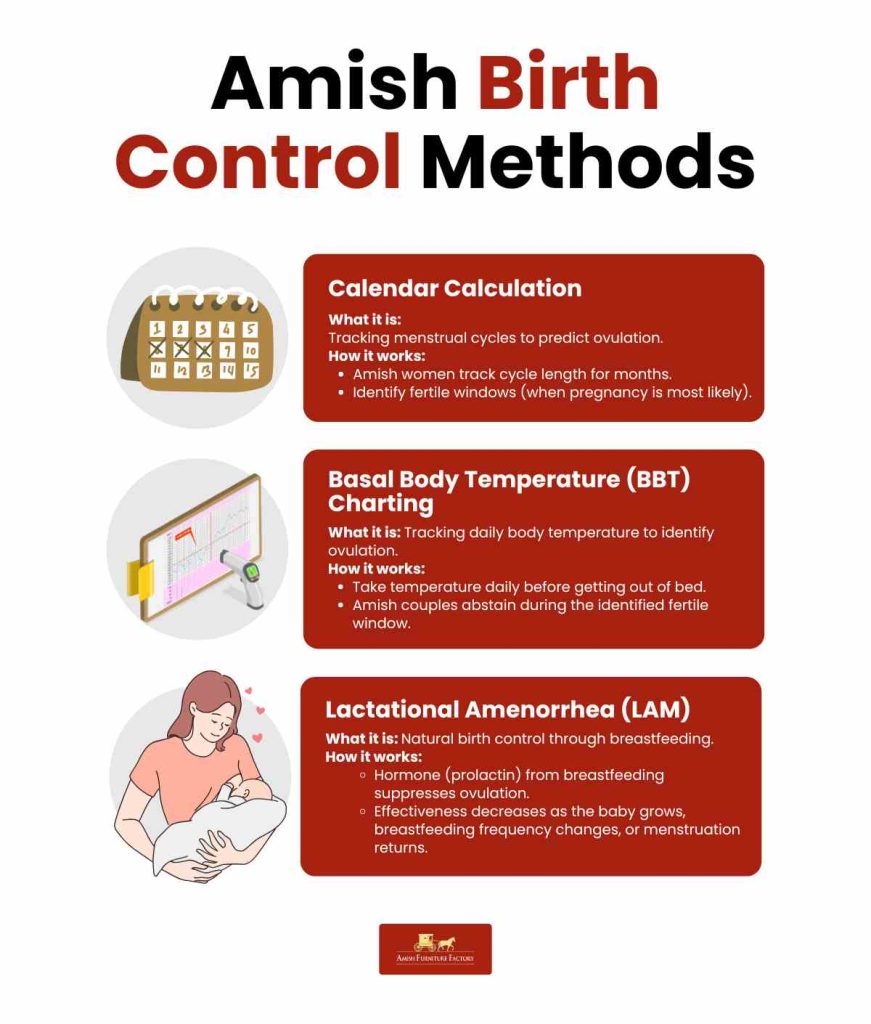
These natural family planning methods include calendar calculation, basal body temperature charting, and lactational amenorrhea.
Theoretically, since these natural options are not 100 percent effective all the time, they still leave room for God’s perfect will, just in case. Unlike artificial birth control methods, Christians hardly see these as “taking a life away.”
Calendar Calculation
Calendar calculation is a method of family planning that involves tracking a woman’s menstrual cycle to estimate when she is most likely to ovulate (release an egg from her ovaries) and, therefore, most likely to become pregnant. It is also known as the calendar, fertility awareness, or rhythm method.
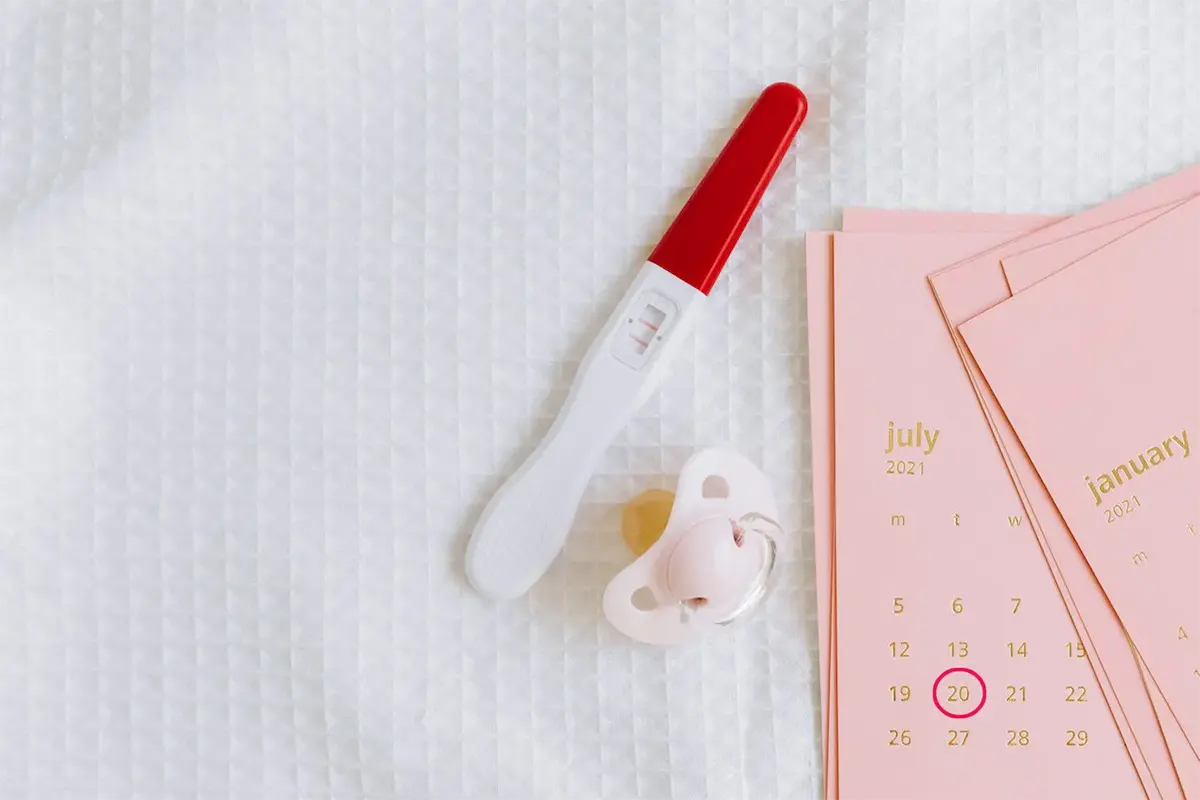
Using the calendar method, the Amish typically begins tracking her menstrual cycles for several months to establish the length of her average cycle. She then identifies the period of her menstrual cycle when she is most likely to ovulate based on the number of days before and after her average cycle length. During this period, Amish couples can avoid sexual intercourse.
Basal Body Temperature Charting
Basal body temperature (BBT) charting is a natural birth control method that involves tracking a woman’s temperature each morning before getting out of bed. By recording these readings daily at the same time, women can notice the slight temperature rise that occurs after ovulation due to increased progesterone. This change signals the most fertile days in the menstrual cycle. The method is also known as the symptothermal method and may include observing other fertility signs.

Amish women who use BBT charting rely on this information to avoid pregnancy by abstaining from sex or using contraception during the fertile window. While it offers a hormone-free option, it requires consistent daily tracking and a strong commitment to accuracy. When used correctly, BBT charting can be a reliable form of natural family planning.
Lactational Amenorrhea
More Amish females use lactational amenorrhea as a natural form of birth control. Lactational amenorrhea occurs because the hormone prolactin, released during breastfeeding, can suppress the release of other hormones necessary for ovulation. As a result, Amish women who exclusively breastfeed their babies and have not resumed menstruation are less likely to become pregnant.

However, specific criteria must be met to use lactational amenorrhea as a reliable form of birth control. These include:
- The baby is less than six months old.
- The mother exclusively breastfeeds the baby, with no supplemental feedings or pacifiers.
- The mother has not resumed menstruation since giving birth.
- The mother is not using hormonal birth control.
If these criteria are met, lactational amenorrhea can be up to 98% effective at preventing pregnancy in the first six months after giving birth. However, the effectiveness of lactational amenorrhea decreases as the baby starts to consume solid foods, the frequency and duration of breastfeeding decrease, or the mother resumes menstruation.
How Do Amish Views on Birth Control Vary by Community?
Amish beliefs about birth control can vary widely depending on the specific church district, community, and leadership. Since there is no centralized Amish authority, local bishops play a key role in shaping what is acceptable. In more conservative Old Order communities, birth control is typically discouraged or left unspoken. Large families are viewed as blessings from God. In contrast, New Order Amish, who are generally more open to modern conveniences and medical care, may have a more accepting attitude toward family planning.
Geography also influences how birth control is viewed. Communities in Lancaster County, Pennsylvania, often hold stricter views than those in Ohio or Indiana, where some districts may adopt a more flexible stance. Among younger Amish adults, subtle shifts are occurring as exposure to the outside world increases through work or limited technology use before baptism.
Can the Amish Use Condoms?
Condoms are considered a modern and artificial form of birth control. The Amish reject modern and artificial things by nature. Therefore, the use of condoms by Amish men is strictly forbidden and condemned in most, if not all, Amish communities.

Why Do Some Amish Families Practice Birth Control?
The Amish community is not monolithic, and Amish practices can vary among different sects and communities. As with any community, some married couples marrying with health or financial limitations may choose to use birth control.
According to a book named “An Amish Paradox,” an Old Order Amish woman commented that artificial birth control is wrong when used for selfish reasons. There won’t be any problem for married couples as long as the reasons behind it are medical and financial issues.
On the other hand, a father from the New Order Amish stated that many Amish use birth control now. Apparently, the only thing that bothers them is their conscience about it.
Is There Any Outside Medical Influence in Amish Family Planning?
While traditional Amish communities often rely on home remedies and midwives within their circles, outside medical influence is increasingly shaping family planning decisions. Some Amish women, particularly in less conservative or more rural areas with limited Amish birthing options, seek care from non-Amish midwives, nurses, or physicians during pregnancy and childbirth.
Younger Amish couples and those from New Order communities are also more likely to engage with mainstream healthcare, either out of necessity or practicality. Hospitals or clinics—especially those with experience treating Plain communities—sometimes offer discreet guidance or services related to family planning, particularly when maternal health is at risk.
Why Do The Amish Have Larger Families?
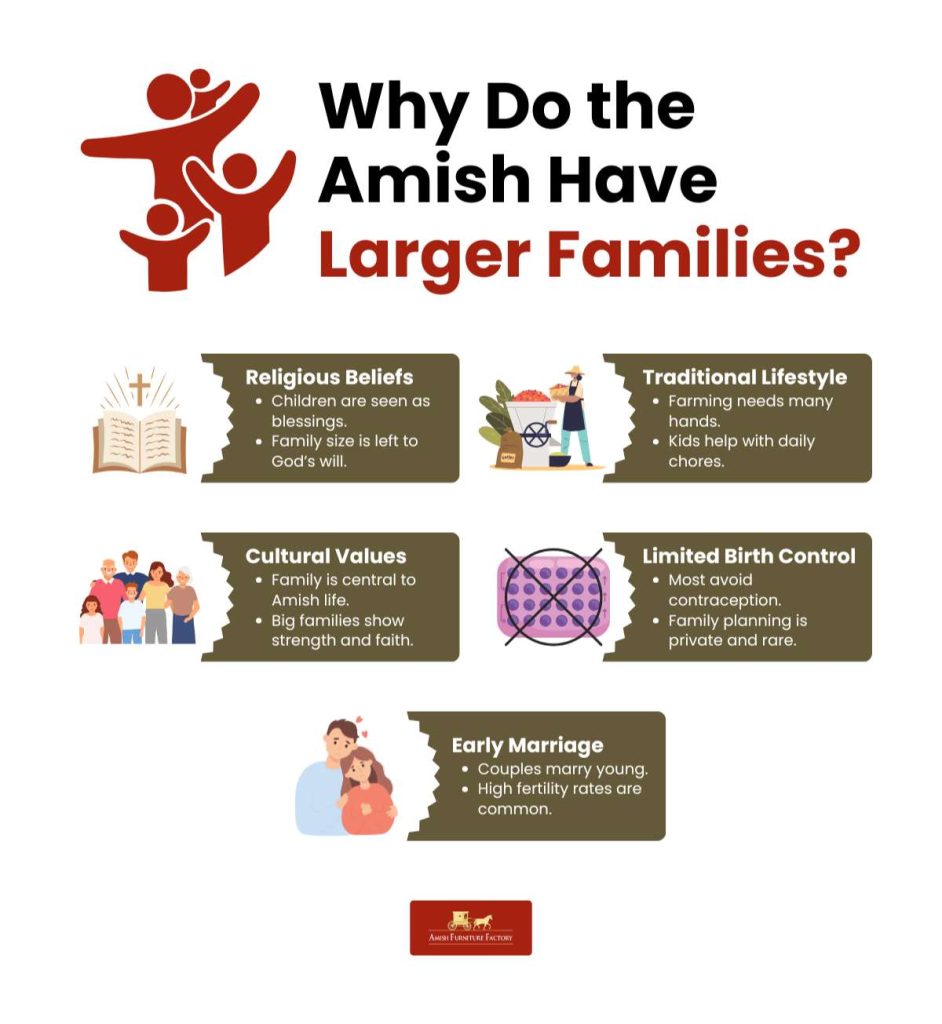
Now, let’s look further at why Amish people have large families and where birth control can fit in. In addition to their religious beliefs, there are practical reasons for the Amish emphasis on large families.
Amish children are highly valued. Having many is seen as a way to fulfill God’s commandment to be fruitful and multiply. It is also seen as a sign of prosperity and a source of strength for the community.
The Amish are a close-knit community that relies heavily on agriculture and manual work to sustain their way of life. Having many Amish children ensures a steady labor supply to help with the farm work and other tasks necessary for the Amish community to function.
How Many Children Do They Have?
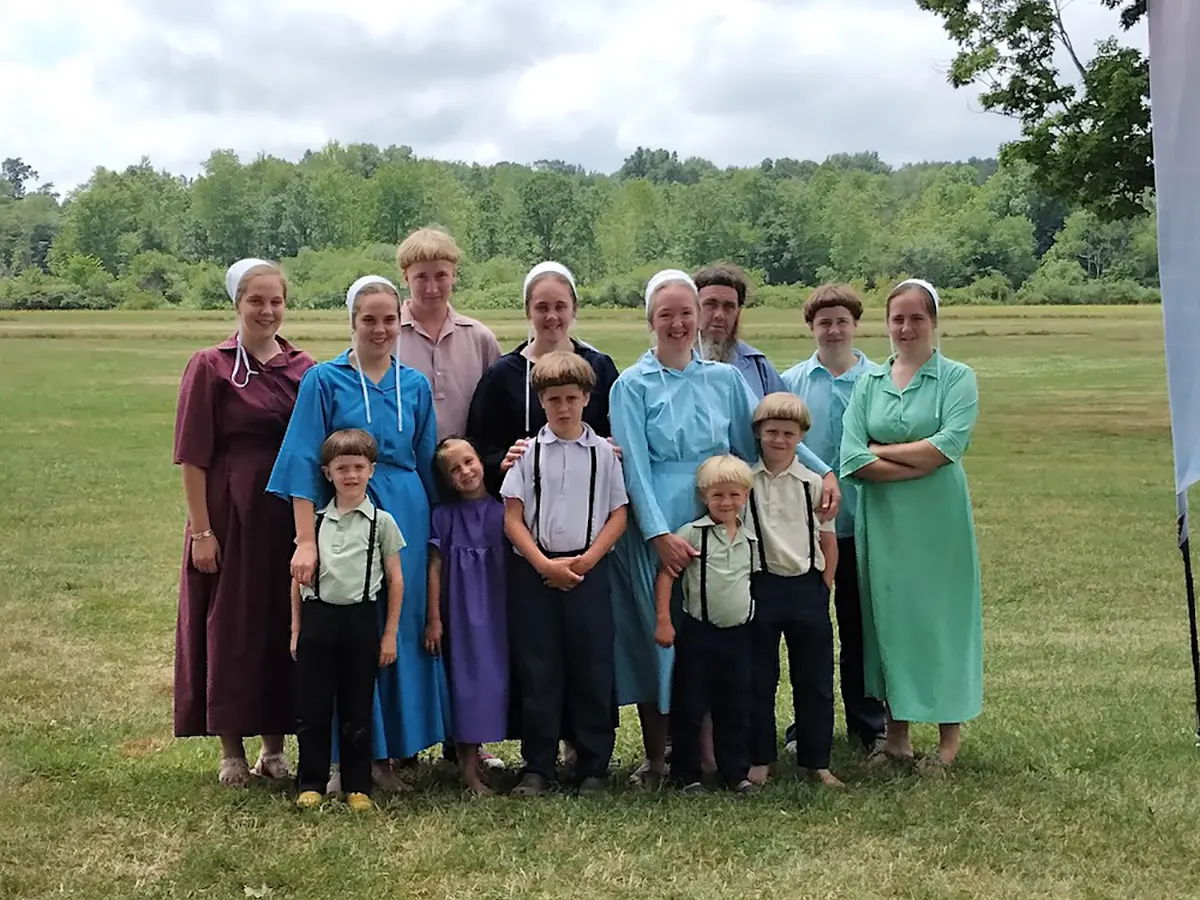
The number of children that Amish families have can vary widely depending on several factors, including individual core beliefs, family circumstances, and community norms. However, it is common for Amish families to have six to eight children. Families with more than ten children are not unheard of.
The Largest Amish Family Known to Date
Today, John Troyer from near Kokomo, Indiana, holds the record for having the largest Amish family. He has twelve children with his first wife and two-step and seventeen violations with his second. This totals to thirty-one Amish children inside their household.
Learn more about the traditional practices surrounding family planning and other fascinating aspects of Amish life. Explore our Amish Ways archive today.
Conclusion
At the end of the day, the decision to have a large family ultimately rests with each Amish couple. Even though there’s no written rule in any Amish church in America that is against delaying or spacing-out births, they respect individual decisions regarding Amish family size while still upholding the value of children and the importance of family in the Amish culture.
While most Amish couples prefer it large, some may opt for smaller families due to personal circumstances or beliefs. Hence, some Amish use birth control to regulate the number of children in their household. Anyway, having more than one can handle is a sin, too.
Frequently Asked Questions
Are there punishments for using birth control?
There are no official punishments for using birth control in Amish communities, but it is often frowned upon, especially in more conservative districts. While couples might face quiet disapproval, private counsel from church leaders, or social pressure, excommunication for birth control use alone is uncommon.
How do Amish men view family planning?
Amish men generally support the traditional belief that children are a blessing and that family size should be left to God. However, some men may participate in discreet discussions about spacing children. This happens often out of concern for their wife’s health or economic limitations.
Is abortion practiced among the Amish?
Abortion is strictly against Amish beliefs and is considered morally unacceptable under almost all circumstances. The Amish view life as sacred from conception. Terminating a pregnancy would be seen as a violation of religious principles.
How do the Amish give birth?
Most Amish women give birth at home with the assistance of a midwife, often from within the Amish community. However, depending on the community and access to healthcare, some may avail hospital births or at birthing centers.
Yes. Im glad to see the reality of God’s way that having more than one can handle is a sin, too.
U widh we loved this planet and had people standing up for the Lord’s ways and share that message that we are having more children then God creation of mother Earth can handle. Contact me is we can share the truth gefuee Mother Earth dies along with us.
It’s been said , human’s often fear what they don’t understand . I like history … now . Didn’t really care much , when I was in grade school .
This paragraph may have two grievous errors:
“Today, John Troyer from near Kokomo, Indiana, holds the record for having the largest Amish family. He has twelve children with his first wife, two-step and seventeen violations with his second—a total of thirty-one Amish children inside their household.”
One error is the verb “has” – “He has 12 children with first wife” and, then, more children with a second wife. This verb tense indicates he has two simultaneous wives. Polygamy.
Perhaps the more shocking word choice was with “violations.” I couldn’t trust my eyes to think he had repeatedly asserted himself in an unholy way so I looked up this man online. The article I found mentioned the death of his first wife and 17 ADDITIONAL children with his second. The autocorrect must’ve messed up and selected “violations” during the initial work up of this article.
Though I grew up in Indiana, and I’m sure I never met Mr. Troyer, he may be mortified by these typos.
Thank you for commenting on this! I, too, was somewhat taken aback by the wording and ran it through my brain a number of times trying to get a sense of what the actual situation was!
I appreciate your investigation and consequent input to the story to help “reframe” a somewhat disturbing version of the original story!
I’m not sure exactly how I would feel if I were referred to as a “violation” rather than a daughter or child, but I don’t think it would be great!?! 😳😢
Why are the children with his second wife called “violations”?
Look at the comment from March 4 2025 – another poster has given some context around what is most likely an autocorrect typo.
The way Amish treat horses is diagusting..
I’ve never seen an Amish farm treat horses badly. At least not in my area. I live close to an Amish/mennonite area in pa
how come i never see dogs and cats on amish property,also why is it that the streets in their village has no names?