
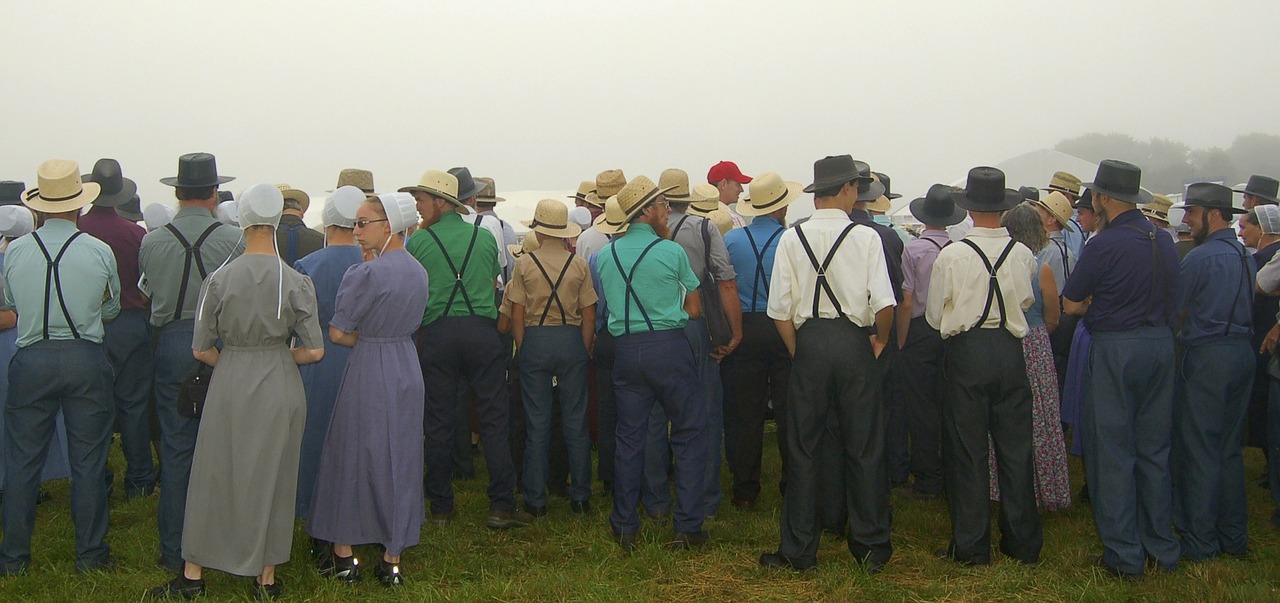

The Amish are known for their simple lifestyle and strong sense of community, most often associated with rural America. Their horse-drawn buggies and traditional ways seem like a scene straight out of a specific place and time. But when you start to wonder if these communities exist beyond the well-known Amish heartlands, things get a bit more interesting. Are there Amish settlements beyond the United States?
Key Takeaways:
- Some Amish communities exist outside the United States, primarily in Canada and South America, with notable settlements in Bolivia and Argentina.
- Today, the United States remains home to the largest Amish population, with over 300,000 members.
In this article, we’ll explore where these communities are located, how they differ from those in the U.S., and what their presence reveals about the adaptability of Amish life across the globe.
The Amish Migration Story
The Amish trace their origins to Europe, where they emerged from the Anabaptist movement in the 16th century. In 1693, Jacob Ammann led a split from the Mennonites, forming the Amish branch. This division remains today, with the Amish seeking a life of separation from mainstream society. Facing persecution for their beliefs, including adult baptism and rejection of worldly involvement, many Amish fled Europe in search of religious freedom.
By the early 1800s, thousands of Amish had made the journey to North America, with communities first established in Lancaster, Pennsylvania and later in Ohio. As religious freedom in Europe continued to decline, the Amish spread across the U.S., particularly in the Midwest. Encouraged by William Penn’s promise of freedom, many Amish found peace in their new homes, as reflected in the words of Eli J. Bontreger, an Amish bishop who moved to Wisconsin in 1909:
“We had the best and kindest and most helpful neighbors imaginable. All in all, I still consider the six years we spent in northern Wisconsin the most congenial of my life.”
The Growing Numbers of the Amish People Outside the U.S
Currently, there are over 400,000 Amish in North America, with the bulk of the Amish living in the United States in Pennsylvania, Ohio and Indiana. However, what many don’t realize is that there are Amish communities in other locations as well. Let’s take a closer look at the Amish outside of the United States.
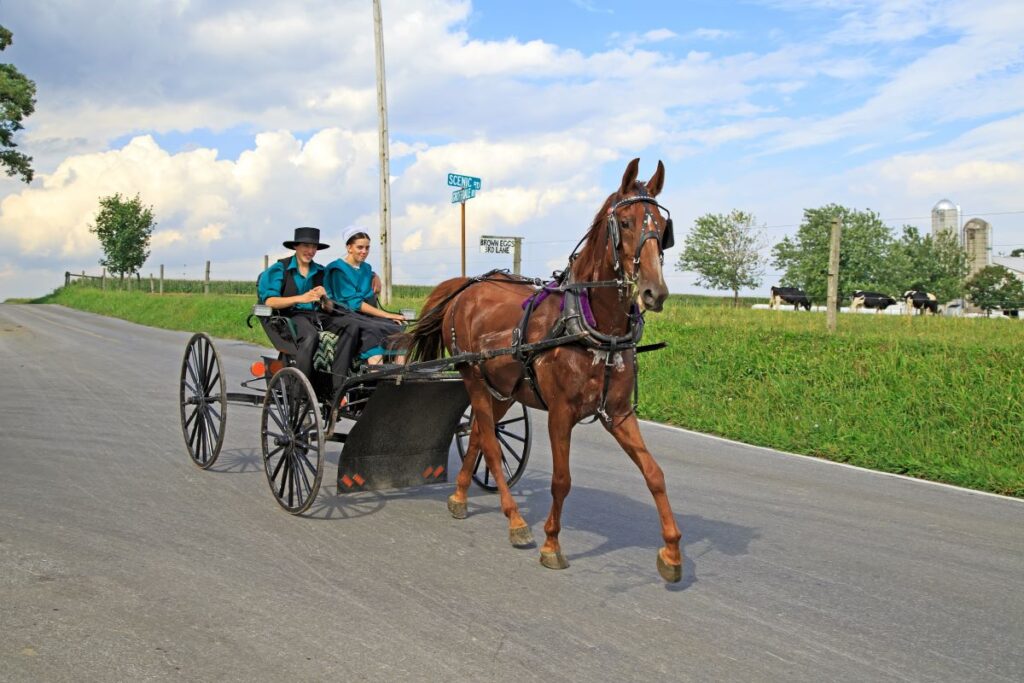
Current Status of the Amish in Europe
Old Order Amish communities no longer exist in Europe. On January 17, 1937, the last known Amish congregation in Ixheim, Germany, closed its doors and merged with a nearby Mennonite group in Zweibrücken. This event marked the end of the Amish as a distinct religious presence in Europe.
Over time, the remaining Amish isolated groups were absorbed into Mennonite congregations or gradually abandoned their religious practices. The Amish never had the same widespread presence in Europe as they did in North America, which played a role in their decline. Today, the Amish are primarily a North American phenomenon, while Mennonite communities remain active in Europe.
Here are the key differences between Amish and Mennonites, highlighting aspects of their beliefs, practices, and community life:
| Aspect | Amish | European Anabaptists (Mennonites) |
| Technology Use | Strict limitations on technology to preserve the traditional lifestyle | More varied, with some groups embracing modern technologies |
| Community Structure | Highly insular communities with minimal outside interaction | Often more integrated into wider society, with varying degrees of interaction |
| Dress Code | Strict traditional dress codes to maintain uniformity and modesty | Dress codes vary widely; generally less strict, with more modern attire acceptable in many communities |
| Transportation | Predominantly use horse-drawn buggies; avoid motor vehicles | More likely to use modern vehicles, especially in urban areas or for business |
| Religious Services | Services are held in High German, emphasizing separation from the world | Services may be in local languages; more integration of contemporary worship styles |
| Education | Formal schooling typically ends at 8th grade; with emphasis on vocational training within the community | Broader educational engagement, often including higher education |
| Mission Work | Generally do not participate in mission work outside their communities | Active in missionary work and social services both locally and internationally |
| Geographic Spread | Mostly concentrated in North America | Widespread across Europe, North and South America, and parts of Africa and Asia |
Amish Communities in Canada
After 1815, the Amish journeyed from the United States to Canada, and others came directly from Europe in 1822. By 1991, this vibrant community had grown to about 1,000 baptized members. Canada stands out as the premier haven for Amish communities beyond the borders of the United States. As of 2021, the Amish population in Canada has reached approximately 5,815. However, as the years went by, the exact numbers could vary as the communities grew and new settlements were established.
According to Doug Crawford, founder of Best Trade Schools, who has extensive experience in the study of cultural dynamics:
“Outside of the US, there are Amish communities, especially in Canada, where there are significant communities in Ontario. Such communities experience special problems, including having to adapt to new legal, educational, and healthcare systems and retain their own values.”
Here’s a table that breaks down the differences and similarities between Amish communities in Canada and the U.S:
| Aspect | Canadian Amish Communities | American Amish Communities |
| Geographic Distribution | Primarily in Ontario, with smaller settlements in Manitoba and PEI. | Widespread across many states, notably Pennsylvania, Ohio, and Indiana. |
| Cultural Integration | Often bilingual, interacting with both English and French Canadian communities. More integration into local markets. | Primarily English-speaking; some interaction with non-Amish, but generally more insular. |
| Farming Practices | Smaller-scale farming due to less available farmland. Emphasis on sustainable practices. | Larger farm plots are typical, with a strong emphasis on farming as a livelihood. Varied levels of technological acceptance. |
| Community Size | Generally, smaller communities are due to newer, less established settlements. | Larger and older settlements with well-established communities. |
| Religious Practices | Similar religious practices with variations influenced by local cultural norms. | Consistent adherence to traditional religious practices, with minimal variation across communities. |
| Housing Styles | Adaptations in housing to accommodate colder climates, such as more robust insulation and heating methods. | Housing styles adapted to local climates, with more uniformity in traditional designs. |
| Interaction with Non-Amish | Tend to have more frequent interactions with non-Amish due to the necessity of engaging in local economies. | Varies by community; some are very isolated, while others engage regularly with non-Amish, especially in business. |
Amish Settlements in North America

The Amish population in North America continues to grow steadily, reaching an estimated 400,910 members as of June 2024. Most Amish communities are concentrated in just three states—Ohio, Pennsylvania, and Indiana—home to about 61% of the total population. Still, Amish families can be found in 32 states and three Canadian provinces, reflecting their gradual expansion beyond their traditional strongholds.
The expansion is also evident in the number of congregational districts, which grew from 2,914 in 2023 to 3,038 in 2024. Each district typically includes 20 to 40 households, and the sheer increase in districts underscores how rapidly the Amish community is multiplying. Since 2000, the Amish population in North America has grown by 125%, essentially doubling every 20 years.
Amish Settlements in Latin America
After a New Order Amish community was built in the Midwest, new Amish settlements emerged in Argentina and Bolivia. In Argentina, particularly within the rural expanses of the Pampas, Amish families have ingrained their centuries-old traditions in the fertile soil of this large agricultural heartland. As of 2022, this community includes about 50 Amish people who work hard to preserve the culture their ancestors fought and died for.
In Bolivia, one Amish settlement in the Santa Cruz region, with at least 175 Amish people as of 2022, faces the complexities of adapting to tropical climates. This community has encountered financial challenges and concerns over increasing isolation, pushing them to seek more significant connections with the broader Amish community.
Unique Challenges and Adaptations Outside the United States
As the Amish establish themselves in countries like Canada, Argentina, and Bolivia, they often face unique challenges that require significant adjustments to their traditional lifestyle and beliefs.
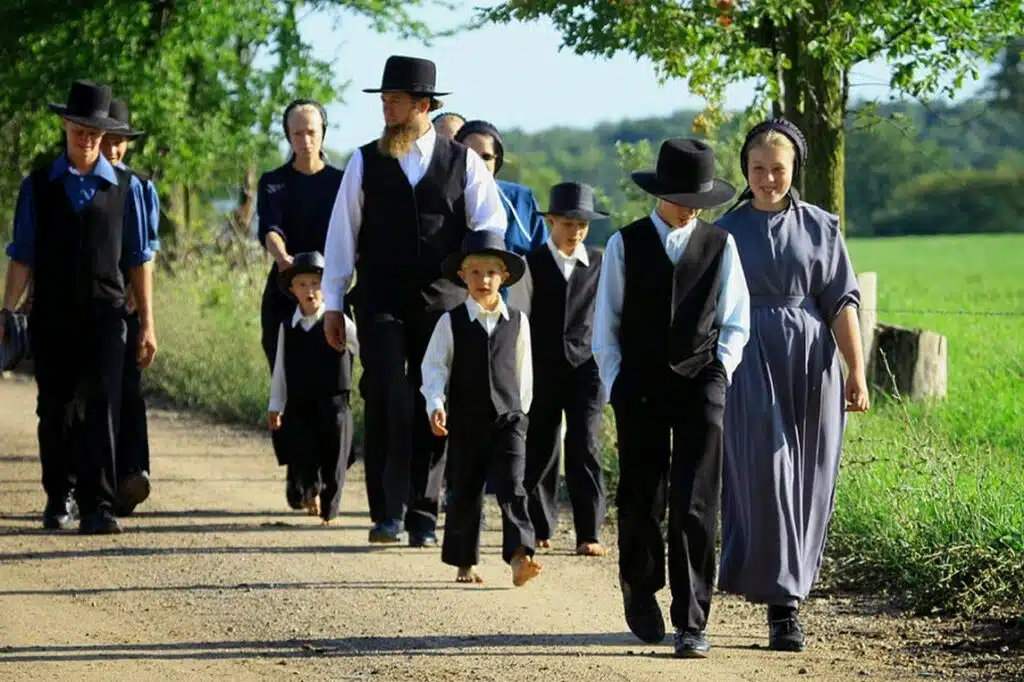
Different Cultural Landscapes
One of the biggest challenges for the Amish living abroad is adapting to the cultural norms and social expectations of their new homes. They often face language barriers and different social customs, which require a flexible approach and sometimes lead to the gradual integration of local customs. As Crawford further explains:
“The Amish in these areas have to contend with cultural differences in the midst of maintaining their agrarian culture and their religious beliefs. They even learn to tolerate a few local customs without sacrificing some of their core beliefs, such as the family-oriented lifestyle, the modest utilization of technology, and good communal relations.”
Environmental Challenges
The Amish face significant environmental challenges when settling in new regions with climates different from the temperate zones of North America. These challenges in Latin American countries with tropical climates include adapting traditional farming practices and modifying construction techniques to better suit the local weather patterns and temperatures.
Legal and Regulatory Challenges
Adapting to the legal frameworks of different countries adds another layer of complexity for Amish migrants. Each country’s specific laws regarding land use, schooling, religious freedoms, and technology can significantly affect how communities with rigid traditions organize their lives and maintain peace. For example, in Canada, the Amish have consistently engaged with government bodies to ensure that their schools can operate while upholding their values, such as avoiding the mandatory use of modern educational technologies like computers.
To explore the rich history and traditions of global Amish settlements, visit our Amish communities archive. Discover how different communities maintain their unique way of life.
Final Thoughts: The Amish Impact from Pennsylvania to Beyond
The Amish journey from Europe to America and other places is a story of consistent adaptation and resilience. Whether settling in the lands of Canada, the tropical areas of Argentina, or the diverse cultures of Bolivia, the Amish have kept their traditional lifestyles while adapting to new challenges.
Their long-standing methods of craftsmanship and farming continue to inspire people globally. From their durable furniture that reflects historical craftsmanship to their communal living models, the Amish exemplify how simplicity and quality remain enduring values.
Frequently Asked Questions
Why don’t Amish communities exist in Europe anymore?
Amish communities largely disappeared from Europe as most emigrated to North America during the 18th and 19th centuries for religious freedom and economic opportunities. Those who stayed behind eventually assimilated into larger Mennonite or other Anabaptist groups, thus losing their distinct Amish identities.
Why do the Amish move to other countries?
The primary reasons for Amish migration are the same as within the U.S.: a search for affordable farmland and a desire to maintain their traditional way of life. High land prices and increasing pressure from surrounding society in established settlements often motivate groups to seek new, more isolated areas where they can farm and live according to their beliefs.
How are these international settlements supported by the U.S. Amish?
Amish communities maintain strong connections with each other, regardless of location. When a new settlement is established, members from the original community often provide financial and logistical support. This can include helping with land purchases, sending relief teams to help with construction, and providing spiritual and social guidance to the new group.
Do Amish in other countries speak a different language?
Most Amish communities, no matter where they are located, speak Pennsylvania German (often called “Pennsylvania Dutch”) as their primary language at home. In school and when interacting with the outside world, they learn the local language, such as English in Canada or Spanish in Central and South America.