
Cocktail tables have a way of quietly doing a lot of work at parties. They hold drinks, anchor a seating area, and often become the visual center of a room. Yet most people don’t think much about their size until something feels off. Too big, and the space feels cramped. Too small, and it looks lost or impractical. That’s why one of the most common questions homeowners, renters, and event planners ask is how big is a cocktail table, really? The answer isn’t one-size-fits-all.
Key Takeaways
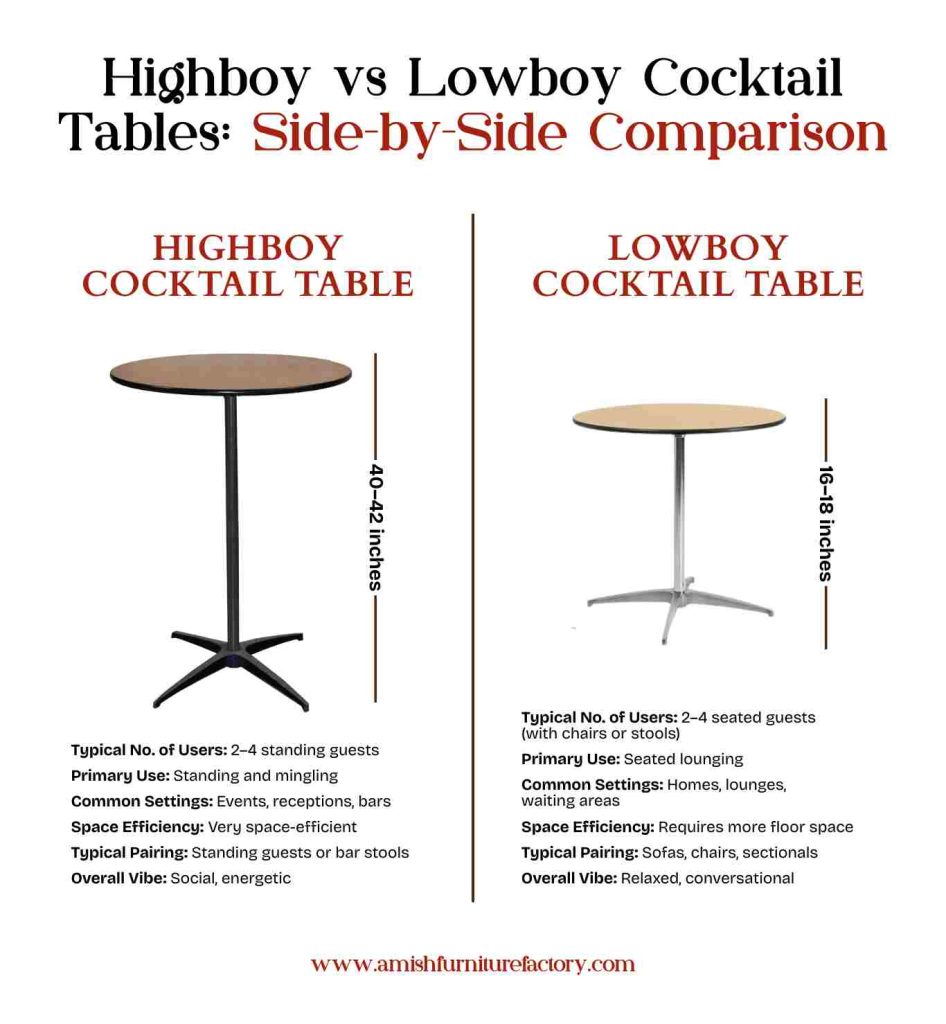
- Standard cocktail tables typically range from 16–18 inches high for lowboy styles and 40–42 inches high for highboy styles.
- Highboy tables are ideal for standing or event spaces, while lowboy tables work best for seated living rooms and lounges.
- To choose the right size, consider your room dimensions, seating type, table height, and intended use.
In this guide, we’ll break down standard cocktail table dimensions, explain how size affects comfort and flow, and help you confidently choose a table that works just as well in a compact apartment as it does in a large, open space.
What Is a Cocktail Table?
A cocktail table is a small, versatile table designed to hold drinks, light snacks, or decorative items while people gather around it. Typically lower than dining tables, it allows guests to easily reach beverages without disrupting conversation, making it a central feature in living rooms, lounges, and social spaces. The concept gained popularity in the early 20th century as cocktail culture and casual entertaining became fashionable, particularly during the 1910s–1930s when homes began shifting from formal parlors to more relaxed living rooms. During this time, furniture makers began marketing low living-room tables specifically for serving drinks, which led to the widespread use of the term “cocktail table.”
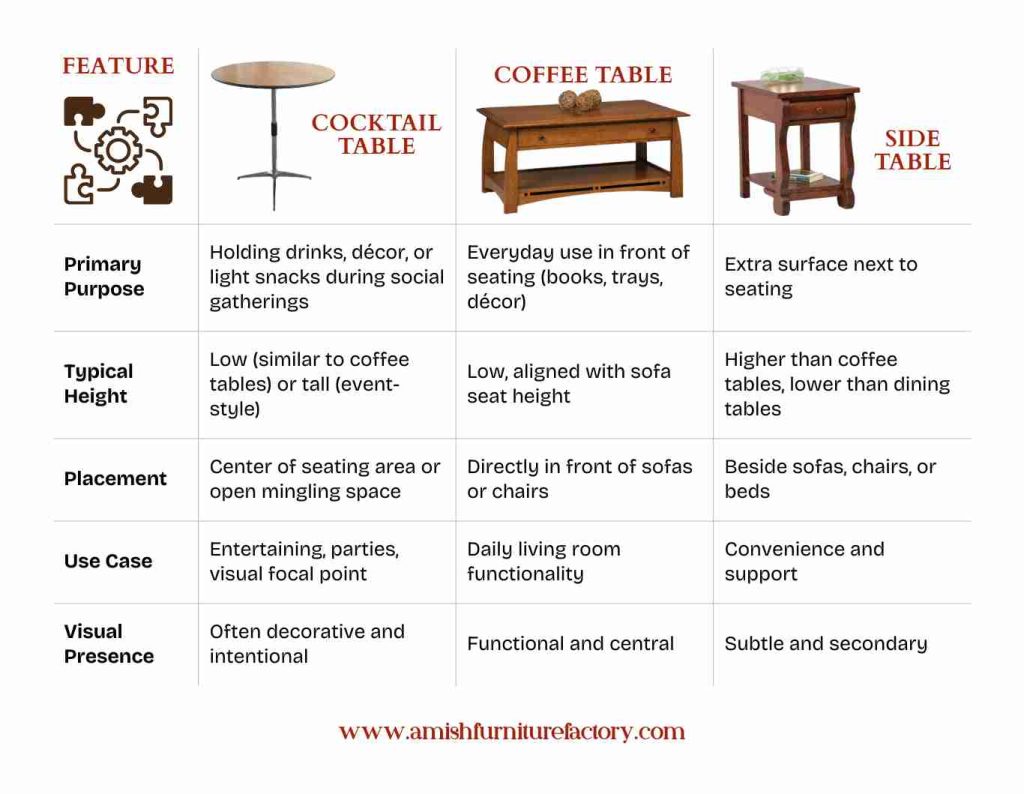
To understand cocktail tables more clearly, it helps to see how they compare to other common tables people often confuse them with.
How Big Is a Cocktail Table? Key Dimensions
Height determines how the cocktail table is used, whether guests are standing with drinks in hand or seated and lounging. While widths and shapes vary, cocktail tables generally fall into two main height categories: tall (often called highboy) and low (known as lowboy). Each serves a different purpose and works best in different environments.
Highboy (Tall) Cocktail Tables
Highboy cocktail tables are built for standing interaction and are most commonly used in event and hospitality settings. On average, these tables stand about 40 to 42 inches tall, with round table or square tabletops typically measuring between 24 and 30 inches across. This height places drinks and small plates at a comfortable level for guests who are standing. Typically, a single highboy table accommodates about 2 to 4 people comfortably, making them perfect for mingling without crowding.
Lowboy Cocktail Tables
Lowboy cocktail tables are designed for seated use and are more commonly found in homes and lounge-style environments. These tables usually measure around 16 to 18 inches high, aligning closely with standard sofa seat height. In terms of surface area, lowboy tables tend to be wider, often 36 to 48 inches long for rectangular designs or about 30 to 36 inches in diameter for round ones. A typical lowboy table comfortably accommodates 4 to 6 seated people, depending on its shape and the surrounding furniture layout. Lowboy cocktail tables work best in living rooms, hotel lobbies, and waiting areas.
Cocktail Table Shapes and How They Affect Space
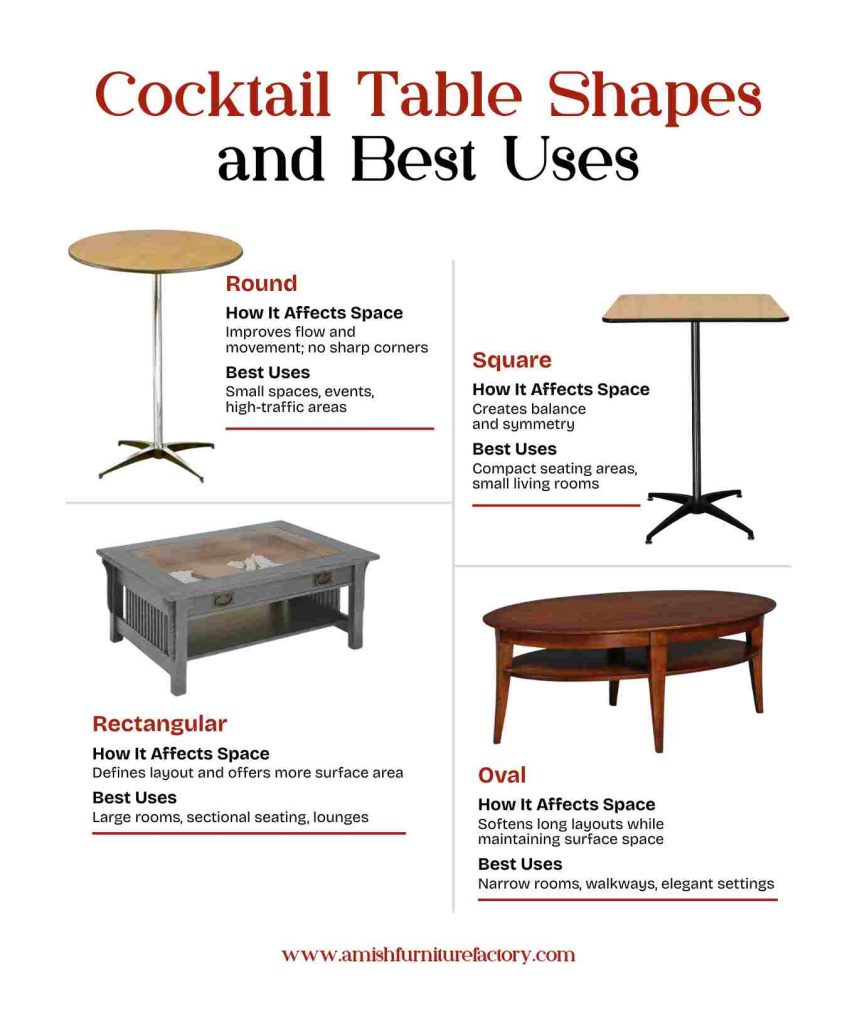
The shape of a cocktail table plays a bigger role than most people realize. While size determines whether a table fits physically, shape determines how easily people can move around it and interact with one another. A round cocktail table, for example, naturally softens a space by eliminating sharp corners. Square and rectangle tables, on the other hand, create more defined lines and structure, which can help anchor furniture layouts but may require a bit more planning to avoid blocking walkways.
Shape also influences how a room feels. Round and oval cocktail tables tend to encourage conversation because everyone has equal access to the surface. Rectangular tables offer more usable surface area and work well in larger rooms. Square tables strike a balance, fitting neatly into compact seating zones. Choosing the perfect shape is often the difference between a room that feels effortless and one that feels slightly awkward.
Here’s a quick summary of common cocktail table shapes and where each one works best.
How to Choose the Right Cocktail Table Size for Small or Large Spaces
Choosing the right cocktail table is about how well it works in the space you have. The key is understanding proportions, movement, and how people will actually use the table day to day.
Measure Your Space and Follow Clearance Rules
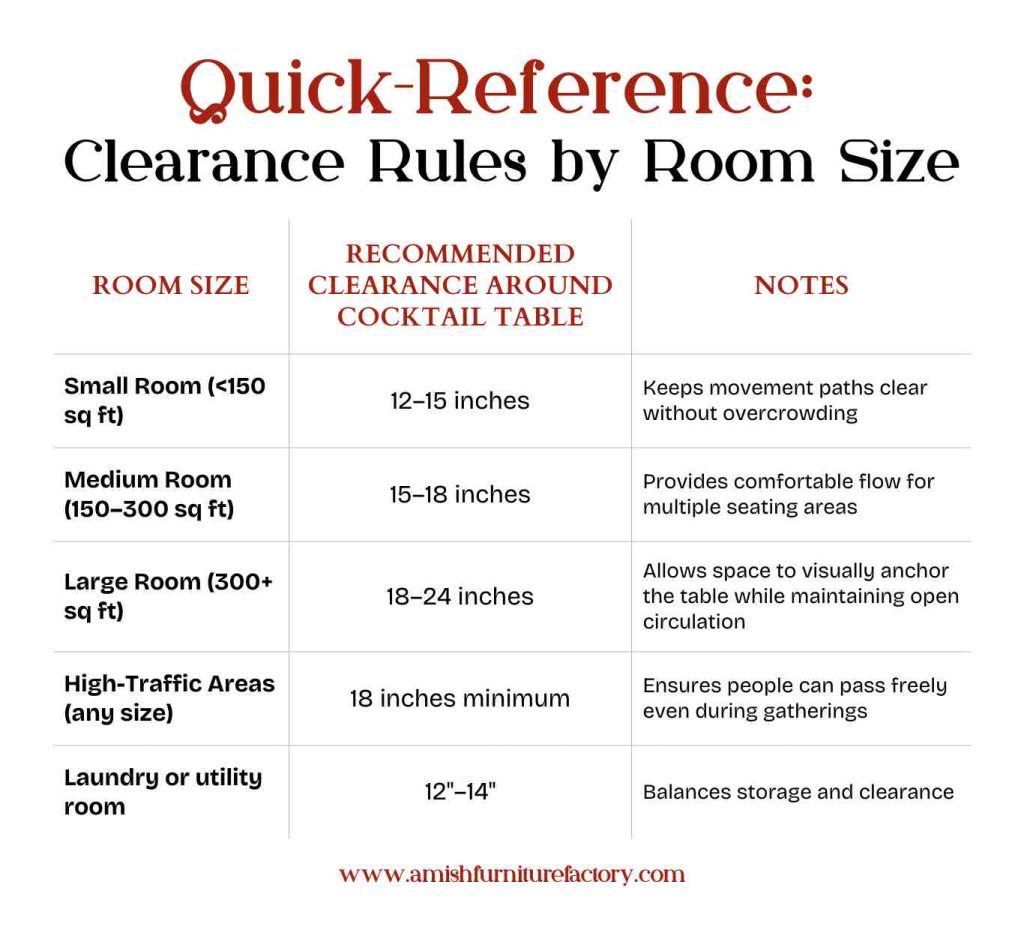
Before choosing a table style or finish, start by measuring the available floor space. Measure the length and width of the area where the cocktail table will sit and account for walking paths and nearby furniture. A good rule is to leave 12 to 18 inches of clearance between the table and surrounding seating so people can move comfortably. In larger rooms, a wider or rectangular table can help anchor the space while still allowing easy movement around it.
Use this quick-reference guide to determine ideal clearance based on room size and layout:
Match Cocktail Table Size to Seating Type
The type of seating around your cocktail table should directly influence its height and dimensions. For sofas and lounge chairs, a lowboy cocktail table works best when its height is equal to or slightly lower than the seat height. If the space is designed for standing or mixed seating, such as bar stools or high chairs, a highboy cocktail table is the better option.
Choose the Right Size Based on Use Case
How you plan to use the table should guide its size just as much as the room itself. For everyday living rooms, a cocktail table should be large enough to hold décor and daily items. In small spaces, round or oval tables with slimmer profiles help maintain flow while still being functional. In larger rooms or open layouts, choosing a table that visually fills the space prevents the room from feeling empty or unbalanced, even if the table isn’t used constantly.
Consider Visual Weight and Room Scale
Beyond measurements, think about how “heavy” the table looks. Thick tabletops, dark finishes, or solid bases can make a table feel larger than its actual dimensions. In small rooms, lighter materials and open bases help keep the space feeling airy. In larger rooms, heavier or wider tables provide the visual presence needed to ground the furniture arrangement.
Elevate your living room’s functionality and charm by adding the traditional pub table, the perfect blend of rustic style and essential storage.
How to Decorate a Cocktail Table (Without Overcrowding It)
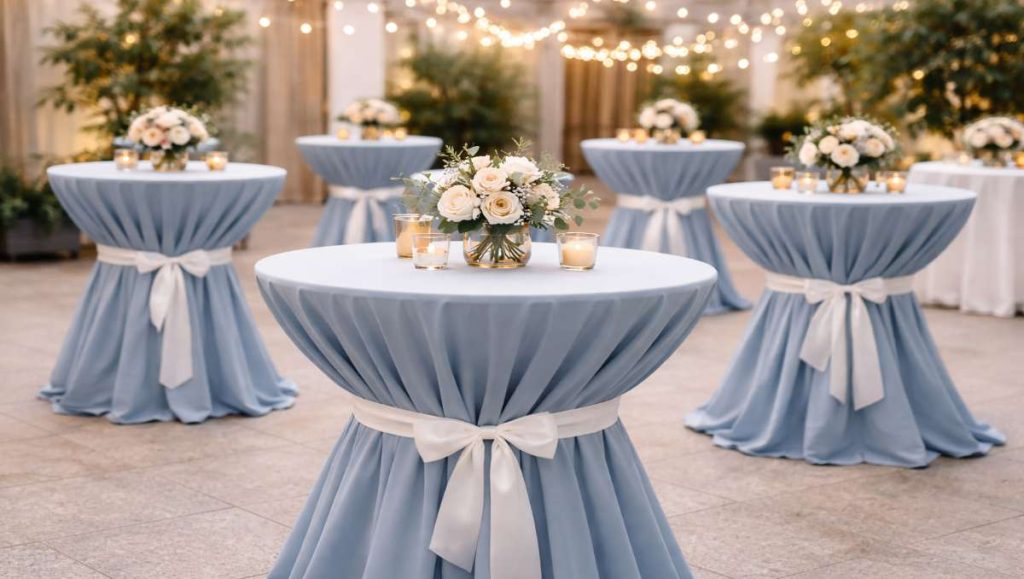
Decorating a cocktail table is about balance. Aim for a styled look that still leaves room for practical use. Start with a focal piece such as a vase, small sculpture, or decorative tray, then add a few complementary items. Varying heights and textures adds interest, while leaving some empty space keeps the table from feeling cluttered.
Also consider the table’s shape and size when arranging décor. Round or oval tables work best with a central arrangement that allows access from all sides. Rectangular or square tables suit linear groupings that guide the eye along the surface. Always leave enough space so guests can comfortably place drinks or plates without disturbing the decorations.
Conclusion: Finding Your Perfect Centerpiece
Choosing the right cocktail table size helps create a functional and stylish living space. By considering height, shape, seating, and room dimensions, you can ensure it fits both daily use and entertaining. When properly sized and styled, a cocktail table becomes the centerpiece of the room, supporting social interaction while keeping the space balanced and cohesive.
Frequently Asked Questions
How many people fit around a 30-inch cocktail table?
A 30-inch round or square cocktail table comfortably accommodates 2 to 4 people seated or standing. For larger gatherings, it works best for casual use rather than full dining, since space for drinks and plates is limited.
How many cocktail tables do I need for 100 guests?
For a standing event, plan roughly 1 highboy cocktail table per 8–10 guests. For 100 guests, that means about 10–12 tables to allow everyone enough space to mingle without overcrowding. If you’re using lowboy tables in a lounge setting, fewer tables are needed, but ensure there’s enough seating nearby.
How far should a cocktail table be from a sofa?
The ideal distance is 12 to 18 inches. This range ensures people can comfortably reach drinks and décor without stretching, while still leaving enough room to walk around the table.
Can a cocktail table be too big for a sectional sofa?
Yes, if the table overwhelms the seating area, it can feel cramped and disrupt the room’s balance. A good rule is that the table should take up no more than two-thirds the length of the sofa, leaving enough space for walking and legroom. Choosing a table proportional to the sectional maintains both function and visual harmony.