
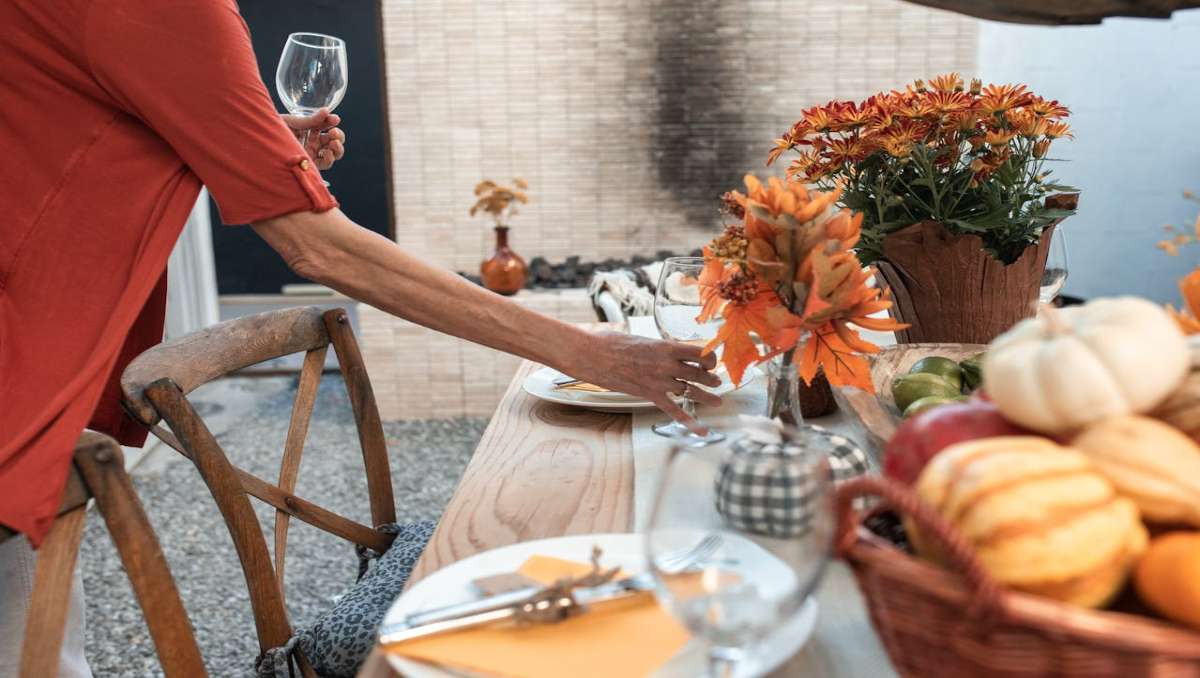
Thanksgiving is widely known as a time to pause, gather, and give thanks for the year’s blessings. Across the United States, it’s marked by family reunions, overflowing tables, and long-held traditions. For the Amish, this familiar holiday takes on a quieter and more intentional form. They observe Thanksgiving not as a cultural spectacle, but as a meaningful moment aligned with their faith and way of life.
Key Takeaways:
- Most Amish communities celebrate Thanksgiving as a meaningful time to give thanks to God, centered on faith, family, and simple feast.
- Amish Thanksgiving traditions vary by region but consistently avoid commercialism and nationalistic themes.
- The holiday reflects everyday Amish values, gratitude, humility, and strong community ties, rather than a break from them.
How exactly do the Amish celebrate Thanksgiving? Let’s find out.
Do Amish People Celebrate Thanksgiving?
Amish communities have generally observed Thanksgiving for many generations, though in a much quieter and more faith-centered way than the broader American culture. While it is often assumed that the Amish avoid all national holidays, that is not entirely true. They choose to recognize holidays that align with their religious values, and Thanksgiving fits because it focuses on gratitude rather than patriotism or commercial celebration.
Historically, Thanksgiving among the Amish has been treated primarily as a religious observance. The day centers on giving thanks to God for the harvest, daily provision, health, and family. Church services are common, and meals are simple but plentiful, shared with extended family and sometimes neighbors. Rather than marking a historical event, the Amish use Thanksgiving as a time to reflect on humility, stewardship, and God’s presence in everyday life, values that have remained consistent over the years.
How the Amish Celebrate Thanksgiving
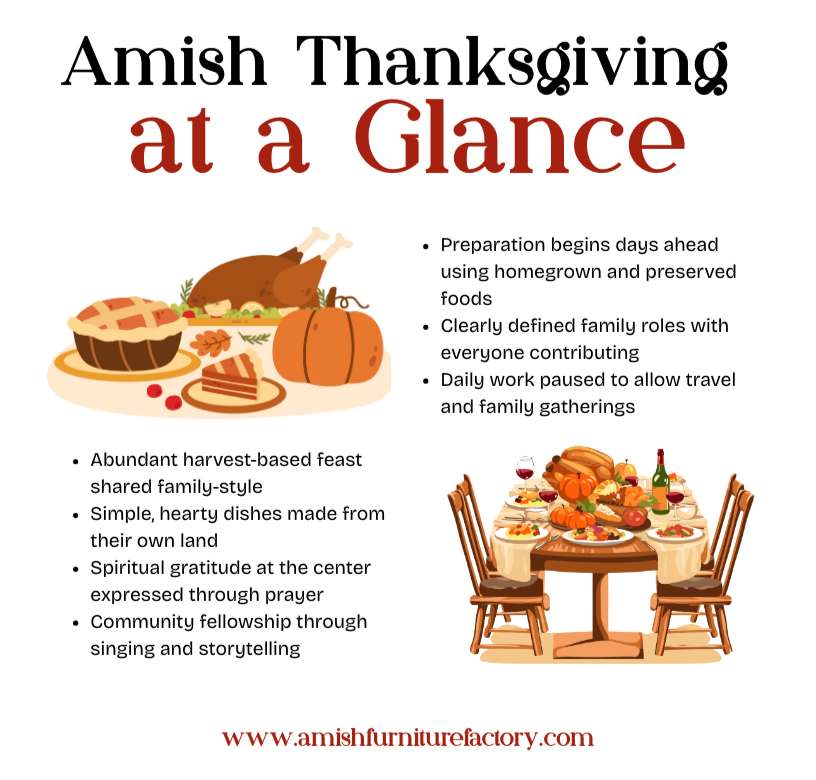
For the Amish, Thanksgiving is a moment to step back from daily work and focus on what truly matters: faith, family, and community. Preparation for Thanksgiving often begins several days in advance, especially in larger Amish households. Meals are planned around what has been grown, preserved, or raised locally, with baking, butchering, and food preparation spread out over multiple days to keep the workload manageable.
Here’s how the day usually goes:
Time Off and Family Time
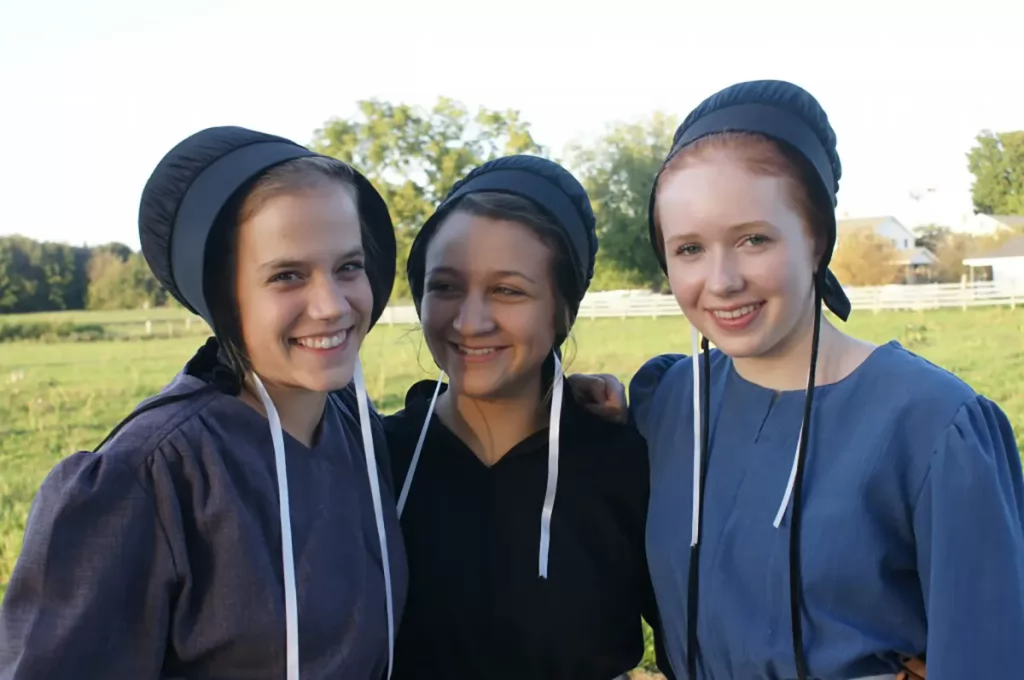
Amish families typically take time off from farm work and household chores to gather together. While daily responsibilities don’t completely stop, the pace slows so that everyone can be present. Extended family members often travel from nearby districts, creating an opportunity for multiple generations to connect, share stories, and strengthen family bonds.
Thanksgiving Feasting and Shared Meals
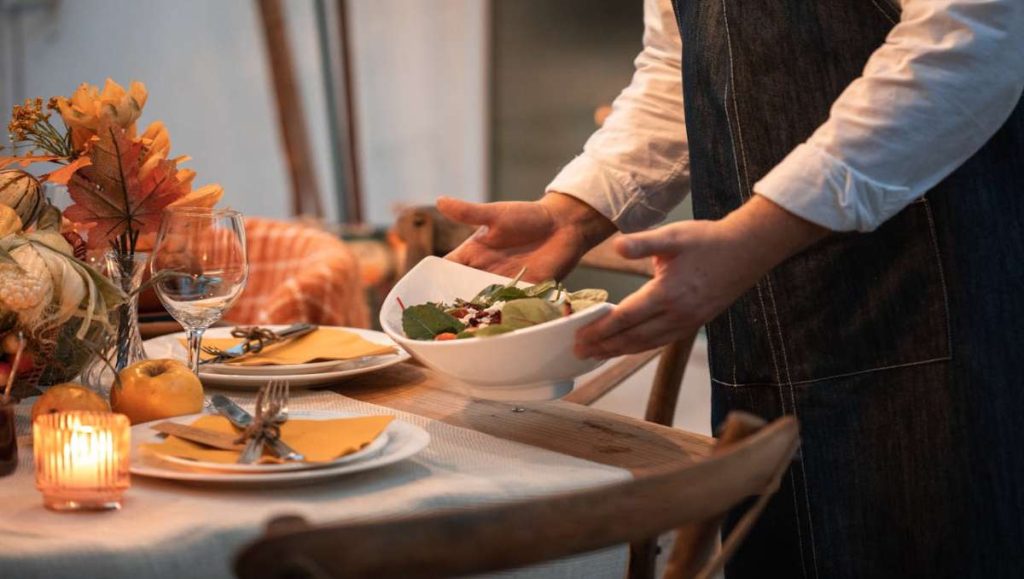
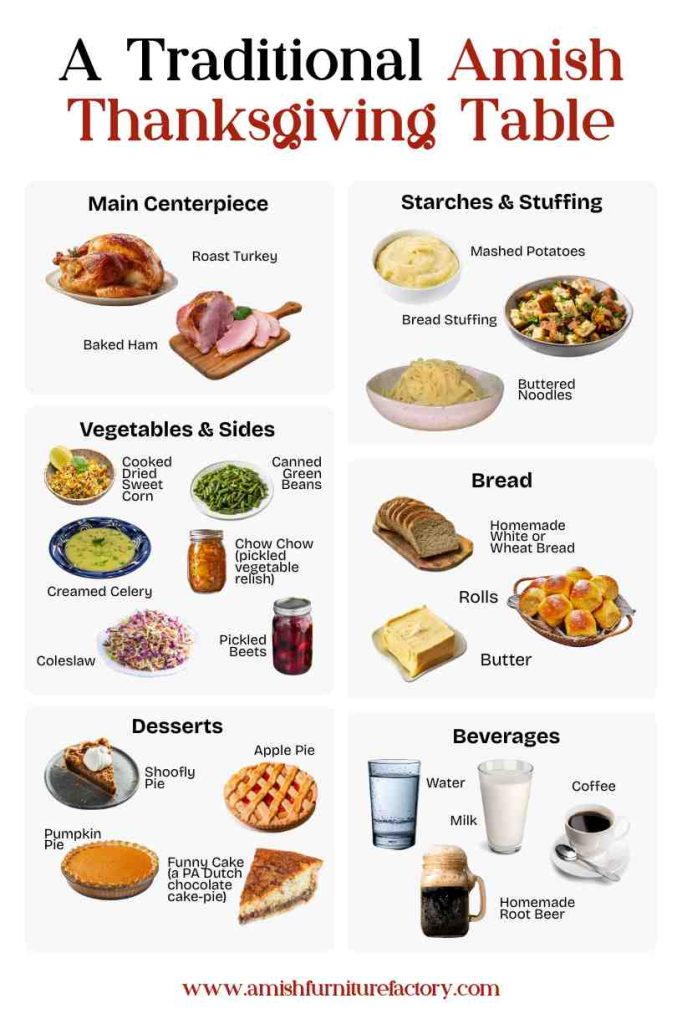
Meals are central to the celebration, with food prepared from what has been grown, harvested, or preserved on the farm. Traditional dishes such as roasted meats, fresh vegetables, pies, and homemade bread are served family-style, emphasizing sharing and abundance over extravagance. The focus is on simple, hearty meals that bring everyone together around the table.
Prayer, Reflection, and Fellowship
Before and during the meal, prayer is a vital component of Thanksgiving. Families offer thanks for God’s provision, health, and protection, often reflecting on blessings from the past year. Beyond the meal, the day may include quiet fellowship, singing, or storytelling, all of which reinforce the values of gratitude, humility, and connection that are central to Amish life.
Is Thanksgiving a Church Holiday for the Amish?
Thanksgiving is not considered a formal church holiday in Amish communities in the same way that Easter or Christmas is. It does not have a set place in the Amish church calendar, nor is it tied to a specific religious ordinance. However, that doesn’t make it insignificant. Many Amish families still treat the day with spiritual seriousness, even without an official church mandate.
In some districts, Thanksgiving may include a church service or a special time of worship, while in others it remains a family-centered observance at home. The unifying element is the intention behind it—giving thanks to God for the year’s blessings.
Regional Differences in Amish Thanksgiving Celebrations
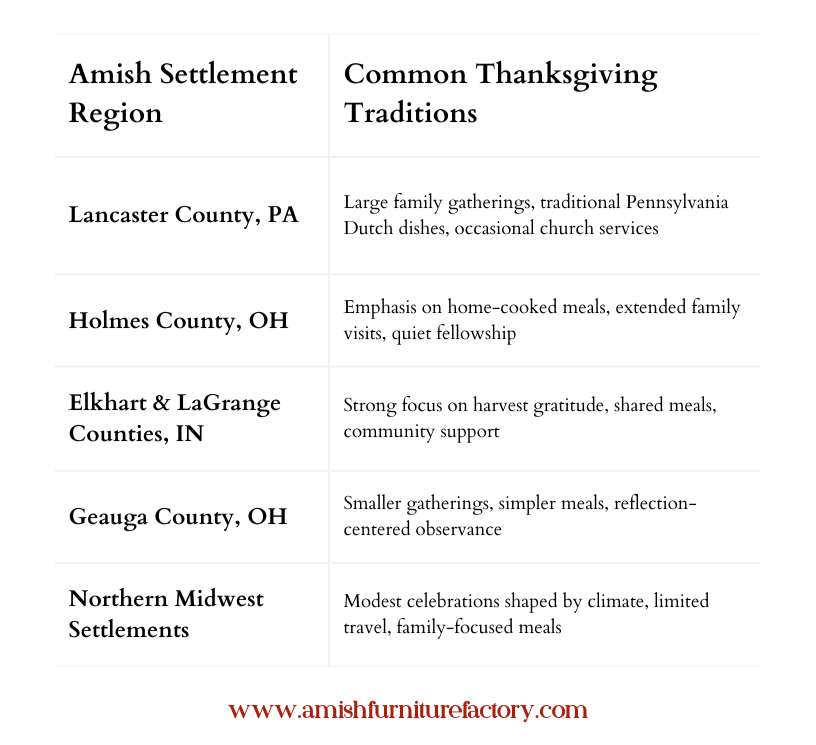
While the core meaning of Thanksgiving remains consistent across Amish communities, the way it is observed can vary by settlement and region. Differences often reflect local church rules (the Ordnung), agricultural practices, and long-established family customs. Some communities emphasize large extended-family gatherings, while others keep the day more subdued, focusing on immediate family and quiet reflection.
Geography also plays a role in shaping traditions. Amish settlements in farming-heavy areas may place greater emphasis on harvest gratitude. Those in more rural or remote regions may observe the holiday with fewer guests and simpler meals. Despite these variations, the underlying themes—thankfulness to God, modesty, and community—remain the same.
Curious to learn more about Amish ways beyond their celebrations? Explore our in-depth guides to Amish traditions, daily life, and values.
Final Reflections: A Quiet Season of Gratitude
Thanksgiving among the Amish is less about marking a date on the calendar and more about reinforcing values they live by year-round. The holiday blends naturally into their rhythm of faith, work, and family life. They offer a pause for gratitude without excess or display. Through shared meals, prayer, and time together, Thanksgiving becomes a reflection of what the Amish believe truly matters.
Unlike mainstream celebrations shaped by media, travel, and consumer traditions, Amish Thanksgiving remains grounded in intention. There are no decorations to hang or schedules to rush through, only the steady presence of family and the shared acknowledgment of blessings received over the past year. The simplicity of the day allows gratitude to feel sincere rather than performative.
Frequently Asked Questions
Do the Amish give gifts or travel on Thanksgiving?
Gift-giving is not a Thanksgiving tradition among the Amish. Travel is usually limited to nearby families, often by buggy, with an emphasis on simplicity rather than long-distance trips.
Is Amish Thanksgiving more religious or cultural?
It is primarily religious. While cultural elements exist, the focus is on giving thanks to God rather than celebrating national history or traditions.
Do Amish people eat turkey and stuffing like typical Americans?
Yes, many do. Turkey, stuffing, mashed potatoes, vegetables, Friendship Bread, and homemade pies are common. Though meals are usually simpler and made from homegrown or locally sourced ingredients.
Is Thanksgiving a bigger holiday than Christmas for the Amish?
In some communities, Thanksgiving can feel just as significant—or even more so—because it emphasizes gratitude and family without the expectations or preparations that often accompany Christmas.